Scaling hope: How the Kita Bersama project is shaping the next generation of public health leaders across Indonesia
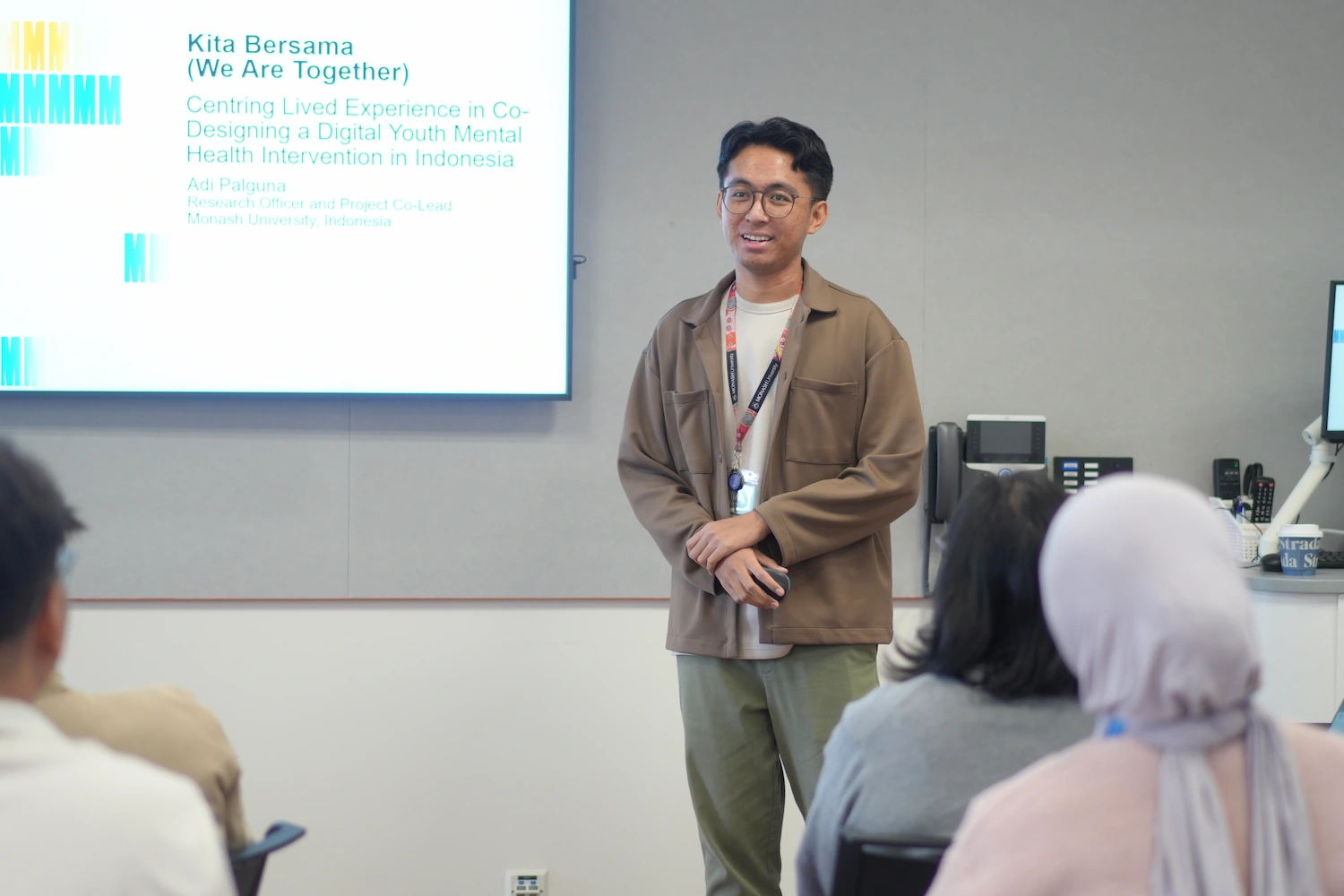 Adi Palguna delivering a presentation regarding the Kita Bersama project to Master of Public Health students
BSD City, Tangerang – With a large and growing young population, the nation’s much-discussed "demographic bonus" (BPS 2022), a period when a large youth population promises significant economic growth and productivity, makes Indonesia stand at a defining moment. Yet this potential is shadowed by a growing public health crisis: youth mental health crisis. If Indonesia is to realise the promise of its next generation, it needs more than healthy bodies and academic qualifications. It needs young people who feel supported, heard, and equipped to thrive, and public health leaders who understand how to turn evidence into solutions that genuinely respond to peoples’ lives.
Recognising that the next generation of leaders must be equipped with both theory and practical innovation, Monash University, Indonesia recently hosted an inspiring guest lecture for its Master of Public Health (MPH) students to bridge this gap. On August 8th, 2026, at Monash University, Indonesia campus, students from the 2026 cohort of the Master of Public Health (MPH) program, specifically those enrolled in the Chronic Disease: Epidemiology and Prevention (PHI5207) unit, gathered for a special "Innovation Talk". The session, titled "Centering Lived Experience in Co-Designing a Digital Youth Mental Health Intervention in Indonesia," was led by Adi Palguna, a Research Officer and Project Co-Lead of the Kita Bersama (We Are Together) initiative.
From lived experience to public health leadership
The atmosphere was sympathetic as Adi took students through his own lived-experience and journey from experiencing childhood trauma, to becoming a mental health advocate with Into the Light Indonesia, and ultimately contributing to research and innovation in the area of mental health, particularly to support young people in Indonesia. His story brought an important message into the classroom: public health is not simply about statistics, policies, or interventions. It is about people. For MPH students, this perspective offered a powerful connection between what they learn academically and what communities experience every day.
The urgent reality of ACEs
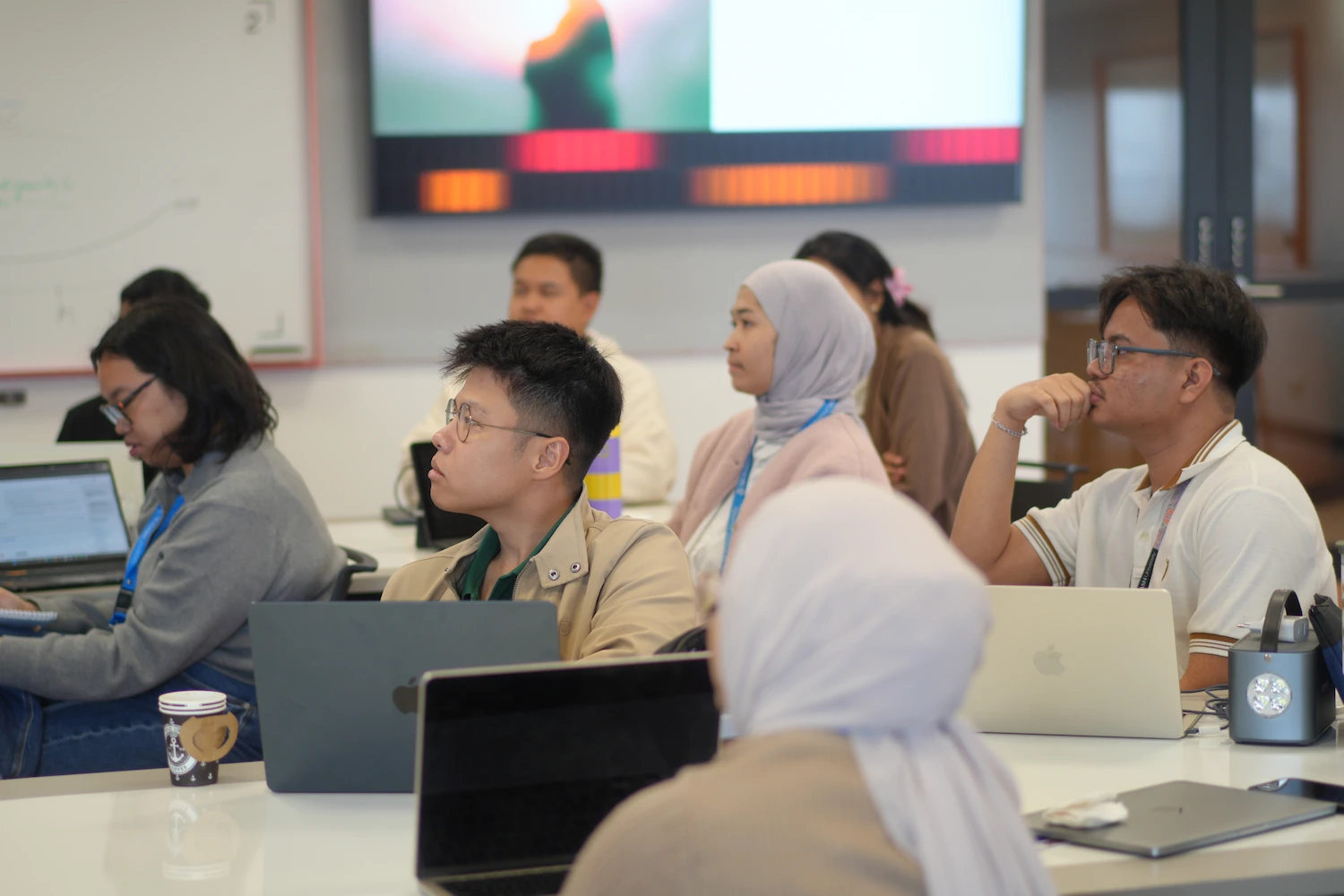 Students are paying attention to the speaker
The lecture began by highlighting a devastating reality: 78% of Indonesian adolescentsexperience Adverse Childhood Experiences (ACEs), such as neglect or abuse from peers and family (Center for Reproductive Health, 2019). These experiences leave deep "inner wounds" that often lead to depression and, in tragic cases, attempts to end one's life.
Despite this, the help-seeking rate remains alarmingly low; less than 11% of youth seek formal treatment due to stigma and low mental health literacy (Health Development Policy Agency, 2023; Center for Reproductive Health et al., 2022). This crisis is further exacerbated by poorly equipped health services (e.g., 24/7 helplines) and by the current severe shortage of specialists, where according to the data from 2022, there were only 50 child and adolescent psychiatrists for the entire nation, with most concentrated heavily in Java.
Co-designing a digital solution
In response to these barriers, the Kita Bersama project, funded by the Grand Challenges (Canada) Being initiative, was established. Adi explained how the project uses the Double Diamond framework for public participation, ensuring that the intervention is not just designed for youth, but built with and for them. By involving 38 youth participants aged 15–24 across West Java and East Kalimantan, the team identified unique local coping mechanisms.
Preliminary findings found that youth rely on faith and prayer, social circles (including pets), and "kakak" (older figures) mentorship for support. The emerging insights are helpful in informing the development of a digital platform incorporating mental health literacy, peer-support opportunities, and pathways connecting young people with formal mental health services. The goal is not to deter youth from- or replace professional care, but to help create a bridge between young people, their communities, and the support systems available to them.
Lessons for the next generation
For the MPH students, the lecture was more than just a case study; it was a masterclass in real-life challenges of public health. They learned that effective programs must be:
- Evidence-informed and systematically planned from inception to evaluation.
- Youth-centric, using approachable "informal language" rather than clinical jargon.
- Communities as partners, by involving young people directly, interventions have a greater opportunity to reflect their voices, lived experiences, priorities, faith, relationships, culture, and everyday realities.
- Safety-focused, fostering an environment where participants feel heard, safe, and secure in their anonymity.
"Innovation is not only about creating an application," Adi reminded the class, "but also about creating solutions that are meaningful, accessible, and responsive to communities".
The session concluded with an engaging Q&A, where students reflected on how applying public health theories can be translated into meaningful action. It is about recognising that behind every prevalence rate is a person, behind every statistic is a lived experience, and behind every public health challenge is a community with knowledge, strengths, and ideas. By connecting students with the lived experiences of projects like Kita Bersama, Monash University, Indonesia continues its commitment to supporting lived realities of vulnerable groups like young people, preparing future public health practitioners and leaders who are ready to create impact, and the evidence-base to strengthen Indonesia’s public health.
Authors