
Kita Bersama (We Are Together): Reducing Adverse Childhood Experiences (ACEs) Impact Induced Mental Health Issues in Indonesian Youth

Kita Bersama (We are together) research team
According to data on the SIMFONI PPA, an online information system for the protection of women and children by the Ministry of Women Empowerment and Child Protection Indonesia, violence against children in Indonesia has been on the rise in the last 5 years. In addition, around 78% of adolescents in the country reported having adverse childhood experiences (ACEs) related to violence perpetrated by peers and family members, contributing to the serious mental health repercussions across Indonesia (Center for Reproductive Health, 2019). Young people have the highest prevalence of depression and mental health issues, with a high concentration in provinces such as West Java and East Kalimantan (3.3.%, 2.2% respectively) (Health Development Policy Agency, 2023). Despite the strong links between violence and adverse mental health effects, there is limited understanding of the extent and magnitude of these effects and effective ways to mitigate them in young people.
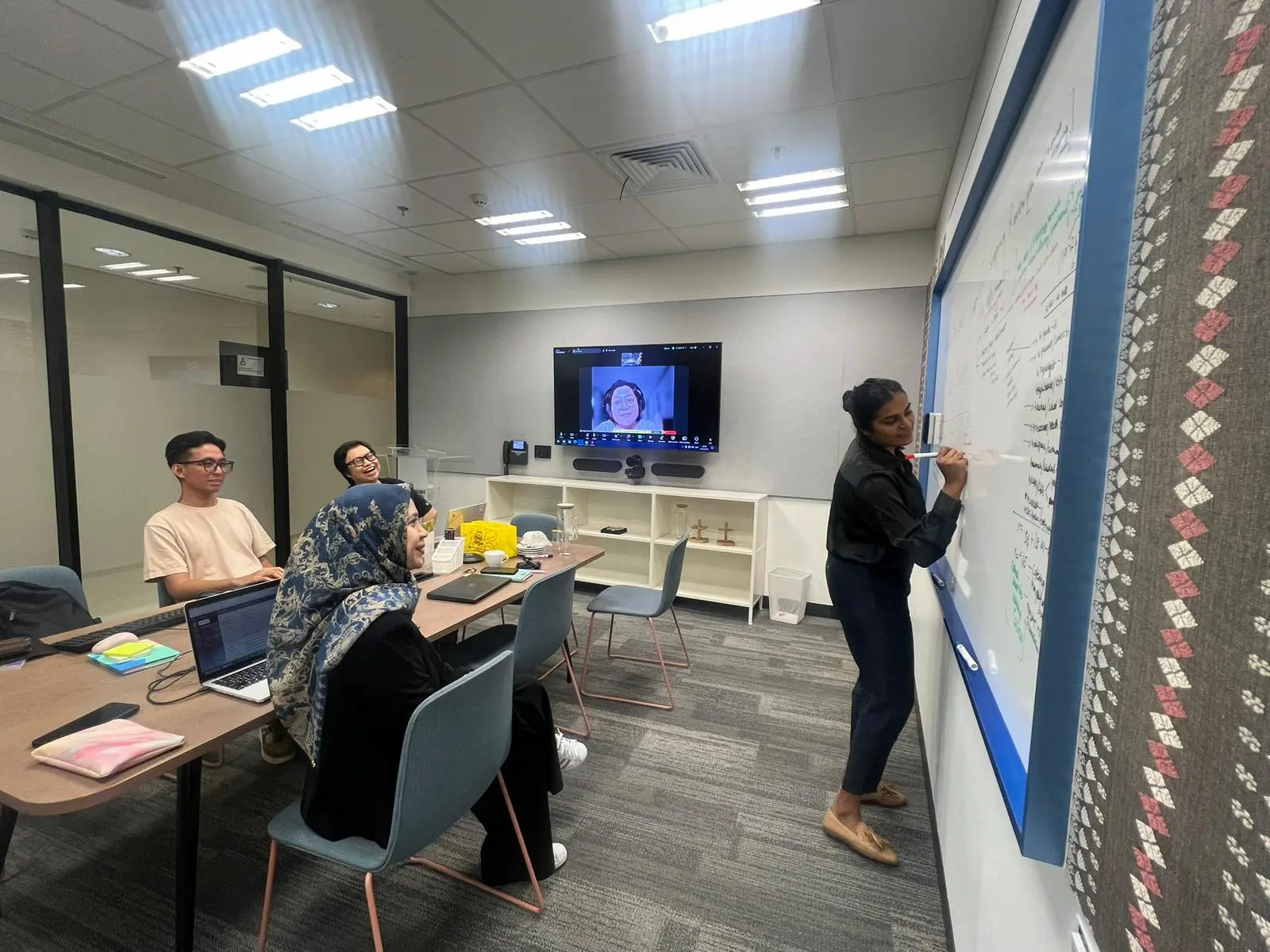
Kita Bersama (We are together) team brainstorming about the research project
A major contributor to the rising burden of youth mental ill health in Indonesia could be the low help-seeking behaviour for formal mental health care, with less than 11% of youths seeking treatment (Health Development Policy Agency, 2023; Center for Reproductive Health et al., 2022). This could be the result of low accessibility of mental health care, low mental health literacy, and strong social stigmatisation surrounding mental disorders. Consequently, a significant number of Indonesian youths with mental health burdens live through their formative and productive years undetected and untreated, which could lead to more severe mental health consequences later in life.
Emerging evidence suggests that digital health platforms can serve as effective tools that improve accessibility to care (Alagarajah et al., 2024; Robards et al., 2018; Philippe et al., 2022). However, there is very little known about the needs, preferences, and attitudes of Indonesian youths with ACEs towards digital mental health platforms. In addition, the perspectives, capacities, and engagement of other stakeholders in youth mental health (e.g., caregivers, mental health providers) with regard to digital mental health platforms need to be explored.
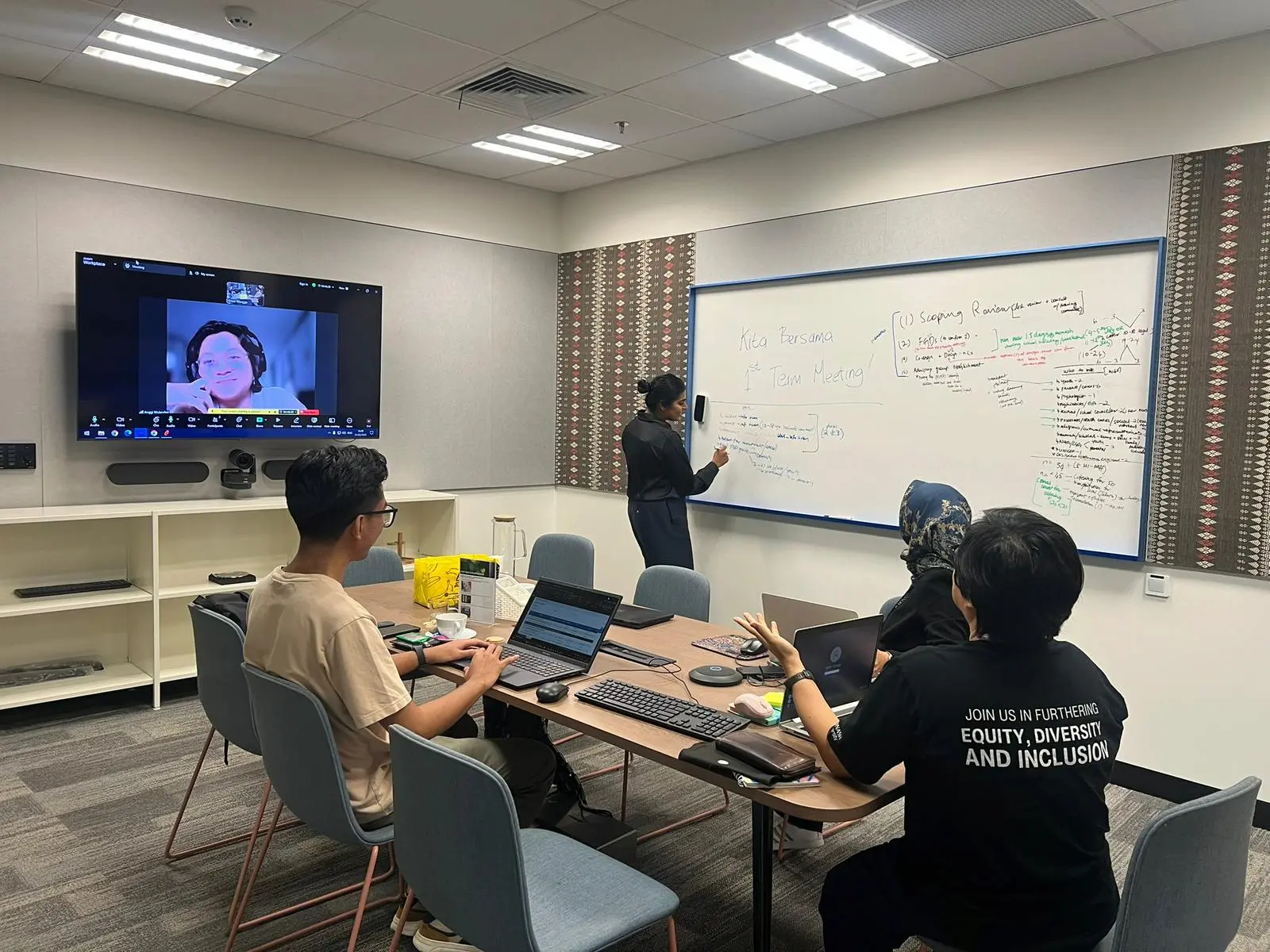
Dr. Gabriela Fernando leading the discussion
To address this issue, we launched Kita Bersama (We Are Together), a youth-led and youth-centred project that aims to prevent and reduce the mental health impacts of ACEs of peer and family violence among Indonesian youth, aged 10 to 24 years, living in West Java and East Kalimantan. In close consultation with key local stakeholders, such as the Ikatan Psikolog Klinis (IPK) of West Java and East Kalimantan and Provincial Health Offices of West Java and East Kalimantan, over the 18 month project, we are developing a culturally relevant, digital platform consisting of five main features: 1) mental health literacy module; 2) peer-support forum; 3) connection to formal mental health care; 4) psychosocial skills module; and 5) positive parenting skills module. Embedded in in-depth community consultations with youth, parents, caregivers and other key stakeholders, we will develop and later examine the platform’s feasibility, acceptability, and effectiveness in strengthening coping skills among youth and promoting positive parenting skills among parents and caregivers in West Java and East Kalimantan. The project will deliver the following outputs:
- A digital youth mental health platform.
- A policy brief to inform national policymakers about the impacts of ACEs of peer and family violence on youth mental health and the project outcomes.
- Infographics for youth mental health and ACEs of peer and family violence campaigns.
- Publications on focus group discussion (FGD) findings and the project’s outcomes in peer-reviewed journals.
Kita Bersama is supported by Being – an international mental health initiative hosted by Grand Challenges Canada and funded in part by Fondation Botnar, The UK’s Department of Health and Social Care using UK aid through the National Institute for Health and Care Research (NIHR), and the Government of Canada, in partnership with the Science for Africa Foundation, Orygen, and United for Global Mental Health.
Authors: Anggi Wulandari, Adi Palguna, and Gabriela Fernando.
This project emerges from Monash Indonesia under the following team: Grace Wangge (Chief Investigator), Adi Palguna (Co-Investigator), Gabriela Fernando (Co-Investigator), Yulisna Mutia Sari (Co-Investigator), Anggi Wulandari (Research Assistant), and Patrick Olivier (Co-Investigator).
References:
- Alagarajah J., Ceccolini D., & Butler S. (2024). Digital mental health interventions for treating mental disorders in young people based in low-and middle-income countries: A systematic review of the literature. Cambridge Prisms: Global Mental Health, 11. https://doi.org/10.1017/gmh.2024.71
- Center for Reproductive Health. (2019). Early Adolescent’s Health in Indonesia: Evidence Base from GEAS-Indonesia: Baseline 2019. https://rutgers.international/resources/early-adolescents-health-in-indonesia/
- Center for Reproductive Health, University of Queensland, & Johns Hopkins Bloomberg School of Public Health. (2022). Indonesia – National Adolescent Mental Health Survey (I-NAMHS) Report. Center for Reproductive Health. https://qcmhr.org/outputs/reports/13-i-namhs-report-english
- Health Development Policy Agency. (2023). Indonesian Health Survey 2023: In Numbers. Ministry of Health of the Republic of Indonesia. https://www.badankebijakan.kemkes.go.id/ski-2023-dalam-angka/
- Philippe, T. J., Sikder, N., Jackson, A., Koblanski, M. E., Liow, E., Pilarinos, A., & Vasarhelyi, K. (2022). Digital Health Interventions for Delivery of Mental Health Care: Systematic and Comprehensive Meta-Review. JMIR Mental Health, 9(5). https://doi.org/10.2196/35159
- Robards, F., Kang, M., Usherwood, T., & Sanci, L. (2018). How marginalized young people access, engage with, and navigate Health-Care systems in the digital Age: Systematic review. Journal of Adolescent Health, 62(4), 365–381. https://doi.org/10.1016/j.jadohealth.2017.10.018
- The Ministry of Women Empowerment and Child Protection of the Republic of Indonesia. (n.d.). Ringkasan Data Pencatatan dan Pelaporan Kekerasan Perempuan dan Anak. Sistem Informasi Online Perlindungan Perempuan dan Anak. https://kekerasan.kemenpppa.go.id/ringkasan