
Smart City: Definition, Components, and Translation into Real-World, Studio Projects
 Smart city illustration
In an era of rapid urbanisation and technological advancement, the concept of smart cities has emerged as a compelling framework for addressing the complex challenges faced by modern urban centers. At its core, a smart city is an urban area that utilises advanced technologies and data-driven approaches to enhance the quality of life for its residents, improve operational efficiency, and promote sustainable development.
As our world becomes increasingly interconnected and digitised, cities around the world (from Zurich to London, from Jakarta to Melbourne) are leveraging cutting-edge technologies to enhance the quality of life for their residents, optimise resource management, and create more sustainable and resilient urban environments.
The concept of smart city represents a holistic approach to urban development, integrating information and communication technologies (ICT) with Internet of Things (IoT) devices to collect and analyse data, enabling urban practitioners, city officials and communities to make informed decisions to improve various aspects of urban life. From transportation and energy management to public safety and environmental sustainability, smart cities are reshaping the urban landscape and paving the way for a more efficient, livable, and inclusive future.
Key Components of a Smart City
While there is no one-size-fits-all definition of a smart city, several key components are commonly associated with the concept:
- Intelligent Infrastructure: Smart cities leverage advanced sensors, IoT devices, and communication networks to collect and transmit data about various urban systems, from traffic flow to air quality.
- Data Analytics and AI: The vast amounts of data collected by technology-enabled urban systems are analyzed using State-of-the-Art algorithms and artificial intelligence to generate actionable insights on multifaceted urban issues.
- Citizen Engagement: Smart cities prioritize two-way communication between government and residents, often through digital platforms and mobile applications that allow citizens and communities to engage in the overall enterprise of bettering the cities.
- Sustainable Development: Many smart city initiatives align with the sustainable development goals, including reducing environmental impact, promoting energy efficiency and amplifying waste reduction.
- Integrated Services: Smart cities aim to break down silos between different urban services and departments, creating a more holistic and efficient approach to city management.
Smart Cities vs. Traditional Urban Development
The smart city approach represents a significant departure from traditional urban development models, as smart cities embrace a more dynamic and adaptive approach that can respond to evolving conditions. Key differences between smart cities and traditional urban development include:
- Data-Driven Decision Making: Smart cities heavily leverage data analytics to inform policy decisions, as opposed to rely largely on ad-hoc, more intuitive approaches that characterize traditional urban management.
- Citizen-Centric Design: Smart city initiatives often prioritise user experience and citizen engagement, seeking to create more responsive and inclusive urban environments.
- Integrated Systems: Unlike the siloed approach of many traditional city departments, smart cities aim to create interconnected systems that streamline data access and sharing seamlessly.
- Sustainability Focus: Adoption of technology-enabled urban systems catalyze sustainability efforts found at the forefront of smart city initiatives.
- Rapid Iteration: Smart city technologies allow for quicker implementation and testing of new solutions, enabling cities to adapt and improve their services more rapidly than traditional development models.
By embracing these principles and leveraging advanced technologies, smart cities offer city-making practices, shaping a more livable, inclusive, and sustainable future urban life.
Studio Works Embracing Smart City Technologies
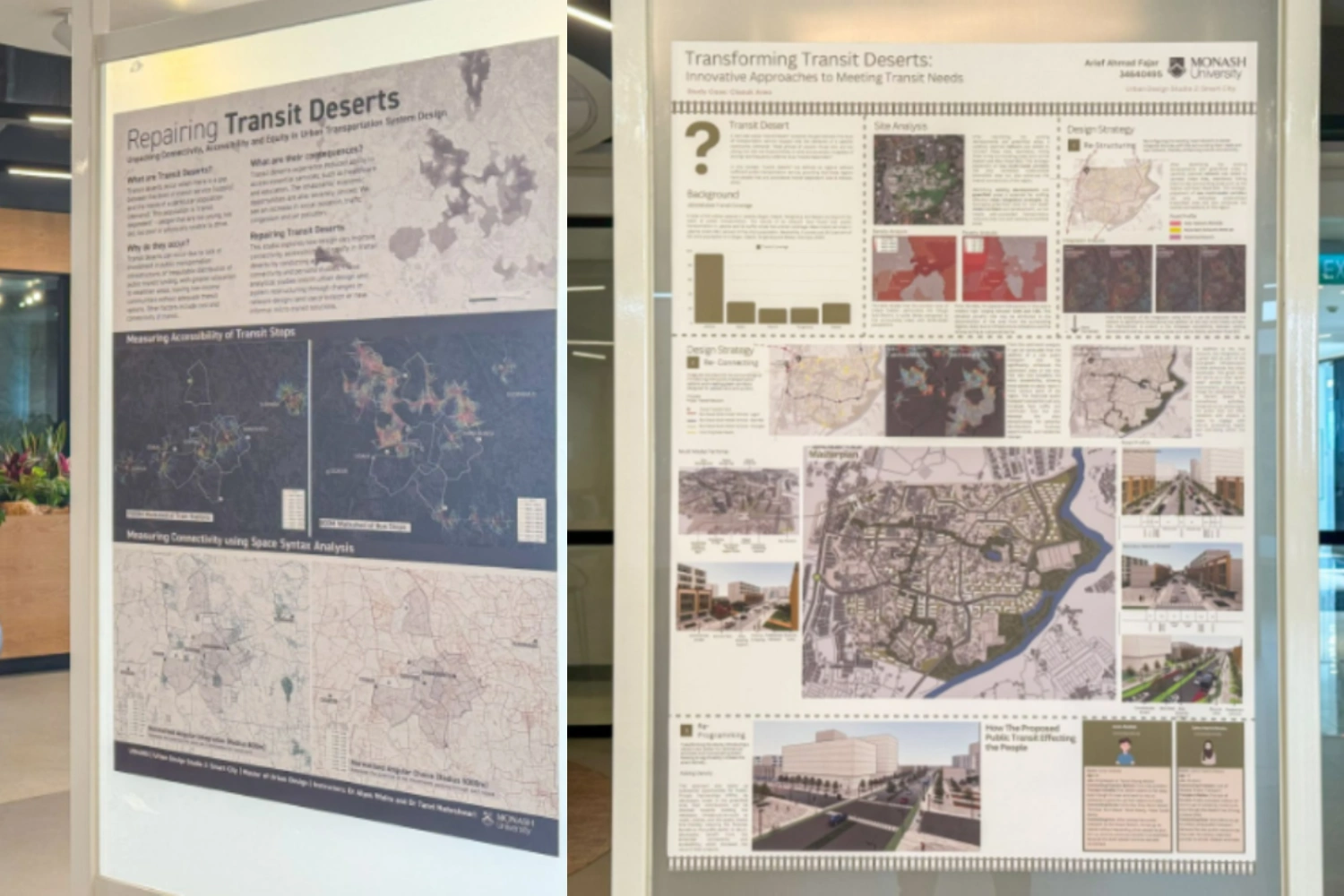
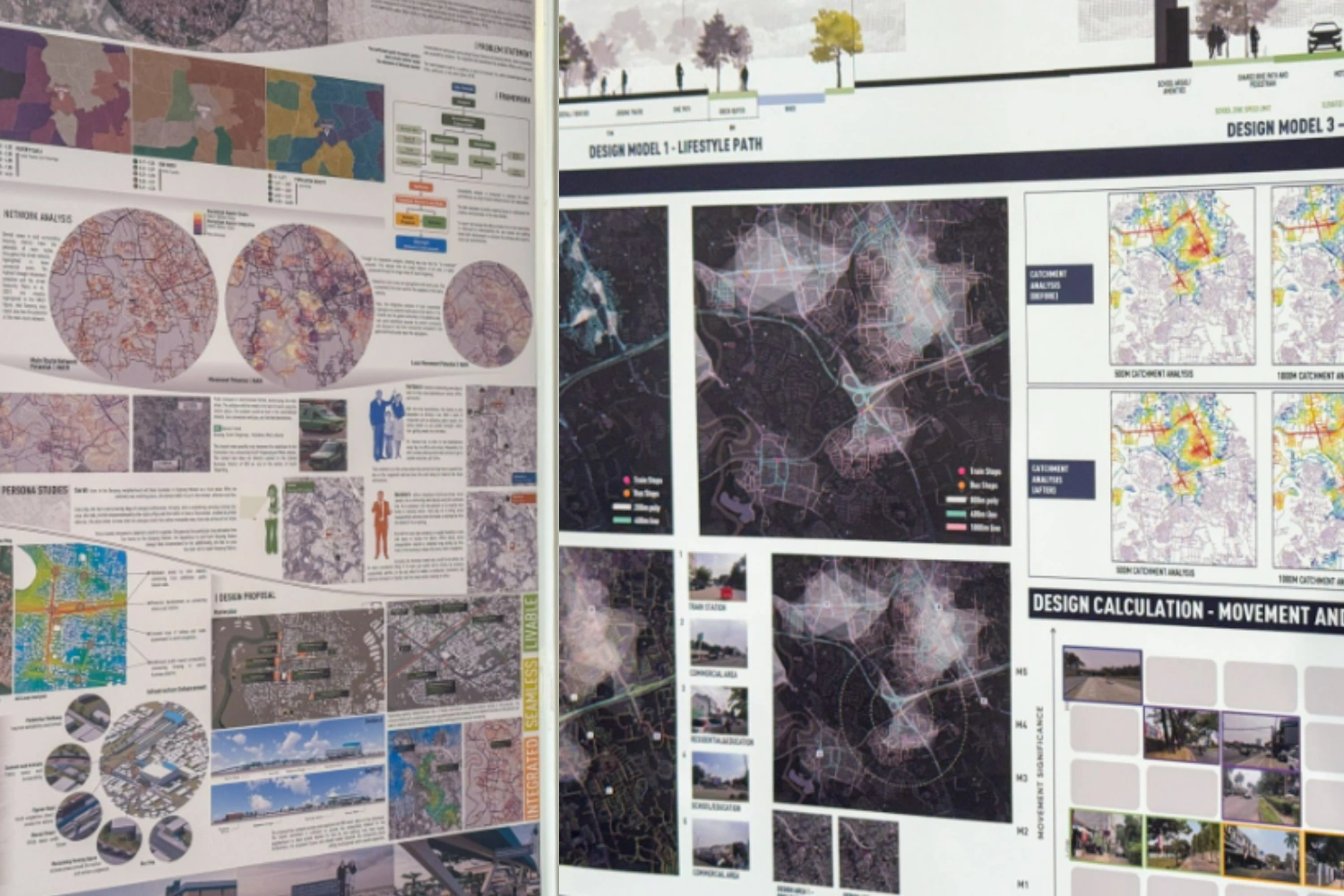
Smart city technologies form a pivotal framework for Master of Urban Design students in their studio course, themed “Repairing Transit Deserts.” Co-taught by Dr. Tanvi Maheshwari (Monash Art, Design and Architecture) in Melbourne and Dr. Alyas Widita at Monash University, Indonesia, students in the studio explored issues of public transit accessibility, connectivity, and equity. Leveraging spatial data analytics complemented with grounded insights, students developed solutions tailored to the growing Jakarta metro area, focusing on case studies and precinct-level interventions in Tangerang.
The images below highlight their work, demonstrating how enhanced proficiency in urban analytics can advance city-making practices.
About Master of Urban Design at Monash University, Indonesia

Are you passionate about creating smarter, more livable cities? Monash University, Indonesia's Master of Urban Design program empowers you to shape the future of urban development in one of Asia's most dynamic regions. As Southeast Asia's cities rapidly evolve, we need innovative designers like you to tackle complex urban challenges with sustainable solutions.
At Monash University, Indonesia, you'll learn from global experts while immersing yourself in real-world urban projects including smart city technologies, climate resilient, community engagement, urban analytics, and more. Our program augments credible creativity by leveraging analytics, data-augmented design combined with practical and stakeholders-engaged projects. Study at a world top 50 university and gain a transformative learning journey, preparing you to shape future urban life in Indonesia and beyond.
Ready to design the future? Apply to our Master of Urban Design (MUD) program! Applications are now open for our January 2025 intake, with scholarships available for qualified candidates.