
Monash University, Indonesia Hosts Workshop on Policy and Governance Approaches to Peatland Emission Mitigation
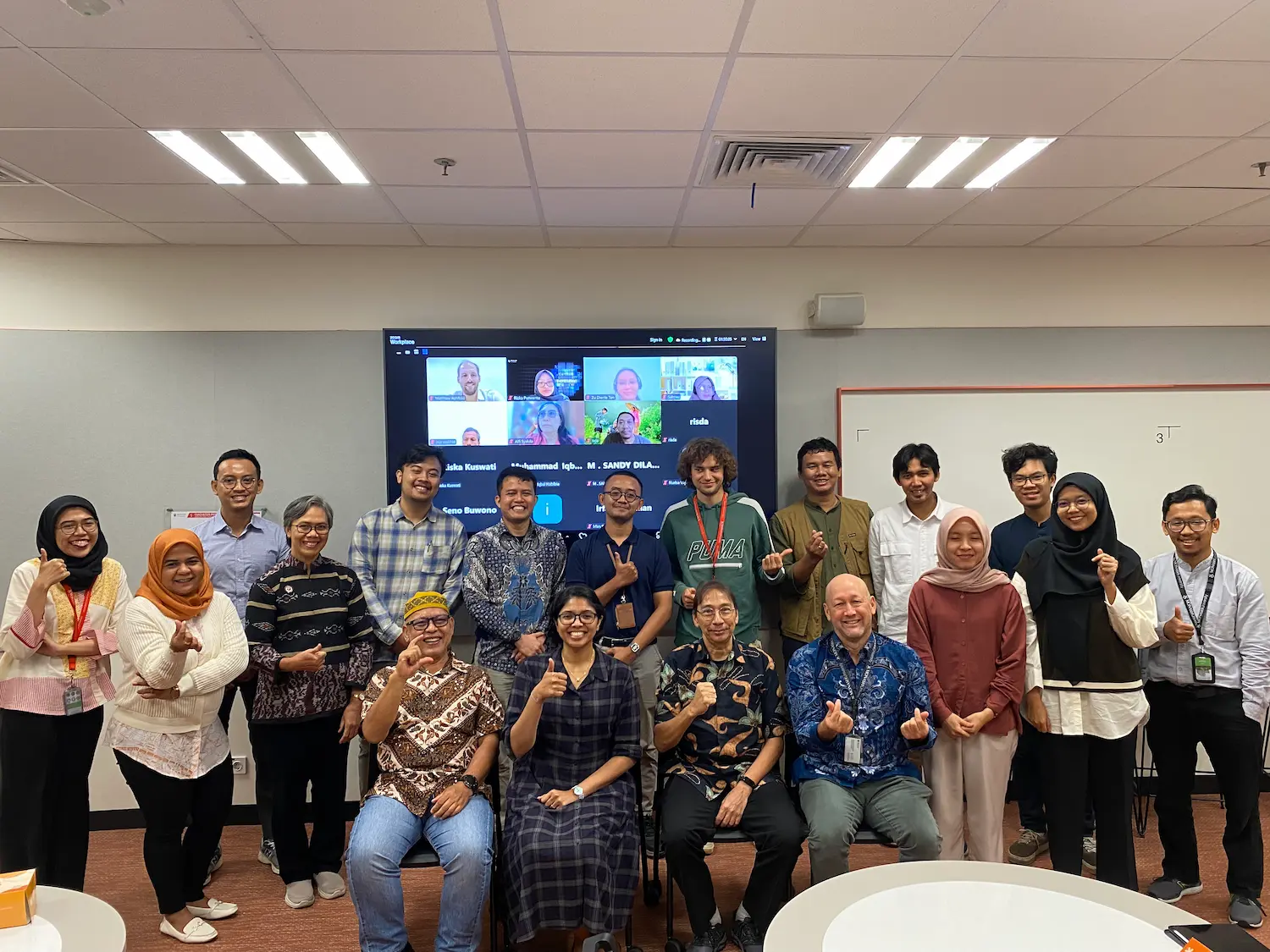 Seminar and Workshop Participants and Speakers taking group picture
South Tangerang - Monash University, Indonesia hosted a workshop on Mitigating Carbon Emissions and Haze in Southeast Asia’s Peatlands on August 7, 2024. This event is part of the ongoing research project "Policy and Governance Approaches to Cooperative Mitigation of Peatland Carbon Emissions and Transboundary Haze in Southeast Asia," funded by the Asia-Pacific Network for Global Change Research in collaboration with Universiti Malaya, University of Nottingham, Universitas Tanjungpura, and ISEAS-Yusof Ishak Institute.
The event featured a Hybrid Webinar with 16 in-person and 33 remote participants from government, NGOs, and early career researchers across Indonesia, Malaysia, and Singapore, followed by a Workshop attended by 12 in-person participants from Indonesian NGOs, government, and private sector, along with 6 remote attendees from Malaysian and Singaporean academic and government sectors.
As part of the project’s Knowledge Exchange Seminar series, the workshop aims to foster a community of practice among Early Career Researchers (ECRs) focused on haze and climate change issues across Southeast Asia. The event focused on mitigating carbon emissions and haze in Southeast Asia’s peatlands, addressing the opportunities and challenges in integrating policy and governance.
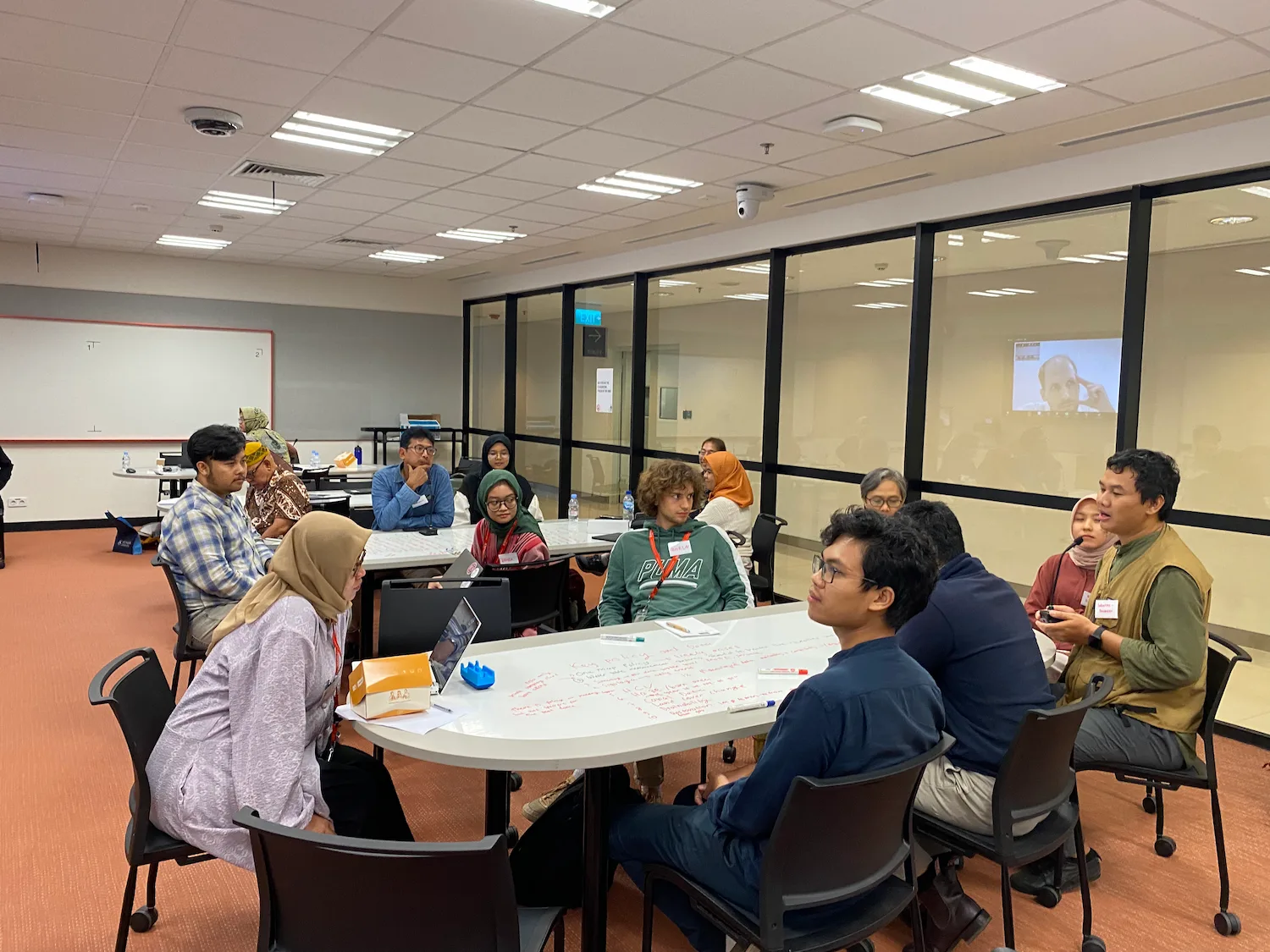 The participants having a group discussion
The seminar began with opening remarks from Dr. Helena Varkkey, Principal Investigator of the project, who outlined the project's objectives and its significance. Two distinguished speakers, Prof. Gusti Anshari, Professor in Soil Science at Universitas Tanjungpura, and Dr. Martua T. Sirait, from the Policy Support Program at Samdhana Institute, presented insights into the opportunities and challenges in integrating policy and governance to mitigate peatland carbon emissions. The discussions emphasized the human rights dimension, which can play a vital role in peatland management, alongside addressing the complex range of factors involved in solving peatland issues—from haze to mining—where multiple ministries and actors are engaged.
Following the seminar, a workshop on peatland carbon emission data and mapping was held. Representatives from NGOs such as WRI, CIFOR-ICRAF, GEC, Yayasan Konservasi Indonesia, Pantau Gambut, and Greenpeace Indonesia; universities like the National University of Singapore and Universiti Putra Malaysia; alongside government agencies including BRGM Indonesia (Peatland and Mangrove Agency), BRIN Indonesia (National Research and Innovation Agency), and MADI Malaysia (Malaysia Agriculture Research and Development Institute) as well as the private sector represented by Daemeter Consulting, participated. The participants collaborated to identify the main sources of uncertainty in peatland mapping and their impact, as well as the methodologies and challenges associated with peatland emission inventories. The ultimate aim is to develop a paper that captures key insights from practitioners and researchers working on peatland data in the region.