
‘Parachute science’ is failing the world’s tropical insects
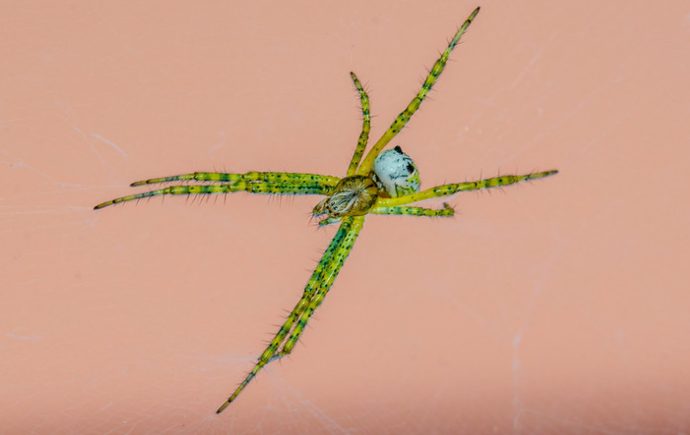
The Dome Tent spider (Cyrtophora moluccensis) Credit: Dr Shawan Chowdhury
Monash University scientists have developed a new global framework to tackle a major blind spot in biodiversity conservation: insects underpin ecosystems and food production but remain largely invisible to conservation efforts across the tropics.
The international study is led by Dr Shawan Chowdhury, head of the Global Change Ecology Lab at the School of Biological Sciences and published in BioScience. The study brings together tropical ecology experts from around the world to identify the major barriers preventing effective insect conservation and a practical pathway to overcome them.
Insects are the most diverse animal group on Earth, with an estimated 14 to 30 million species, most of which are still undocumented. They pollinate more than 80 per cent of wild plant species, provide food for 60 per cent of bird species, and perform essential roles in food webs, nutrient cycling and global food production.
Yet despite mounting evidence of insect declines, conservation knowledge is heavily skewed towards temperate regions, which contain only around 20 per cent of global insect diversity.
Dr Chowdhury said this meant conservation efforts risked overlooking the regions where the overwhelming majority of the world’s insect diversity is found.
“More than 80 per cent of insect species occur in the tropics, yet these are the very places where we have some of the biggest gaps in our knowledge,” Dr Chowdhury said.
“We cannot effectively conserve species if we don’t know what is there, where populations are changing, or even where important existing knowledge can be found,” he said.
“Insects are fundamental to functioning ecosystems and food production, but they remain dramatically underrepresented in biodiversity monitoring, protected areas and conservation policy.”
The researchers identified four major obstacles to tropical insect conservation: limited global visibility of existing research, major data shortfalls, inadequate research infrastructure, and insufficient conservation action.
Their framework proposes combining conventional scientific research with regional and non-English literature, museum collections, local expertise, citizen science, social media observations, and emerging technologies, while strengthening scientific capacity and ensuring that evidence reaches policymakers.
The scale of the information gap is striking. Nearly 26 per cent of insect distribution data held by the Global Biodiversity Information Facility comes from the United Kingdom alone, despite most of the insect diversity occurring in tropical regions.
The researchers say that international collaboration must also move away from “parachute science”, in which researchers from tropical countries and local communities are treated primarily as data sources rather than equal partners.
Instead, their framework calls for locally led research, investment in regional collections and scientific infrastructure, greater taxonomic expertise, long-term monitoring, equitable international partnerships and stronger links between researchers and decision-makers.
“If we want global biodiversity targets to mean something, tropical insects cannot remain an afterthought,” Dr Chowdhury said.
“The tropics hold most of the world’s insect diversity. Protecting that extraordinary diversity is not just an insect conservation issue, it is fundamental to ecosystems, food security and human wellbeing.”
The study, ‘A framework for the strategic conservation of tropical insects’, brings together researchers from Australia, Bangladesh, Uganda, Hong Kong, Brazil, Czech Republic, Italy and India.
Further information
Silvia Dropulich
Marketing, Media & Communications Manager, Monash Science
T: +61 3 9902 4513 M: +61 435 138 743
Email: silvia.dropulich@monash.edu