
Green Buildings Are Not a Luxury, They're a Necessity for Indonesia's Future
Written by Resinthia Rachmanda, Master of Urban Design cohort 2024
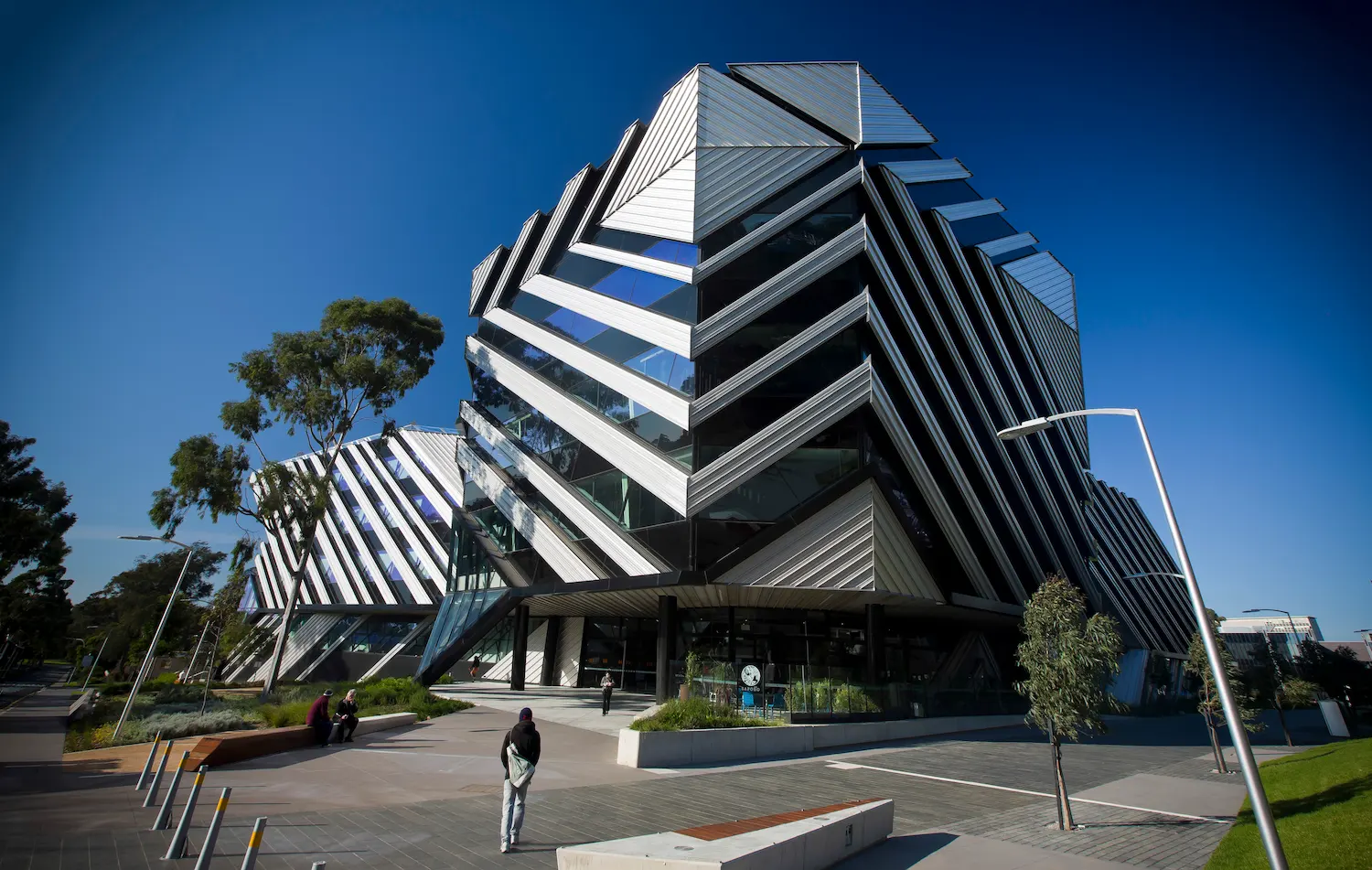
The New Horizons building at Clayton campus
Melbourne, Australia – As the impacts of climate change become increasingly undeniable, the world is turning its attention to how our built environment can both adapt to and mitigate its effects. From rising sea levels swallowing Pacific islands to earth temperature increases, the crisis is no longer a distant threat, it is a reality. If we fail to act, Indonesia could face the same fate.
In Indonesia, buildings contribute to 29% of total greenhouse gas (GHG) emissions. Yet as of 2024, only around 140 buildings in the country are green-certified. In comparison, Australia boasts over 5,600 certified green buildings. If Indonesia is serious about achieving its net-zero emissions target by 2060, a fundamental shift in how we design, construct, and regulate our buildings is urgently needed.
As a tropical country, Indonesia is already experiencing the consequences of climate change directly. Rising temperatures, between 1–2°C annually, have increased our reliance on unsustainable technologies such as air conditioning, which in turn contributes further to emissions. This vicious cycle is unsustainable. And while buildings are a large part of the problem, they can also be a significant part of the solution, if we choose to build them right.
Learning from Australia
Australia offers a practical example of how to mainstream sustainable building practices. Despite facing similar challenges, such as concerns over high upfront costs, Australia has made green building the norm, not the exception. This has been possible through a combination of clear policies, incentives, and institutional support.
Central to Australia's success is its strong certification framework. The Green Building Council of Australia (GBCA) administers the Green Star rating system, while the government mandates energy efficiency assessments through NABERS (National Australian Built Environment Rating System) for all government and CBD buildings.
Australia has also implemented a variety of incentive schemes to make green building more accessible. These include a 50% land tax reduction for built-to-rent residential buildings, tax deductions for businesses that invest in green assets, and grants of up to AUD 500,000 for commercial green buildings. Financial partnerships, such as green loans with reduced interest rates and environmental upgrade financing through the National Australia Bank, further support adoption.
The message is clear: sustainability in the built environment is not optional—it is embedded into the system.
Indonesia’s Lagging Progress
By contrast, Indonesia’s green building efforts remain mostly voluntary. Programs such as GREENSHIP, developed by the Green Building Council Indonesia (GBCI), are promising but not mandatory. It is not a standard yet. Public awareness remains low, and a widespread perception that green buildings are expensive continues to deter investment.
Dispelling the Cost Myth
One of the most persistent barriers to green building adoption in Indonesia is cost. There is a widespread belief that sustainable buildings are unaffordable and only suitable for high-end developments. However, this narrative is misleading. Research shows that while green buildings may increase upfront construction costs by as little as 0.4% to 13%, they can reduce annual maintenance and energy costs by up to 20%. Over the lifespan of a building, this results in significant savings—both financially and environmentally.
Smart Incentives for a Green Future
Indonesia has begun to make strides with regulations like PWPH Reg 21/2021 and OJK Reg 51/POJK.03/2017, which encourage financial institutions to integrate sustainability into their lending policies. However, more targeted incentives are needed—particularly for retrofitting existing buildings and promoting green construction for affordable housing.
Australia’s example shows how financial tools can be leveraged to support these goals. Tax incentives, concessional loans, and public-private financing mechanisms can lower the entry barrier for developers and homeowners alike. Indonesia should explore similar pathways, tailored to its unique social and economic context.
A Call to Action
To accelerate the green building movement in Indonesia, several key actions must be taken:
- Mandate green certifications for all new government buildings and public structures over 1,500 sqm, aligning with the average size of many office buildings in the country. The government should lead by example.
- Expand tax incentives for green-certified residential buildings to promote inclusivity and make sustainable housing accessible to all income levels.
- Empower universities and research institutions, such as Monash University, to lead collaborative research on green materials, financing models, and cost-effective construction strategies that can engage both public and private stakeholders.
- Raise public awareness through seminars, community outreach, and campaigns that address misconceptions around affordability, while highlighting the health, comfort, and financial benefits of sustainable living.
This is not about copying Australia wholesale. It’s about adapting proven strategies to fit our national context. Indonesia has a rich tradition of vernacular architecture that is inherently sustainable—from rumah panggung to joglo houses, which promote historical, cultural and climate adaptation.
The Road Ahead
Green buildings are not a luxury, they are an essential part of our response to climate change. Every building constructed today without sustainability in mind locks us into decades of inefficiency and escalating emissions. But each green building we construct represents a step toward resilience, economic security, and a healthier environment. Indonesia’s vision of reaching net-zero emissions by 2060 is within reach. But we cannot get there through business as usual. We must make green buildings the standard, not the exception.