
Mining Spatial Data Intelligence Research Hub Wins 'Most Visionary Research' at Virtual Academic Dialogue, Indonesia International Sustainability Forum (IISF) 2024
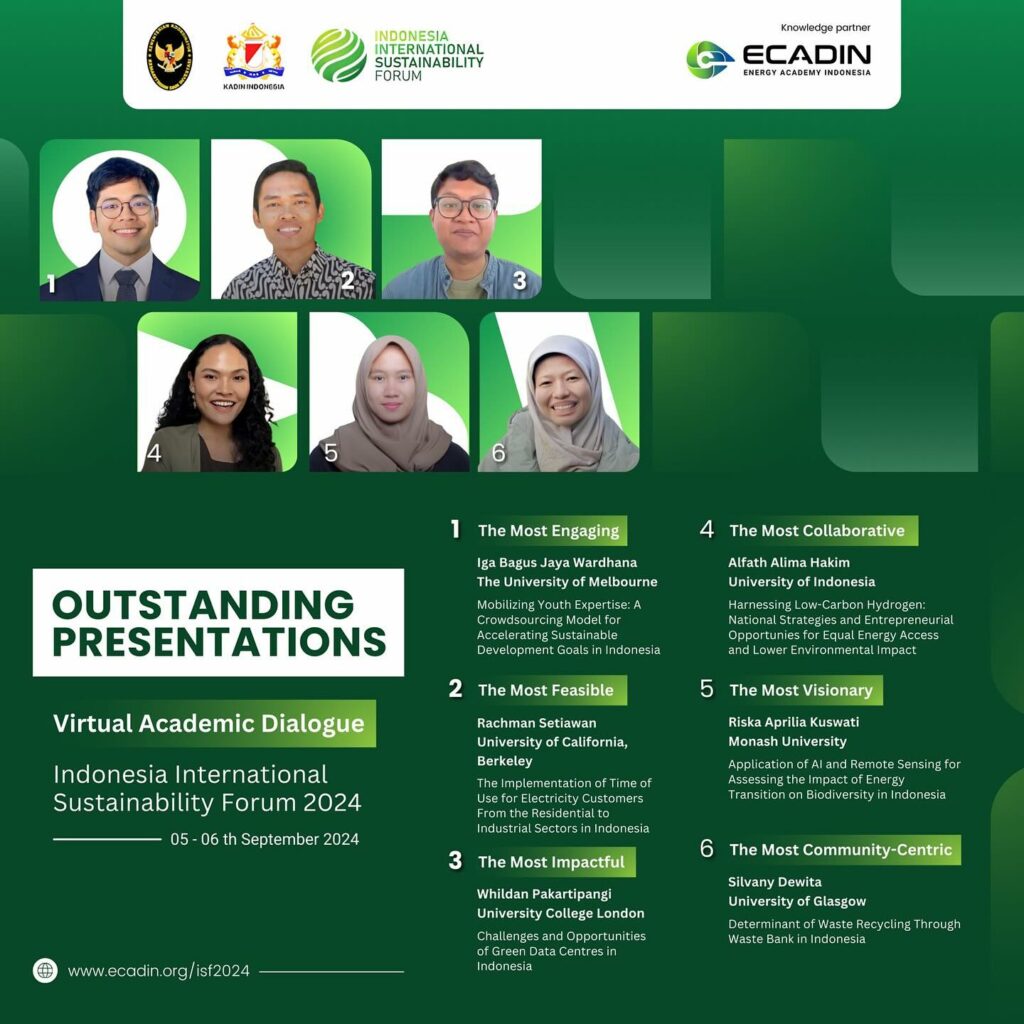
International Sustainability Forum (IISF) 2024 - Virtual Academic Dialogue
Jakarta – Monash University, Indonesia’s Mining Spatial Data Intelligence Research Hub has been awarded the 'Most Visionary Research' accolade at the Virtual Academic Dialogue at Indonesia’s International Sustainability Forum (IISF) 2024 on 5-6 September 2024. Organized by Energy Academy Indonesia (ECADIN) and the Coordinating Ministry for Maritime and Investment Affairs (CMMI), IISF 2024 stands as Indonesia's largest sustainability conference.
IISF 2024 featured a comprehensive agenda, including 10 plenary sessions, 15 thematic sessions, 1 Virtual Academic Dialogue, 1 Indonesia Investment Day, and 1 Youth Forum, all designed to address critical sustainability challenges. This year’s forum brought together stakeholders, world leaders, experts, and business people from around the globe. Over 11,000 participants from 53 countries attended, further solidifying its role as a key event in the global sustainability landscape, producing 14 Climate Action Memorandum of Understandings (MoUs).
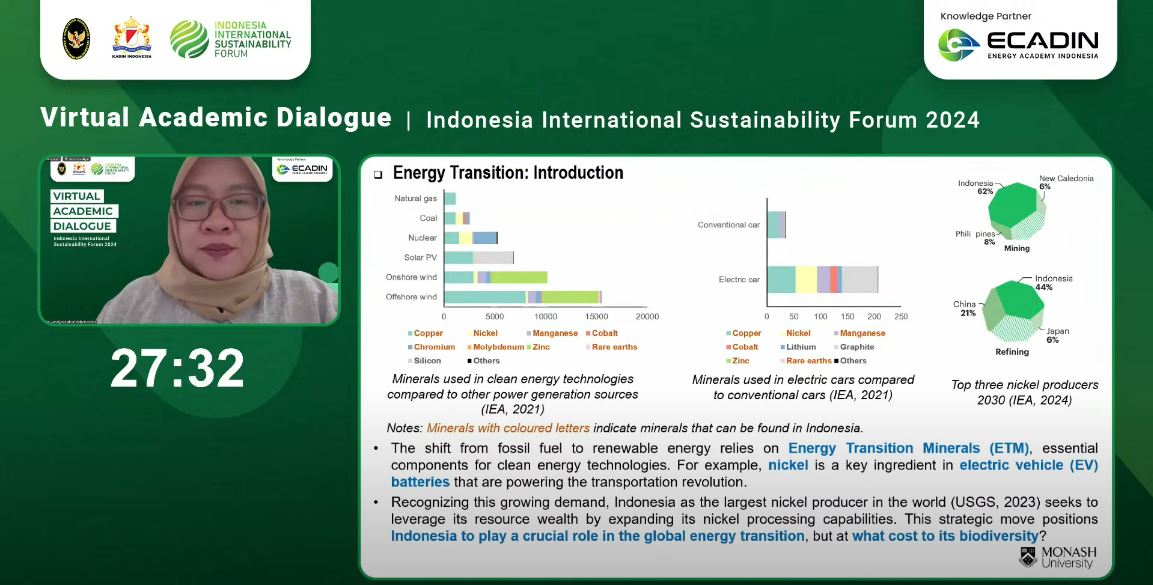
Riska Kuswati presenting her winning research at IISF 2024
The winning research, titled "Application of AI and Remote Sensing for Assessing the Impact of Energy Transition on Biodiversity in Indonesia", was presented on behalf of the team by two rising early-career researchers, Riska Kuswati, a GIS Analyst, and Vicky Feliren, a Data Scientist, at the Virtual Academic Dialogue session. This session, streamed live on CMMI’s YouTube channel, featured their outstanding presentation, which stood out among 27 selected participants, including students, academics, and professionals from 22 prestigious institutions worldwide..
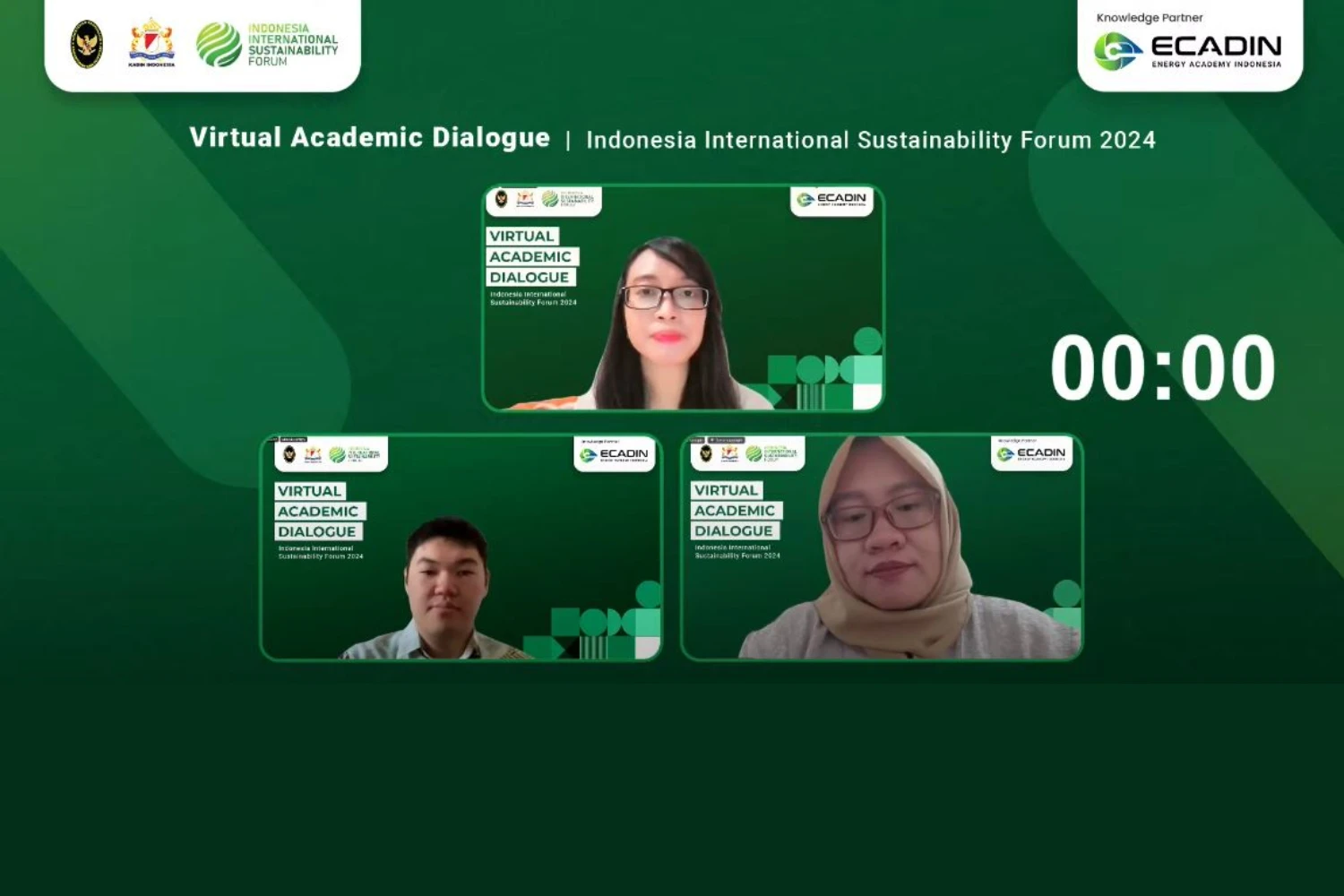
Riska Kuswati and Vicky Feliren on panel discussion at IISF 2024
The research investigates how artificial intelligence (AI) and remote sensing technologies can be used to track biodversity impacts of mining activities related to Indonesia's energy transition. By applying AI algorithms to satellite imagery, the project generates essential data on ecosystem effects, focusing on nickel mining in Indonesia. As the world's leading producer of nickel, a critical mineral vital to the global green energy transition, Indonesia plays a key role. The study’s findings offer valuable insights for policymakers to promote a sustainable energy transition.
Professor Alex Lechner, the project lead in Sustainability emphasized the significance of the research in advancing Indonesia's green energy objectives. "Our research focuses on developing evidence-based approaches that can help Indonesia ensure a just energy transition, balancing both environmental sustainability and societal well-being."
The recognition of this research at IISF 2024 underscores the potential of advanced technologies like AI and remote sensing in guiding sustainable development. The research demonstrates that AI can help automatically assess mining activities from visible mine extents at specific locations and times. The team highlighted that although the research focuses on Indonesia as a case study, it holds significant potential for global application in assessing the wider impacts of mining on achieving energy transitions and reaching net-zero goals. The many questions from the audience reflected interest in how this ongoing research could be implemented to support governments and affected communities.
Dr. Risqi Saputra, project lead in Data Science and AI, stated, "AI has a significant potential to characterise changes in mining landscapes over time automating the labour intensive process of identifying mining footprints using semantic segmentation applied to remote sensing imagery."
Monash University, Indonesia through The Mining Spatial Data Intelligence Research Hub continues to contribute to global sustainability efforts by pioneering innovative solutions that protect biodiversity while supporting the energy transition. The research hub is a joint initiative between the Centre for Social Responsibility in Mining (CSRM) at the University of Queensland, Australia and Monash University, Indonesia, supported by multiple funding sources including the Ford Foundation, University of Queensland, and Google. It has produced publications in high-impact journals related to examining social and environmental processes in resource development, with its portfolio available at https://www.monash.edu/indonesia/our-research/mining-ai-and-gis.