
Navigating the Digital Minefield: Insights from PowerTalk on Hate Speech Monitoring & Online Polarisation
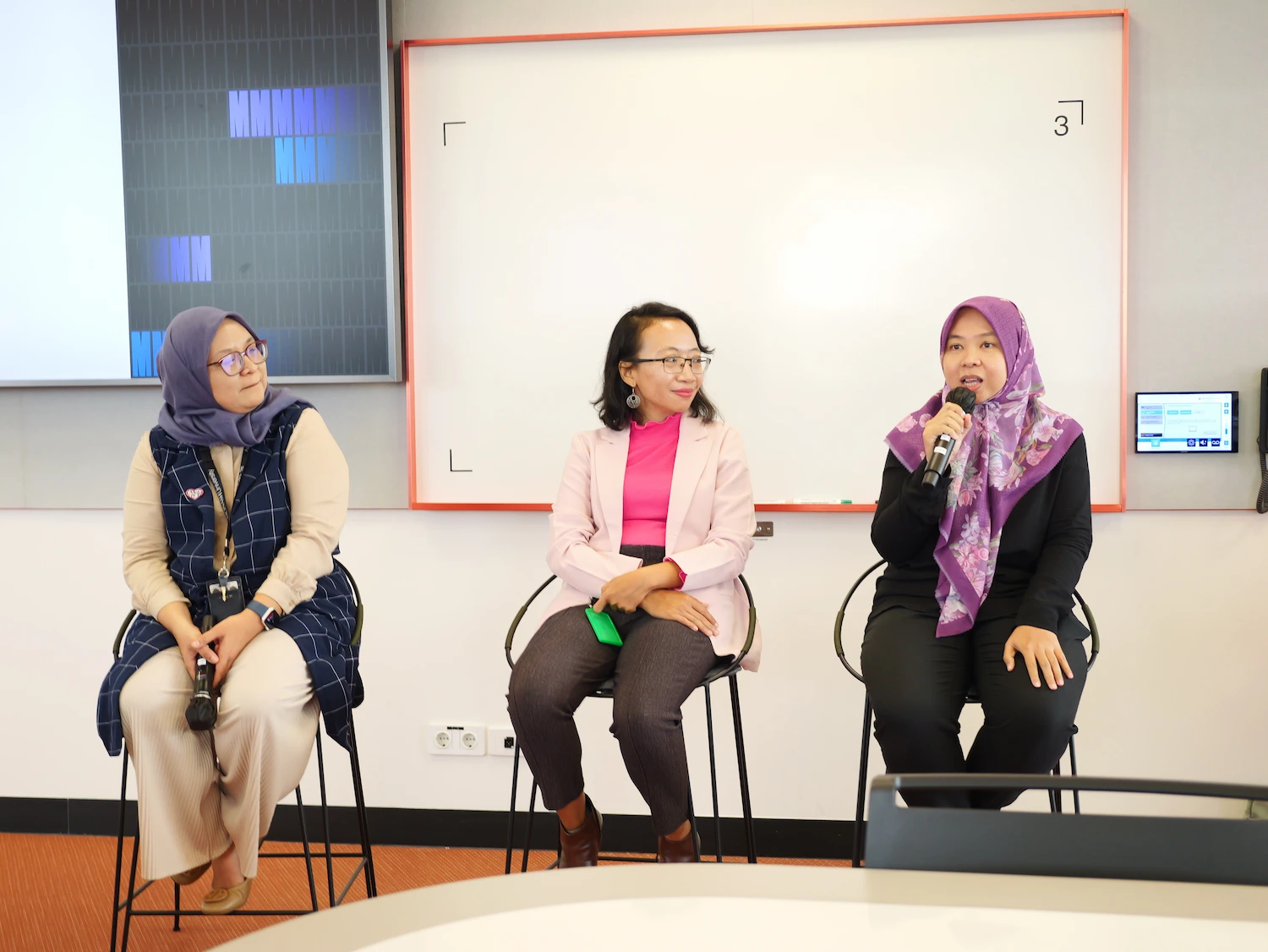
From left to right: Dr. Ika Idris, Co-Director MDDRH and Associate Professor of MPPM; Ika Ningtyas, Fact Checking Coordinator of Tempo and Former General Secretary of AJI; Dr. Derry Wijaya, Co-Director MDDRH and Associate Professor of MDS
In the wake of Indonesia's recent presidential election, social media platforms saw a 30% surge in hate speech incidents compared to the previous year, according to the Ministry of Communication and Information Technology. This alarming trend set the stage for a timely PowerTalk session held on August 10, focusing on "Hate Speech Monitoring & Online Polarisation."
The event featured a panel of experts: Ika Ningtyas, Fact Checking Coordinator at Tempo and former General Secretary of the Alliance of Independent Journalists (AJI); Dr. Ika Idris and Dr. Derry Wijaya, both academics from Monash Indonesia and co-directors of the Monash Data Democracy Research Hub.
Ika Ningtyas highlighted the challenges faced by media organisations in combating misinformation and hate speech, emphasising the importance of fact-checking mechanisms and journalistic integrity. Dr. Ika Idris explored the psychological aspects of online polarisation, explaining how echo chambers and filter bubbles amplify extreme views. Dr. Derry Wijaya brought a technical perspective, discussing advancements in natural language processing and machine learning for detecting hate speech online.
The session featured an engaging Q&A segment, where attendees interacted with the speakers. Aileen Velishya, a Data Science student, asked: "How can we ensure the authenticity and reliability of data retrieved from online sources?"
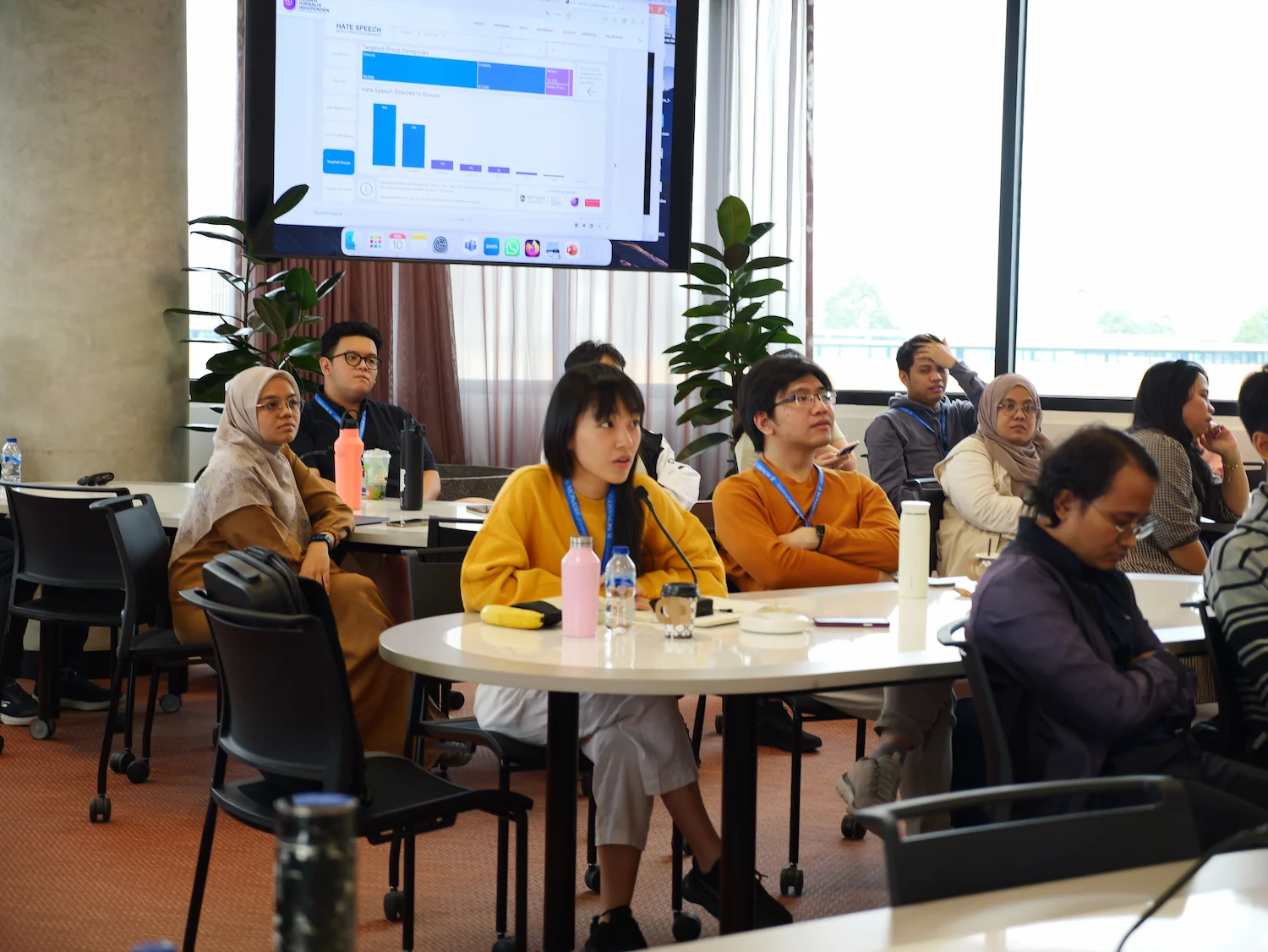 Student asking questions to the speakers
The speakers addressed Aileen's question comprehensively. Dr. Wijaya emphasised cross-referencing multiple reliable sources and using established data verification techniques. Ika Ningtyas highlighted the importance of source credibility assessment in journalism, while Dr. Idris added a social science perspective, discussing the role of peer review and academic rigour in validating online data for research.
The PowerTalk concluded with a call to action from all three speakers, emphasising the collective responsibility of tech companies, media organisations, academia, and individual users in creating a more informed and less polarised online environment. They agreed that while technological solutions are crucial, they must be complemented by education, critical thinking, and a commitment to ethical digital citizenship.
The impact of the session was evident in the enthusiastic response from attendees. Rahma Febrianti, a Master of Business Innovation student, shared her testimony: "It was very insightful. Even my friend, an MBI student, wants to take part in the research. The topic was interesting, and the speakers were very incredible. Overall, it was a blast! Thanks, Aufa and the team!"
Khoirunnisa Fatimah, a Data Science major, echoed this sentiment: "That's a really great session! I think that was the one that really inspires me so far. I think because the topic was relevant to what I am studying. The speakers also show their comprehensive knowledge on whatever they're doing. I hope there will be many more sessions like that in the next power talk."
These testimonials highlight the session's success in not only informing but also inspiring students across different disciplines. Khoirunnisa's comment, in particular, underscores the relevance of the topic to data science studies and the depth of expertise demonstrated by the speakers.
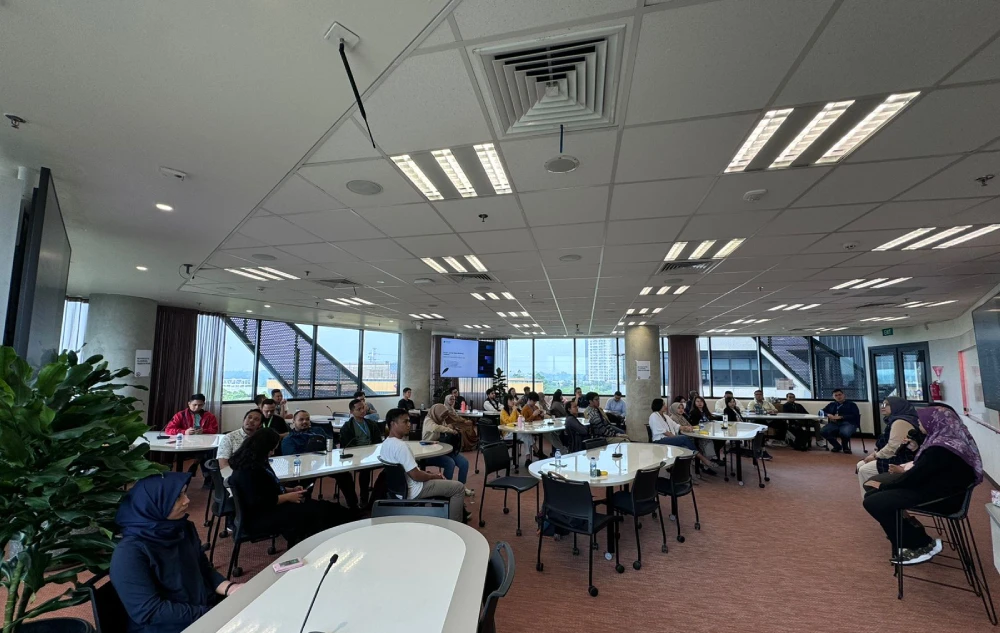 The students attending PowerTalk event on Saturday, 10 August 2024
PowerTalk's ability to bridge academic interests with real-world issues was evident in the students' responses. For data science students like Aileen and Khoirunnisa, the session provided valuable insights into the practical applications of their field in addressing critical social issues. Meanwhile, business students like Rahma found the interdisciplinary approach enlightening, showcasing the broad relevance of the topic across various academic and professional domains.
As attendees left the session, there was a palpable sense of empowerment and enthusiasm. The PowerTalk had not only shed light on the complex issues of hate speech and online polarisation but also provided practical insights and tools for navigating the digital landscape. The speakers' comprehensive knowledge and the relevance of the topic to various fields of study left a lasting impression on the students.
In an era where online interactions increasingly shape public discourse and democratic processes, such discussions prove invaluable in fostering a more informed and resilient digital society. The success of this PowerTalk, as evidenced by the positive feedback from students, underscores the importance of continuing such interdisciplinary conversations in academic settings.