
Dissemination event of Indonesia Economics Prospect December 2025 Edition by the World Bank
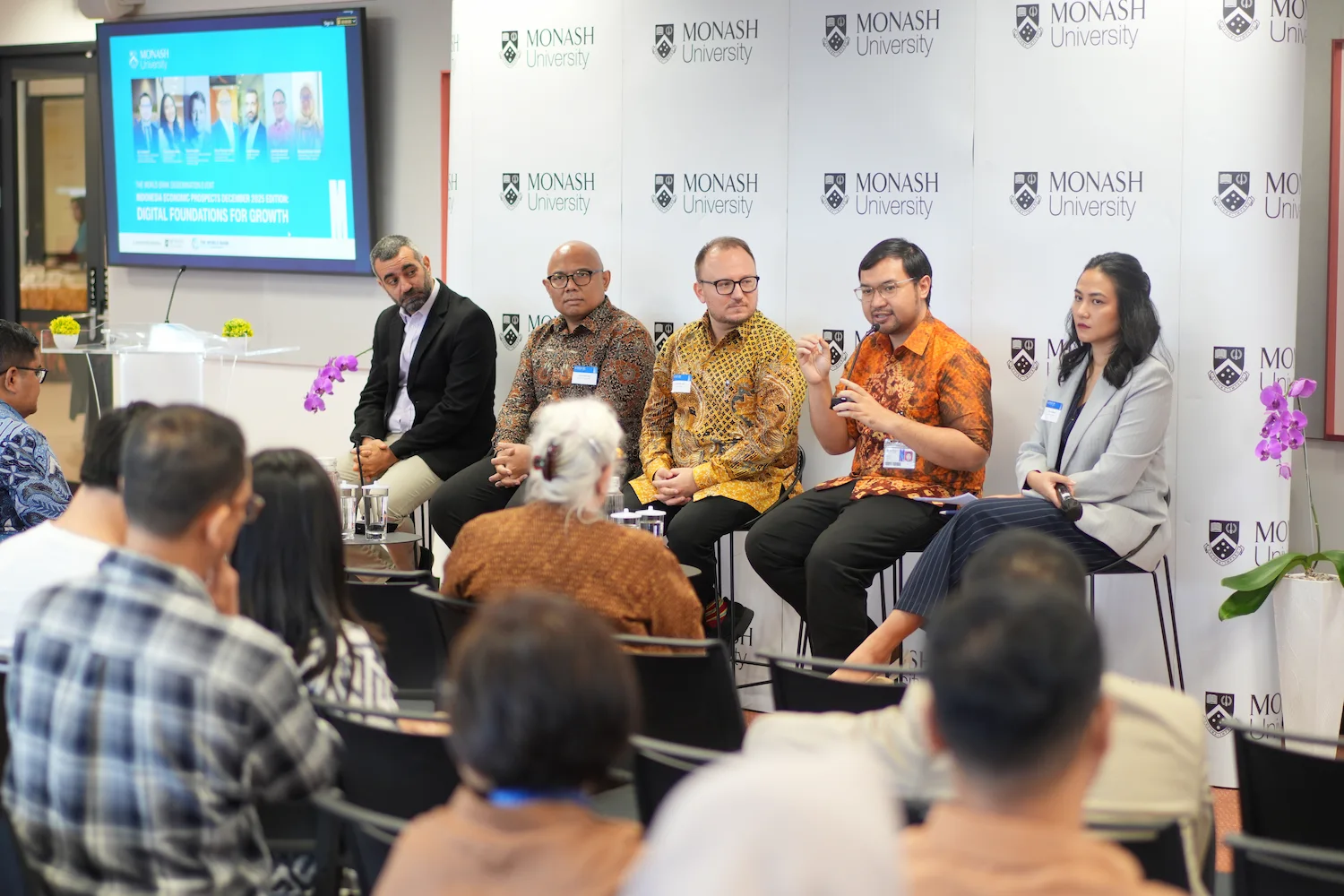 Panel discussion at World Bank Group's dissemination event
BSD City, Tangerang – Monash University, Indonesia proudly co-chaired the World Bank Group's dissemination event for their latest Indonesia Economic Prospects report — the December 2025 edition — centred on the theme of "Digital Foundations for Growth." The report surveys recent developments in the Indonesian economy and shines a spotlight on the state of digital infrastructure across the archipelago.
Nearly 80 students, staff, alumni, and research network members of Monash University, Indonesia filled the seminar rooms to near capacity — a powerful testament to the hunger for knowledge and meaningful discussion.
Why does this event matter?
The event opened with remarks by Wael Mansour, World Bank Indonesia and Timor Leste Senior Economist and co-chair of the event, who underscored the importance of forging a strong partnership between academic institutions — particularly Monash University, Indonesia's academics and students — and leading international development organisations such as the World Bank. Declan Ingham from Australian Department of Foreign Affairs and Trade (DFAT) warmly welcomed this campus visit initiative and affirmed that the report's theme captures the direction for the Australia-Indonesia economic and development partnership. Finally, Prof. Matthew Nicholson, Monash University, Indonesia's Pro Vice-Chancellor and President, officially opened the event by drawing attention to the urgent issue of digital disparity in Indonesia and the nation's readiness to embrace a digital future.
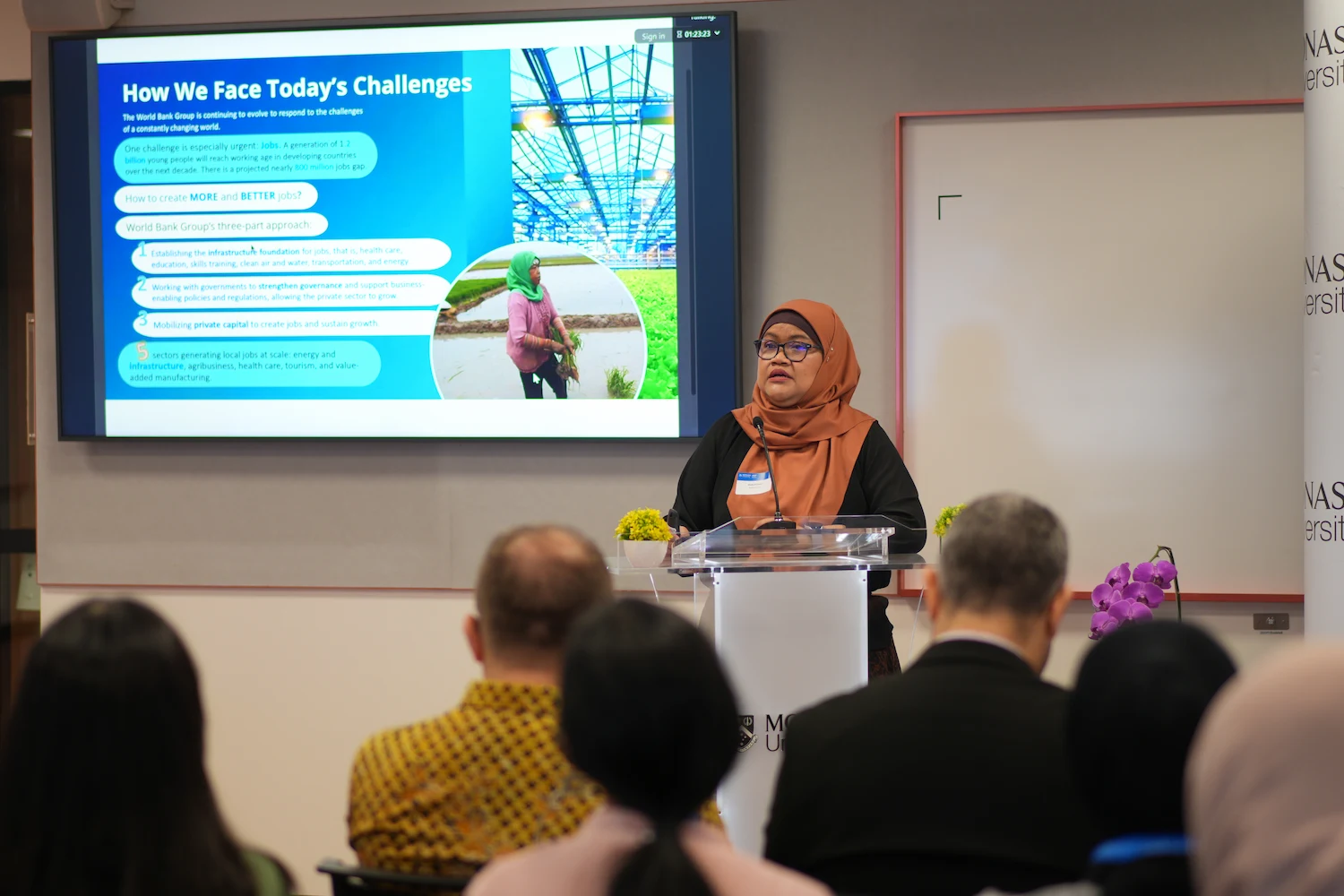 Maulyati Slamet presenting about the World Bank Group's mission before the report discussion
Before the report's dissemination began, Maulyati Slamet offered participants an illuminating introduction to the World Bank Group. Her talk revealed that the World Bank Group's mission extends far beyond providing loans — it actively delivers technical assistance, helping countries share and apply knowledge to tackle their most pressing development challenges. She also emphasised that the World Bank's current priorities go beyond eliminating poverty; they are equally committed to creating quality jobs. She warmly invited academics and students to stay connected with the World Bank's work through multiple platforms, including the highly regarded Young Professionals Program.
World Bank's assessment of Indonesia’s economy and digital readiness
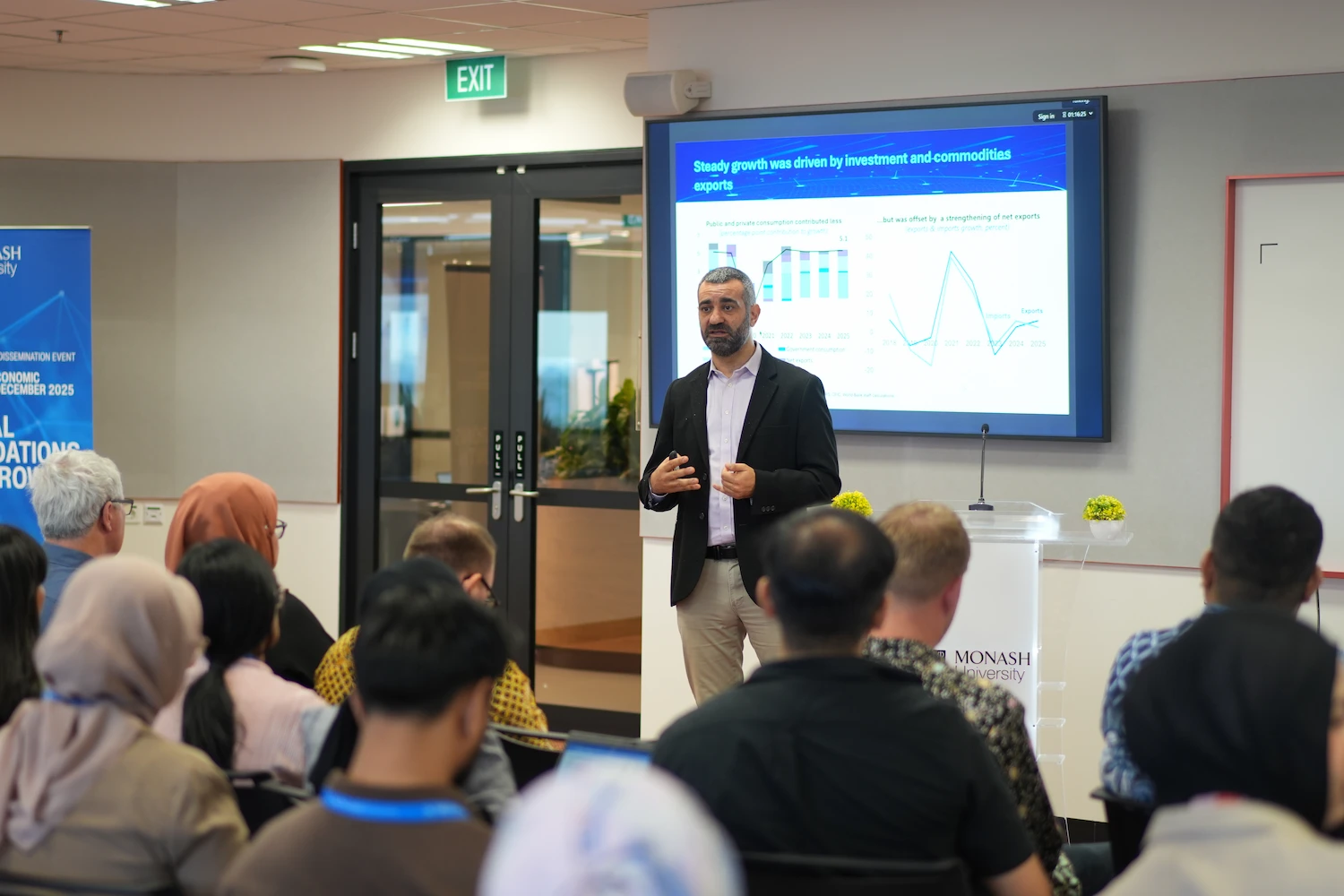
Wael Mansour presenting Indonesia economic 2025 report
Wael Mansour opened the substantive discussion by highlighting the remarkable resilience of the Indonesian economy amid global uncertainty. The economy grew robustly at 5.1% in Q4 2025, driven primarily by investment and commodities exports, while private and public consumption played a comparatively smaller role than in previous years. The report also illuminated a "hidden" yet deeply consequential issue: middle-class household insecurity, rooted in challenges around human capital development and job quality. Wael drew attention to shrinking real wage growth among skilled workers and a troubling scarcity of high-skilled job opportunities.
The report offers valuable and actionable policy insights. With the State playing an increasingly dominant role in driving economic activity, Wael issued a timely reminder: pro-business policies must not be neglected if Indonesia is to stimulate genuine demand for good jobs. Strengthening the Labour Market Information System is equally essential to ensure that potential opportunities do not go unfulfilled.
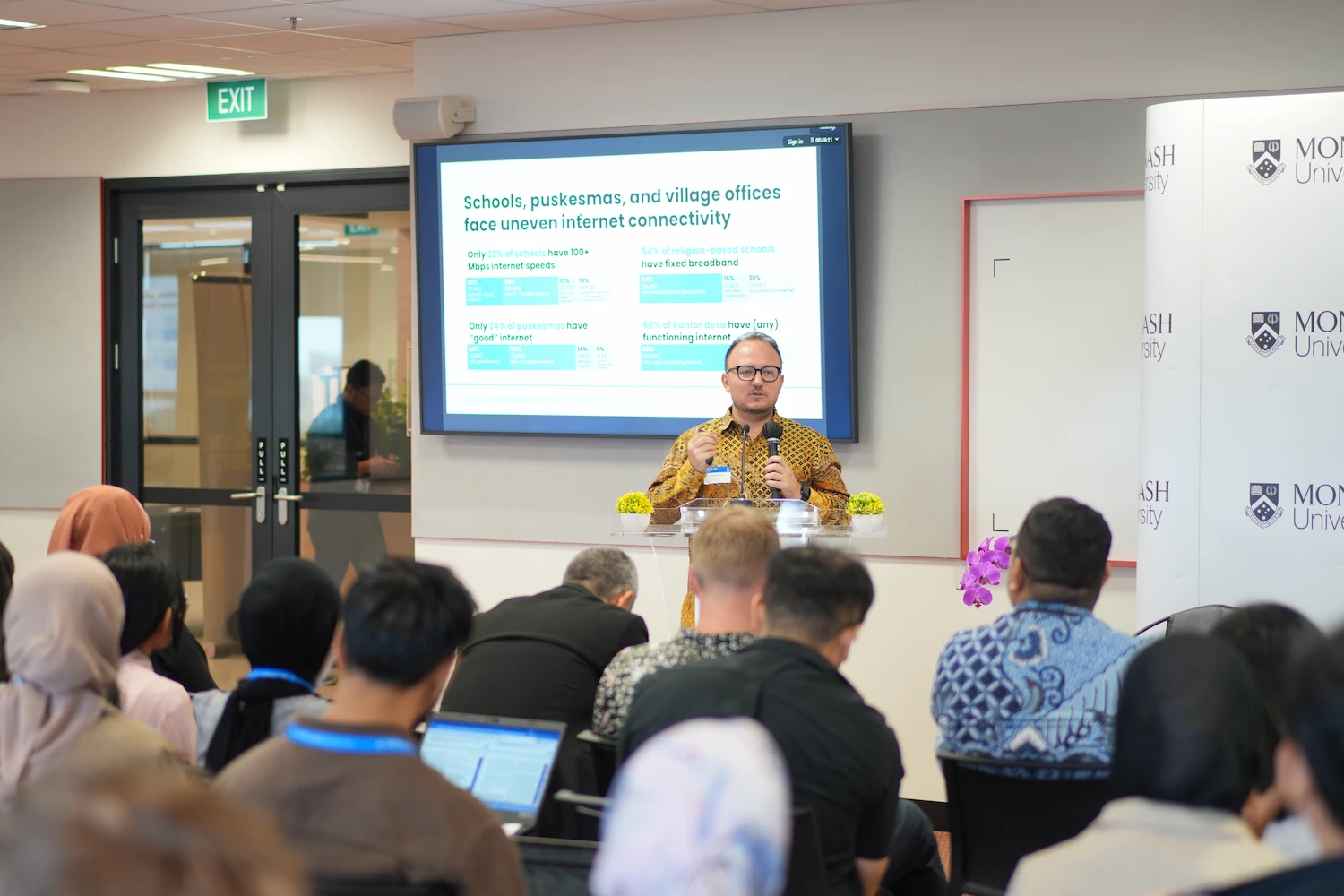
Jonathan Marskell presenting on digital foundations and infrastructure in Indonesia
In the second session on digital foundations, Jonathan Marskell opened with a sobering but important fact: digital divides in internet access remain stark across Indonesia. While 73% of the population is connected on average, some provinces — particularly in the Papua regions — report connectivity rates below 50%, or even as low as 10%. Furthermore, despite a decade of expansive cellular network rollout, internet speeds and fixed broadband adoption continue to lag behind neighbouring countries. Indonesia ranks at or near the bottom regionally in both mobile and fixed broadband speeds. Most critically, Jonathan highlighted the inadequate connectivity at public facilities — schools, puskesmas (community health centres), and village offices — where the need is arguably greatest.
He concluded by proposing several practical "policy tweaks" to address these gaps — including enabling private investment in network upgrades by lowering spectrum costs, and facilitating infrastructure sharing through fair, open access to wholesale fibre networks and passive infrastructure, including PLN poles.
Monash scholars perspectives
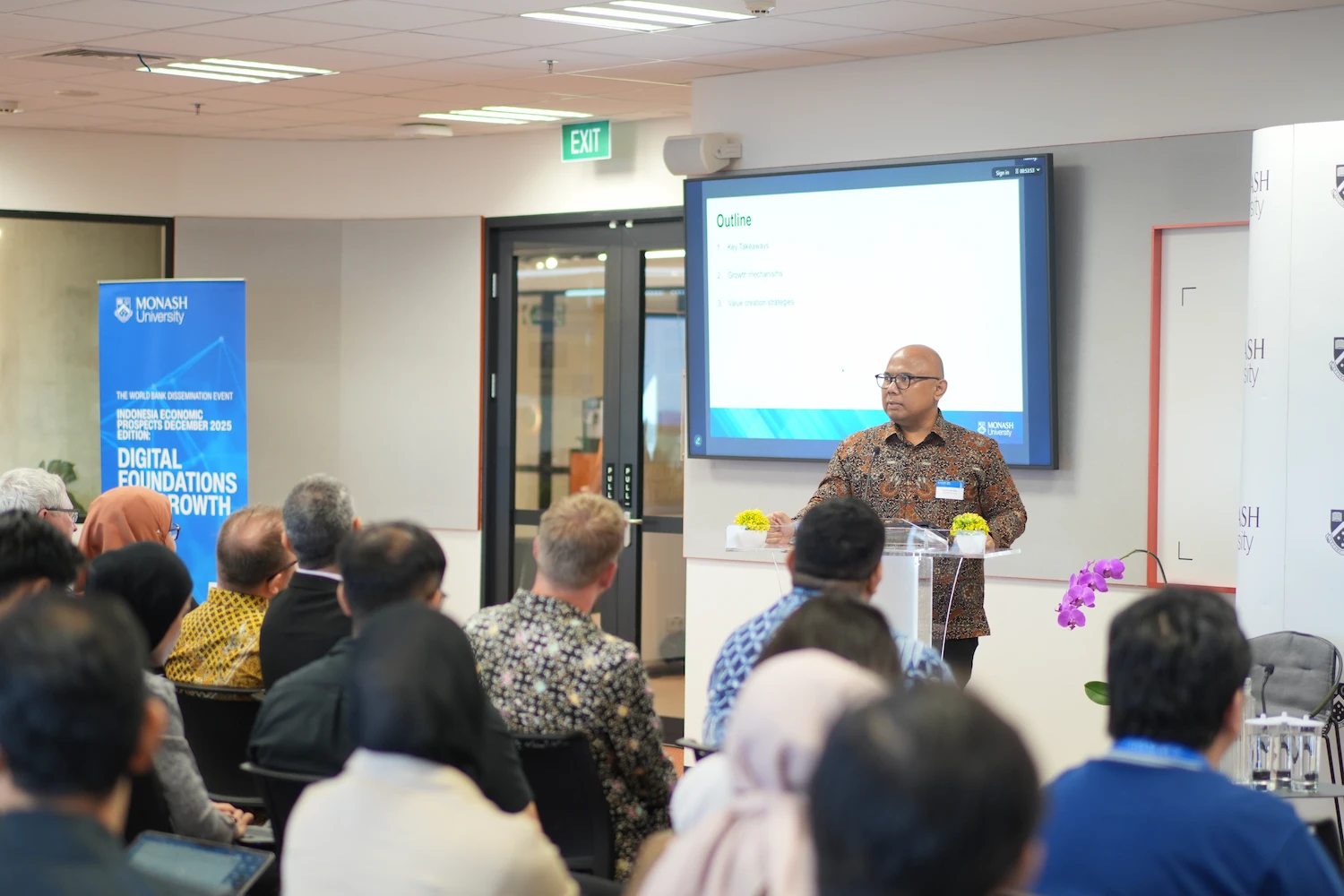 Dr. Yessy Perangin-Angin delivering his presentation providing compelling insights from private-sector perspective
Dr. Yessy Perangin-Angin, Vice President of Education and Associate Professor of Business Innovation, enriched the World Bank's economic diagnosis by offering a compelling private-sector perspective. He highlighted the pervasive sense of uncertainty that continues to erode investor confidence and dampen private investment. Indonesia's economy, while outwardly stable, does present real opportunities — particularly in government spending and downstream industries. Credit, however, remains selective, favouring proposals that promise clear returns and align with government priorities. His message to businesses was direct and actionable: do not wait for consumers to drive growth; focus instead on reducing costs wherever possible and seize the opportunities that already exist.
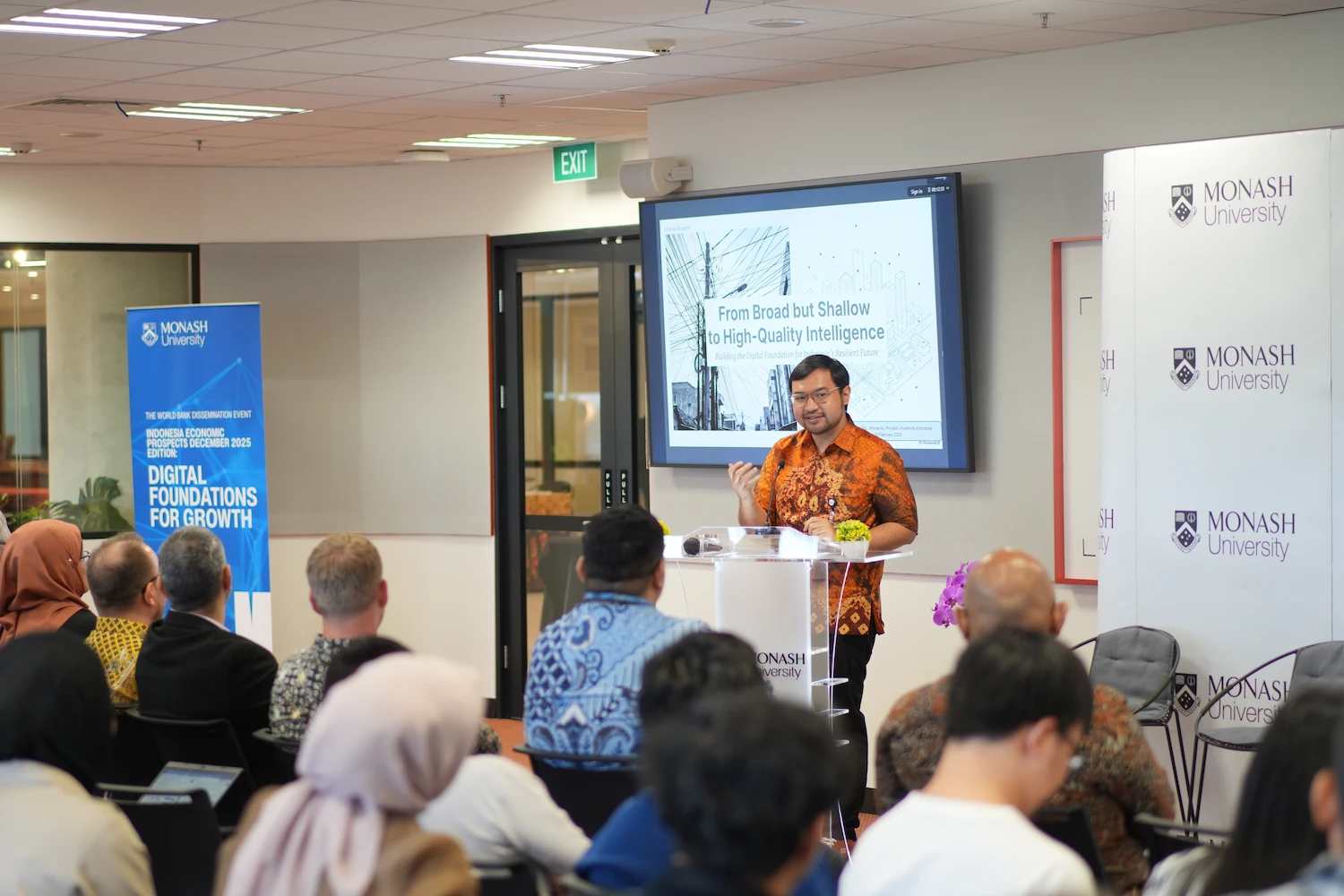 Dr. Erza Aminanto delivering his presentation adding insights from IT perspectives
In the following session, Dr. Erza Aminanto, Assistant Professor of Cybersecurity, expressed genuine appreciation for the report's Digital Foundations for Growth chapter. He affirmed that the World Bank has accurately diagnosed a critical truth: while Indonesia has achieved broad internet access, that connectivity remains too shallow and too slow to power a truly productive, high-value digital economy.
Dr. Erza made the point compellingly — resolving foundational infrastructure bottlenecks such as spectrum scarcity, broken middle-mile fibre connections, and insufficient sovereign data centre capacity is an absolute prerequisite for deploying next-generation urban management tools like Digital Twins. Ultimately, upgrading this critical "hardware" will unlock Indonesia's ability to run the advanced "software" needed to optimise flood resilience, decarbonisation, and waste circularity in megacities like Jakarta
Student engagement
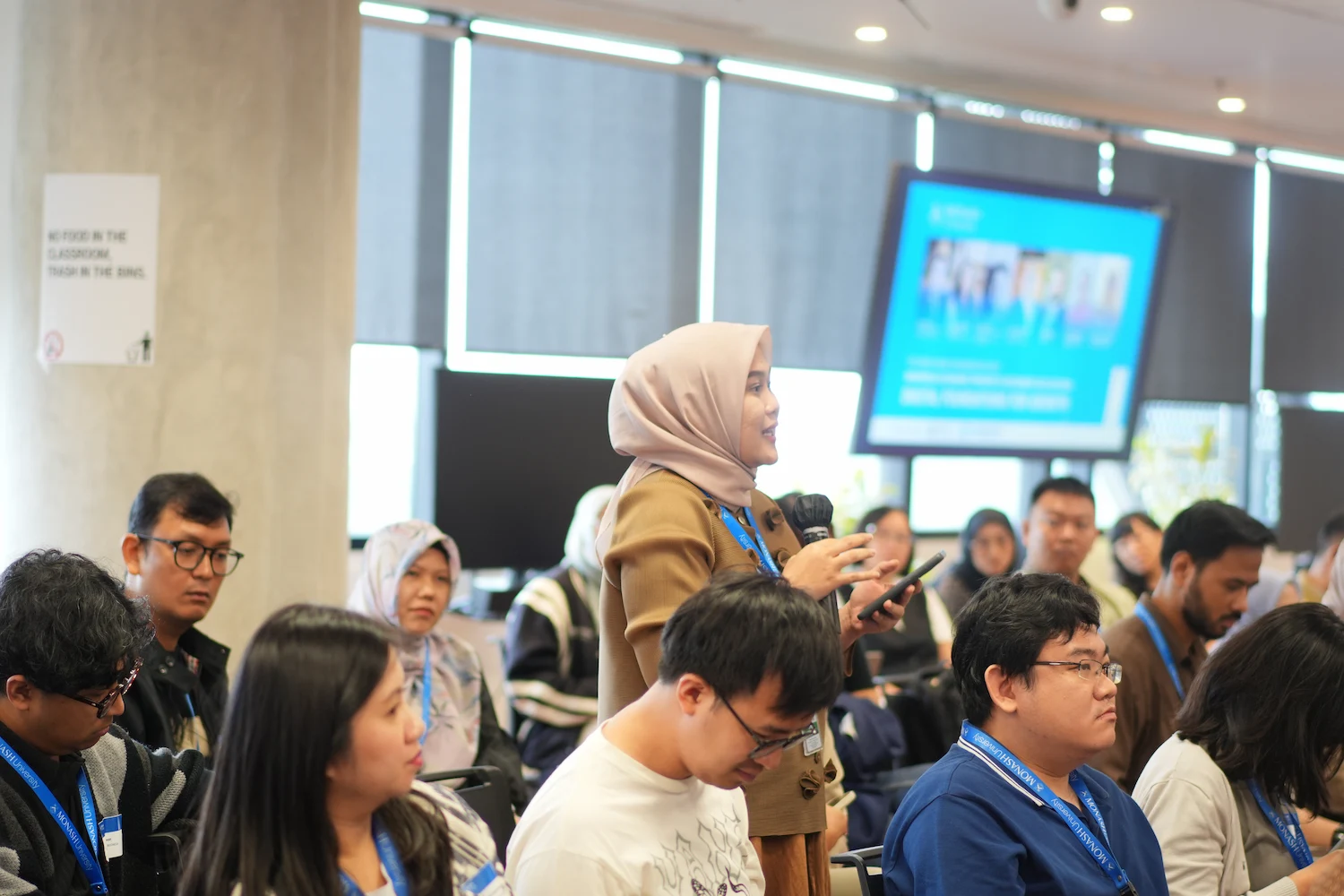 Students asking questions, making the dialogue more engaging
The Q&A session was lively and energised, thanks to the enthusiastic participation of Monash University, Indonesia's students. Several thought-provoking questions emerged. One student raised a deeply relevant concern: what should the next generation do to prepare for the future economy — and how, as students, they must prepare themselves for future-proof jobs? The conversation quickly expanded beyond economics, touching on the profound human dimension of digital infrastructure. One student, who is also a practising medical doctor, shared a heartfelt concern about the critical importance of internet connectivity at public health facilities and made a passionate case for advancing tele-health services across Indonesia.
The event concluded with a presentation of tokens of appreciation by Prof. Jane Jacobs (VP Research) to Wael and Declan Ingham. The mandatory group photo brought the formal proceedings to a close — but the conversations among participants continued well into a hearty lunch.
Fun fact
For some external attendees, it was their first visit to the BSD area. The Monash University, Indonesia BSD campus itself told part of the story. Situated within Indonesia's most ambitious digital economic zone, Monash University, Indonesia is not a bystander in this conversation — it is a participant. The contrast between BSD's gleaming infrastructure and the connectivity gaps that persist elsewhere across the archipelago is not a reason for pessimism. It is a call to act — with urgency, with purpose, and with the kind of evidence-based ambition that events like this help to build.