
Alyas Widita
Urban Design
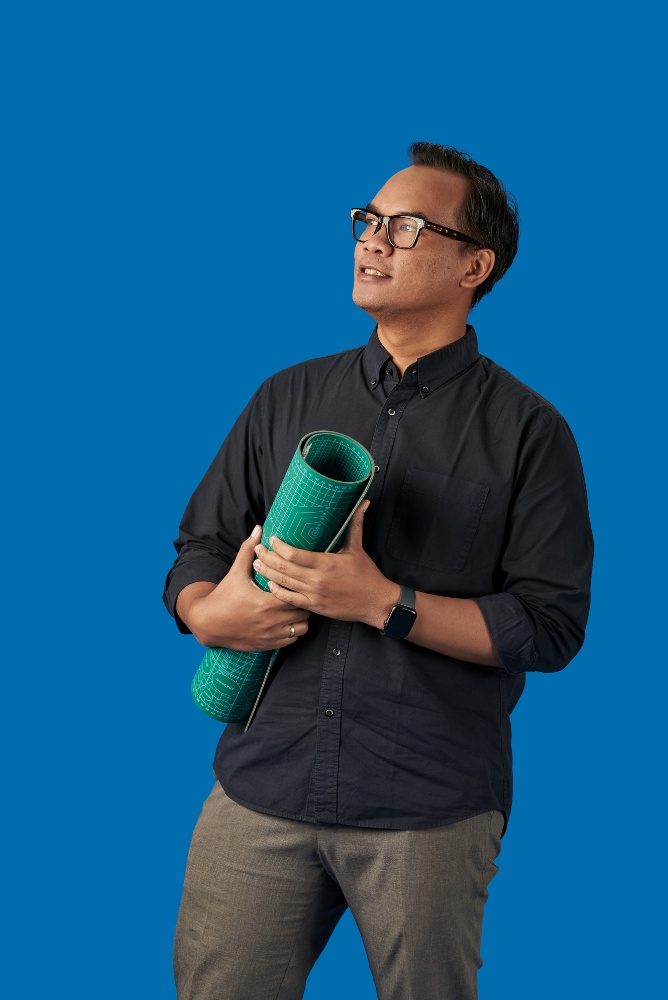
Bringing real urban challenges into the classroom
Alyas helps students apply data and design tools to real projects shaping the future of Indonesian cities.
What do you teach?
I teach in the areas of travel behaviour, transportation, urban analytics, and sustainable development. My units include Smart City Technologies, Urban Spatial Reasoning, and Urban Design Studio.
What qualifications or professional experiences are most central to your work as an academic?
I hold a PhD in City and Regional Planning from the Georgia Institute of Technology and have worked as an international consultant with the World Bank and the Korea Transport Institute (KOTI).
What are you doing differently in your field that you believe is driving real change?
I bring data and design together in the classroom. Students learn how to use real evidence - patterns, numbers, and spatial data - to shape creative design ideas. It helps them see that good urban design isn’t just about intuition; it’s about understanding how people move, live, and interact with the city.
The moment data clicks into design thinking is when students truly transform. ”
Tell us about a specific moment when you saw a student transform. What happened, and what role did you play?
I once worked with a student who felt overwhelmed by spatial data and couldn’t see how it connected to design. Through hands-on workshops, I showed them how to translate patterns in the data into design strategies. The moment it clicked, their whole approach shifted - they started using evidence to guide their ideas with confidence. Watching that change was incredibly rewarding.
What’s something about Monash University, Indonesia that would surprise people in a good way?
Many people are surprised by how closely we work with industry. Students don’t just learn about urban challenges, they work directly with government agencies, international organisations, and infrastructure partners on real projects that matter to Indonesia’s future. It’s a very forward‑looking environment.
What industry partnerships, research collaborations, or real-world projects are you/your students currently involved in?
Recently, my students collaborated with Moda Integrasi Transportasi Jabodetabek (MITJ) and the Indonesia–Australia Partnership for Infrastructure (KIAT) on a Transit‑Oriented Development project for Pasar Senen. They developed evidence‑based design strategies while working alongside transportation authorities and infrastructure experts. It’s the kind of experience that helps students see how their skills translate into real world impact.