
Harriman Saragih
Business Innovation
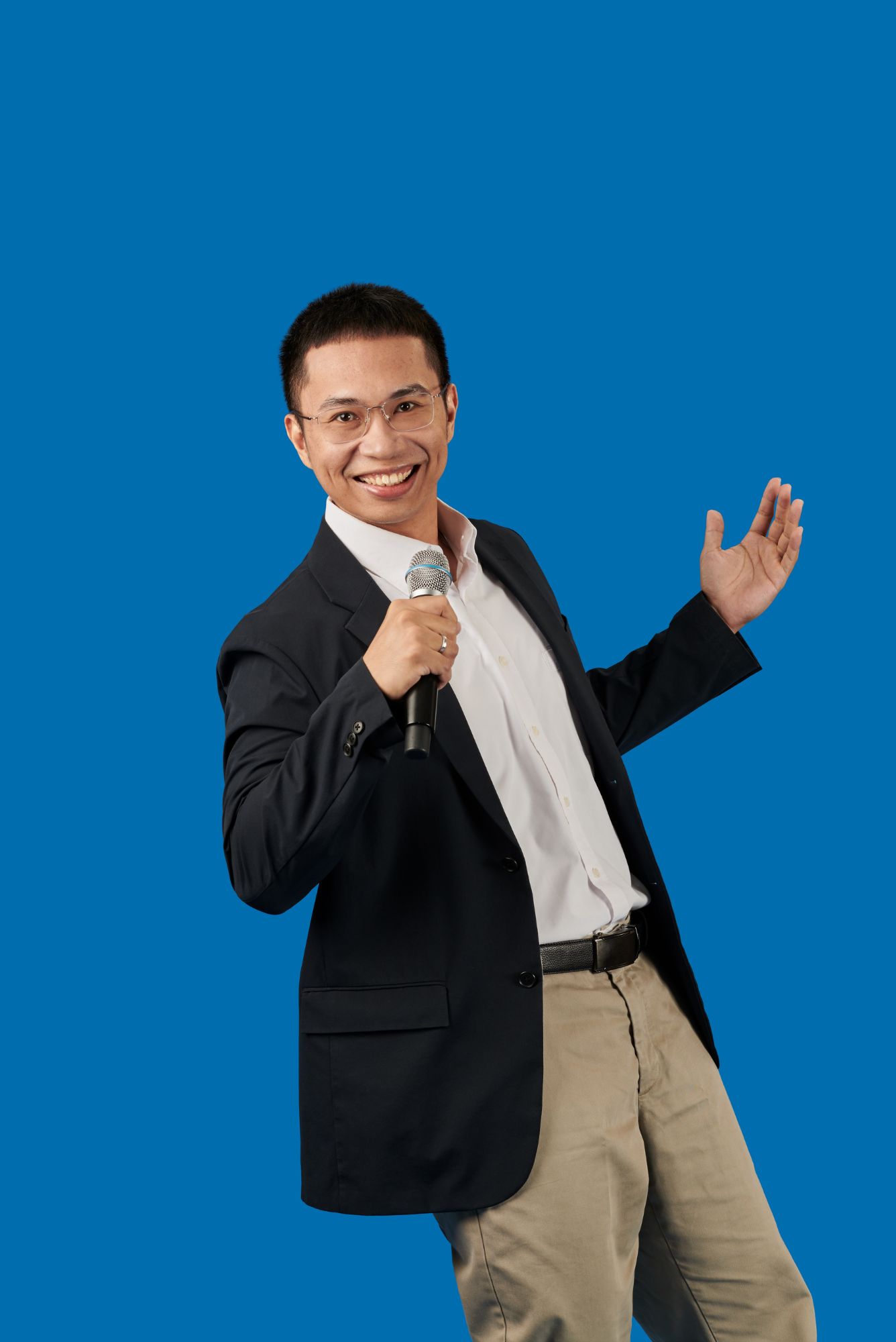
Building students' confidence in real-world decision-making
Harriman teaches students to think clearly, reason systematically, and apply marketing and design thinking principles to real organisational challenges.
What do you teach?
I teach Marketing, Design Thinking, and Creativity Management.
What qualifications or professional experiences are most central to your work as an academic?
I'm proud to have built an academic profile where my teaching, research, and service complement one another. I am a Fellow of the Higher Education Academy (UK) and a Fulbright Scholar at Cornell University. My journey has further developed my expertise in executive education and data-driven decision-making, including completing a specialization in Applied Data Science from Columbia University and earning certification as a Design Thinking Practitioner from IBM.
In the classroom, I help students develop structured decision-making skills. In my research, I study how these capabilities emerge and matter in real organisations. Through service, I translate these insights into programs that benefit the wider academic and professional community. This alignment keeps my work relevant, impactful, and grounded in practice.
I work with students to develop them into confident pracademics — people who can bridge theory and practice. ”
What are you doing differently in your field that you believe is driving real change?
I work with students to develop them into confident pracademics - people who can bridge theory and practice. I treat students as partners in decisionmaking. We focus on clarity of thought, disciplined reasoning, and the ability to argue systematically. Students learn to break down complex situations, identify what truly matters, and make defensible choices. This prepares them not just for academic success, but for leadership in real organisations.
Tell us about a specific moment when you saw a student transform. What happened, and what role did you play?
A memorable moment was when a student told me how concepts from class had directly shaped decisions in their professional role and personal life. That recognition of relevance shifted their engagement - from tentative participation to confident, sustained contribution. By designing learning activities that emphasised real‑world application, I helped the student see their own reasoning as meaningful and impactful.
What's something about Monash University, Indonesia that would surprise people in a good way?
People are often surprised by how intellectually stimulating and globally connected our classrooms are. Students experience an academic culture from a globally ranked university, while grounding their learning in Indonesian and regional realities. It creates an environment that is both world‑class and deeply relevant.
What industry partnerships, research collaborations, or real‑world projects are you and your students currently involved in?
My students regularly engage with real organisational challenges drawn from industry partners and executive education contexts, requiring them to analyse concrete problems, work with practitioner perspectives, and generate solutions that matter beyond the classroom, leading them to graduate with strong academic foundations and proven experience applying their thinking to real‑world situations. Their applied projects extend across the region where Monash University, Indonesia is located, including collaborations with fishermen in the Karanganyar area to examine livelihood constraints and supply‑chain vulnerabilities, engagements with Deaf baristas to investigate how physical‑digital technologies can facilitate inclusive service design, and partnerships with waste workers in local market areas to identify pathways for improving occupational wellbeing and recognition. In my executive education programs, participants further this applied orientation by launching real businesses that enhance wellbeing and healthcare access in remote communities, ensuring that managerial learning remains anchored in responsible, context‑sensitive impact.
What's one thing you're working on right now that doesn't fit the traditional "academic" mould?
I’m creating new teaching materials that move away from traditional theory‑heavy coursework and focus instead on what students will actually face in real organisations. Rather than working through abstract cases, students tackle realistic scenarios that require clear judgment, structured reasoning, and accountability. They learn to turn theory into practical recommendations, and we build that learning together rather than me simply delivering it. The aim is to prepare students to make thoughtful, responsible decisions in both their professional and personal lives - not just to pass an assessment.
What advice would you give a student who hopes to build a similar career or level of expertise?
Don’t focus solely on collecting credentials, instead focus on learning how to think clearly and systematically. Seek experiences that stretch your judgment, not just your knowledge, and take feedback seriously. Stay humble; deep expertise in one area often reveals how much there is still to learn in others. Over time, consistency and discipline matter far more than speed or shortcuts.