
Sarah Gultom
Business Innovation
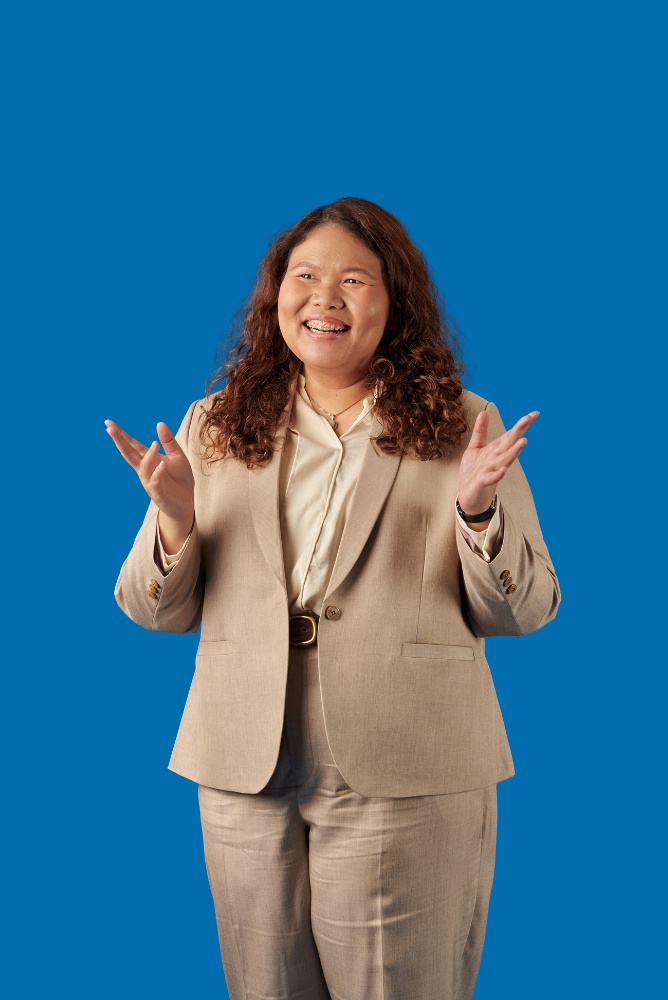
Helping students rethink development through empathy, evidence, and innovation
Sarah teaches students to understand real‑world problems from the ground up and design solutions that genuinely improve people's lives.
What do you teach?
I teach across development economics, business economics, social innovation, and business innovation. My current units include Regulation, Prices, and Markets, and Poverty, Inequality, and Opportunity.
What qualifications or professional experiences are most central to your work as an academic?
I hold a PhD in Economics focused on multidimensional poverty measurement in Indonesia. Before academia, I co‑founded a not‑for‑profit organisation running social programs in North Sumatra. These experiences shaped how I approach development problems by always starting with people's lived realities.
What are you doing differently in your field that you believe is driving real change?
I start by listening to people directly affected by the problem. Instead of assuming what communities need, I map their real challenges first, then design solutions that fit their context.
My current research focuses on improving farmer welfare which is a complex issue shaped by markets, infrastructure, and long‑standing structural barriers. It’s difficult work, but it matters deeply, and grounded, bottom‑up approaches are far more likely to create lasting change.
Development starts with understanding lived realities — not with ready‑made answers. ”
Tell us about a specific moment when you saw a student transform. What happened, and what role did you play?
My students are experienced professionals, so I ask them to "empty their cup" and rebuild their understanding of economics, social issues, and innovation.
The transformation shows when they design real social‑innovation projects. A team created AI‑assisted tools to help cafés communicate with deaf workers. Another taught fishermen in Banten new crab‑cultivation techniques. Others built sustainable business models for smallholder farmers.
Seeing them shift from familiar business thinking to people‑centred problem‑solving is the most rewarding part of teaching.
What's something about Monash University, Indonesia that would surprise people in a good way?
Monash University, Indonesia was built with a genuine commitment to Indonesia’s development, and that spirit is alive in everything we do. Whether in the classroom or in the field, academics and students work alongside communities, not from a distance.
What industry partnerships, research collaborations, or real‑world projects are you and your students currently involved in?
I'm collaborating with farming communities and local universities on research into farmer welfare. Previously, I worked with a fintech company on financial-inclusion research.
My students also work directly with communities. Their recent projects include expanding the capabilities of early childhood teachers in local daycares and providing a safe logistics service for milk banks to deliver to nursing mothers and infants in need. Every project is grounded in real needs, not assumptions.
What's one thing you're working on right now that doesn't fit the traditional "academic" mould?
I'm challenging top‑down development approaches by showing how bottom‑up, community‑driven problem identification leads to better solutions. It’s research, but it’s also advocacy and systems change.
If you had to explain your research’s impact and/or teaching philosophy to a prospective student's parents over coffee, what would you say?
My research aims to produce practical, evidence‑based solutions to real development problems. My teaching has one core message: you can always be a better leader, but never forget to be a good person.
What achievement or milestone are you most proud of, and why?
I'm proudest when people use what they’ve learned from my classes or research to solve real problems. Watching students surpass me by achieving more, leading more, and creating a bigger impact, is the greatest achievement of all.
What advice would you give a student who hopes to build a similar career or level of expertise?
Stay close to the communities you want to serve, work on difficult, long‑term problems, and aim for academic rigor with real‑world impact.