
Stephen Cairns
Urban Design
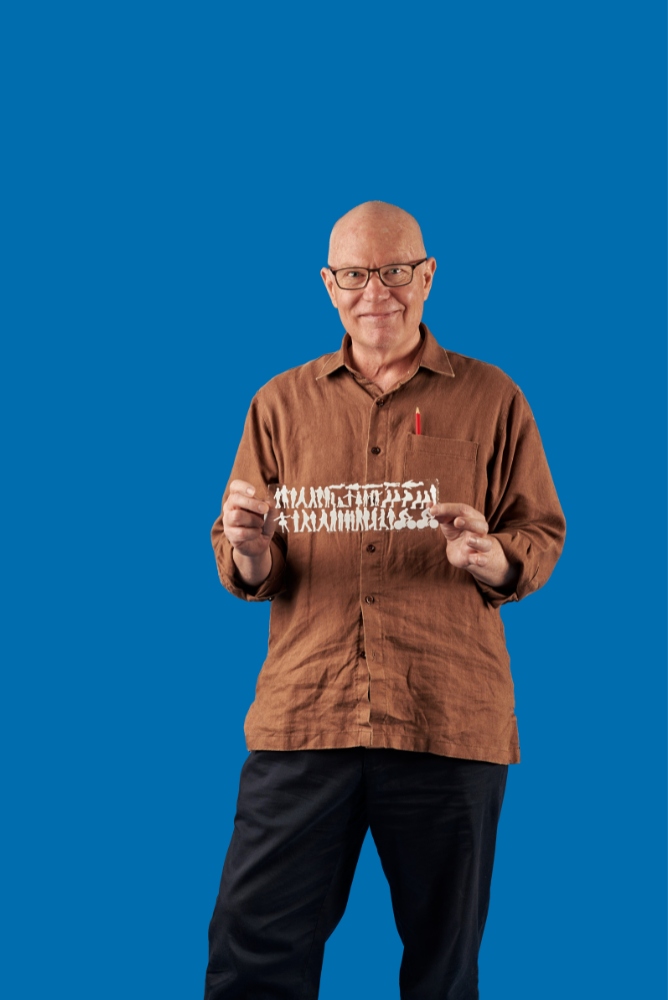
Teaching students to design cities fit for a better future
Stephen and his students work directly with communities, developers, and government, mapping, drawing and creating real‑world urban design across places, systems and scales.
What do you teach?
Urban Design
What qualifications or professional experiences are most central to your work as an academic?
Directorship of Future Cities Lab (FCL), ETH Zurich's flagship research centre in Singapore; leading technical assistance projects on using spatial data for urban and regional design with Asian Development Bank in India and Indonesia; and designing the Expandable House pilot project in Batam Indonesia.
What are you doing differently in your field that you believe is driving real change?
Asia is urbanising at an unprecedented scale, and Indonesia is at the centre of it. Instead of treating urban design as a drawing exercise, we teach it as implementation.
Our approach, called UD×, connects design with ecology, infrastructure, policy, and community needs. Students work on real sites across Jakarta and Indonesia, learning to design neighbourhoods and regions that are resilient, inclusive, and climate‑ready. UD× is about creating, connecting, and catalysing — not just imagining.
That’s when they stop seeing themselves as students and start seeing themselves as citymakers. ”
Tell us about a specific moment when you saw a student transform?
The shift happens when students leave the studio and work directly with communities and developers. When they build full‑scale mock‑ups, test ideas on site, and see residents respond to their designs, they realise urban design is about systems, negotiation, and responsibility.
My role is to create that bridge by helping them move from theory to real‑world impact. That's when they stop seeing themselves as students and start seeing themselves as citymakers.
What’s something about Monash University, Indonesia that would surprise people in a good way?
Students are learning inside one of the world’s most dynamic urban transitions, Jakarta, and the new capital, Nusantara.
Our "classroom" includes government agencies, major developers, and local communities. Students design everything from inclusive neighbourhoods to regional systems that connect urban and rural economies. It is urban design at the frontline of change.
What industry partnerships or real‑world projects are you and your students involved in?
We're working with Kampung Lengkong Kyai and Sinar Mas Land to bridge community aspirations with large‑scale development.
We're also designing an agropolitan seed town in peri‑urban Jakarta, integrating farming, ecology, and new settlement systems.
These are live projects with real timelines, not hypothetical exercises.
What's one thing you're working on right now that doesn’t fit the traditional academic mould?
We build at full scale. Sometimes permanent structures, sometimes temporary 1:1 mock‑ups to test ideas before construction. Our expandable house in Batam, still lived in today , generates half its own energy, captures most of its water, and manages its own waste.
In UD×, thinking and building happen together.
How would you explain your research impact or teaching philosophy to a student's parents?
We teach students to move beyond diagnosing problems like climate change or sinking cities. They learn to design whole settlement systems including neighbourhoods, towns, and regions that integrate water, energy, mobility, and food. Urban design becomes the bridge between disciplines, making cities not just beautiful, but viable.
What achievement are you most proud of, and why?
The expandable house in Batam. It proved that sustainable design doesn’t have to stay theoretical but that it can be built, tested, and lived in. It embodies UD×: scaling ideas from prototype to system.
What advice would you give a student who hopes to build a similar career?
Asia’s future cities won’t be designed in silos. If you want to help shape where one billion people will live, this is the place to start.