
Taufiq Asyari
Data Science
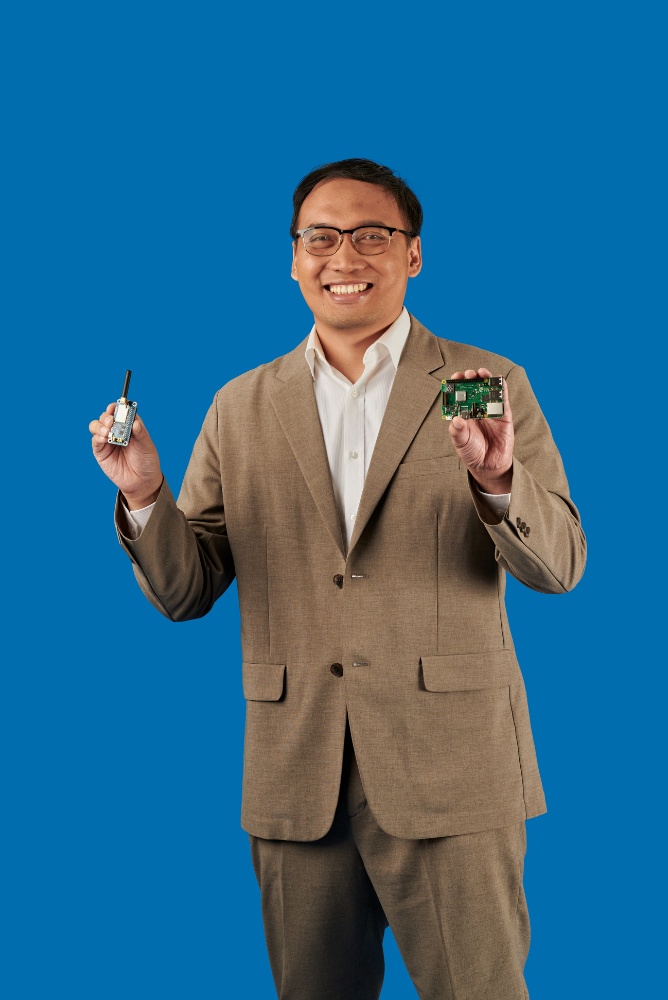
Helping students turn data, AI, and research into real‑world impact
Taufiq teaches students to combine strong technical foundations with curiosity, confidence, and hands-on experience solving real problems.
What do you teach?
I teach across data science and AI, including Mathematics Foundations for Data Science and AI, Statistical Data Modelling, and Data Processing for Big Data.
What qualifications or professional experiences are most central to your work as an academic?
My work is shaped by a PhD in Information Engineering from the University of Cambridge, more than a decade of teaching across the UK, Taiwan, Malaysia, and Indonesia, and extensive experience supervising MSc and PhD students. I've also led major international research projects in data science, AI, and networked systems - experience I bring directly into the classroom.
What are you doing differently in your field that you believe is driving real change?
I connect advanced AI and data‑science research with real‑world challenges. I build multidisciplinary teams, mentor students closely, and involve them in international projects where their work contributes to society, not just to academic papers. My focus is developing both strong technology and strong people.
I want students to grow into confident problem‑solvers who understand how data and AI can improve the world around them. ”
Tell us about a specific moment when you saw a student transform?
One memorable transformation was a PhD student returning to academia after many years in industry. She initially doubted her academic abilities, but through regular guidance and structured discussions, she learned to combine her industry experience with academic rigour. Her confidence grew quickly, and she is now working on her first research article. Watching her rediscover her identity as a researcher has been incredibly rewarding.
What's something about Monash University, Indonesia that would surprise people in a good way?
Students are often surprised by how open and approachable the academic culture is. Professors are accessible, conversations are encouraged, and students feel comfortable sharing ideas. It’s an inclusive environment where everyone’s voice matters.
What industry partnerships or real‑world projects are you and your students involved in?
My students and I are involved in several real‑world, impact‑driven collaborations. We work with PT PLN and the RACE for 2030 program on Indonesia’s first industry‑linked PhD initiative focused on clean‑energy transitions.
I also supervise research with direct relevance to financial‑crime detection through the Financial Intelligence Unit (PPATK), where industry experience is translated into academically rigorous investigations.
Through the LEAF Indonesia Initiative, funded by the Global Centre on Biodiversity for Climate, we partner with government agencies in Gorontalo, East Kalimantan, and West Papua on food security, biodiversity, and climate research that has already produced policy briefs and informed local decision‑making.
Alongside this, our GREEN‑EDGE collaboration with environmental NGOs develops technology‑enabled tools for monitoring wildlife and biodiversity. Across all these projects, students gain hands-on experience working with real stakeholders, real data, and real constraints, seeing firsthand how academic research can shape meaningful outcomes.
What’s one thing you're working on right now that doesn’t fit the traditional academic mould?
I’m building real‑world technology ecosystems with industry, government, and environmental partners. These projects involve fieldwork, co‑design, and deployment, and feel more like I’m running an innovation hub than a traditional academic lab.
How would you explain your research impact or teaching philosophy to a student's parents?
I want students to grow into confident problem‑solvers who understand how data and AI can make a real difference. I bring real industry and government projects into the classroom so students see how their skills apply in the world. Most importantly, we create an open, supportive environment where students discover their strengths and build belief in themselves.
What achievement are you most proud of, and why?
Studying at institutions like NTU and Cambridge shaped my values as an educator. Bringing that world‑class academic culture back to Indonesia through Monash, and seeing students here access the same level of opportunity, is something I’m deeply proud of.
What advice would you give a student who hopes to build a similar career?
Stay curious, stay humble, and keep showing up. Build strong theory, but also seek real‑world experience. Ask questions, find mentors, and take opportunities that stretch you. A meaningful career grows from consistent effort, not speed, and from a genuine love of learning.