
Viral infections
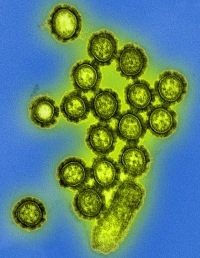
Monash Infectious Diseases participates in research studies and clinical trials of new agents for the management of viral infections including influenza and respiratory syncytial virus.
Investigators and Collaborators
Investigators
Collaborators
- Prof Allen Cheng (Monash University)
- Prof David Jans (Monash University)
Research studies
FluCAN (The Influenza Complications Alert Network)
The Influenza Complications Alert Network (FluCAN) is a sentinel hospital-based surveillance program that operates at sites in all states and territories in Australia.
In 2009, A Rapid Alert System for Severe Respiratory Illness: The FluCAN Surveillance system was created with the involvement and support of the Thoracic Society of Australia and New Zealand and funding from the NHMRC. The aim of FluCAN was to establish and maintain a real-time sentinel hospital surveillance system for acute respiratory disease requiring hospitalisation, which could provide a reliable and timely source of information that could be used to inform public health policy. In 2010 the Seasonal Influenza Surveillance Strategy Working Group (SISSWG) approved enhancing FluCAN sentinel hospitalisation data, and the Commonwealth Department of Health and Aging extended funding support.
Aims
- To collect detailed clinical and laboratory information from all patients hospitalised within the network with a laboratory confirmed diagnosis of influenza during the current season to determine the non-pneumonia burden of disease requiring hospitalisation associated with influenza.
- To estimate the effectiveness of influenza vaccine against hospitalisation against influenza
Chief Investigator: Prof Allen Cheng
Site Principal Investigator: A/Prof Tony Korman
Clinical trials
Current study
Study to Evaluate the Antiviral Activity, Clinical Outcomes, Safety, Tolerability, and Pharmacokinetics of Orally Administered Lumicitabine Regimens in Adult Participants Hospitalized With Respiratory Syncytial Virus.
ClinicalTrials.gov Identifier: NCT02935673
Summary: The purpose of this study is to characterize the Pharmacokinetic and to confirm the popPK model derived from healthy volunteers in hospitalized adults who are infected with respiratory syncytial virus (RSV) and to determine in adults who are hospitalized with respiratory syncytial virus (RSV) infection the dose response relationship of multiple regimens of lumicitabine on antiviral activity based on nasal RSV shedding using quantitative real-time reverse transcriptase-polymerase chain reaction (qRT-PCR) assay.
Completed studies
Efficacy, Pharmacokinetics, and Safety of Presatovir (GS-5806) in Hospitalized Adults With Respiratory Syncytial Virus (RSV) Infection
ClinicalTrials.gov Identifier: NCT01231620
Summary: This international Phase 2b study is to evaluate the antiviral effect, pharmacokinetics, safety, and tolerability of presatovir in respiratory syncytial virus (RSV) positive adults who have been hospitalized with acute respiratory infectious symptoms. Participants will receive 1 dose of presatovir and followed for 28 days postdose. Nasal swabs will be collected at each study visit (excluding Day 28) and assayed for change in viral load as the primary endpoint.
A Study of Intravenous Zanamivir Versus Oral Oseltamivir in Adults and Adolescents Hospitalized With Influenza (ZORO)
ClinicalTrials.gov Identifier: NCT01231620
Summary: This will be an international Phase 3, double-blind, double-dummy, 3-arm study to evaluate the efficacy, antiviral activity and safety of IV zanamivir 600 mg twice daily compared to oral oseltamivir 75 mg twice daily, and 600 mg IV zanamivir twice daily compared to 300 mg IV zanamivir for 5 days in hospitalized subjects with laboratory confirmed or suspected influenza infection. For a given subject, the initial 5-day treatment course may be extended for up to 5 additional days if clinical symptoms or patient characteristics as assessed by the investigator warrant further treatment. Alternatively, if the investigator considers that a subject is failing to improve clinically on their randomized treatment, the investigator can choose to initiate the switch/rescue option (600 mg IV zanamivir twice daily) on any day from Day 6 through Day 10 for up to an additional 5 days of treatment. On switching treatments, subjects complete a maximum of 14 days of treatment and are followed-up to Post-Treatment +28 Days.
Safety Study of IV Peramivir in Hospitalized Subjects With Confirmed or Suspected Influenza
ClinicalTrials.gov Identifier: NCT00957996
Summary: This is a Phase 3, open-label, randomized study of the antiviral activity, safety, and tolerability of intravenous Peramivir in hospitalized subjects with confirmed or suspected influenza infection.
Intravenous peramivir for treatment of influenza in hospitalized patients.
Ison MG, Fraiz J, Heller B, Jauregui L, Mills G, O'Riordan W, O'Neil B, Playford EG, Rolf JD, Sada-Diaz E, Elder J, Collis P, Hernandez JE, Sheridan WP.
Antivir Ther. 2014;19(4):349-61. doi: 10.3851/IMP2680. Epub 2013 Aug 28.
Abstract
BACKGROUND: Influenza causes over 200,000 hospitalizations a year in the United States, but few antiviral treatment studies have focused on patients hospitalized with influenza. This open-label, randomized study was initiated during the 2009 H1N1 pandemic to help assess the antiviral activity, safety and tolerability of 5-10 days treatment with two different dosing regimens of the intravenous neuraminidase inhibitor, peramivir, in hospitalized subjects with influenza.
METHODS: Quantitative virology was done on nasopharyngeal swab specimens from subjects ≥6 years of age to measure change from baseline in tissue culture infective dose (primary end point) and quantitative viral RNA levels by real-time PCR. Clinical end points included time to clinical resolution, a composite end point of four vital signs and oxygen saturation.
RESULTS: A total of 234 hospitalized patients were randomized to peramivir 300 mg twice daily or 600 mg once daily; 127 had laboratory confirmed influenza. In those with detectable virus at baseline, viral titres declined without differences between regimens. There were no significant differences in clinical or virological end points between treatment arms, and apparent differences were explained by baseline disease severity differences in the groups. Peramivir was generally safe and well tolerated for treated patients hospitalized with pandemic influenza with outcomes similar to those described in the literature.
CONCLUSIONS: This open-label trial of intravenous peramivir in subjects hospitalized predominantly with 2009 influenza A (H1N1) demonstrated that once- or twice-daily administration was associated with decreases in viral shedding and clinical improvement.
Publications
Publications: Influenza
Influenza epidemiology in adults admitted to sentinel Australian hospitals in 2014: the Influenza Complications Alert Network (FluCAN).
Cheng AC, Holmes M, Senenayake S, Dwyer DE, Hewagama S, Korman T, Irving L, Brown S, Waterer G, Hunter C, Friedman ND, Wark P, Simpson G, Upman J, Bowler S, Macartney K, Blyth C, Kotsimbos T, Kelly P.
Commun Dis Intell Q Rep. 2015 Sep 30;39(3):E355-60.
Mandatory seasonal influenza vaccination of health care workers: a way forward to improving influenza vaccination rates.
Chean R, Ferguson JK, Stuart RL.
Healthcare Infection 2014; 19(2): 42-44.
Influenza vaccination uptake amongst pregnant women and maternal care providers is suboptimal.
Lu AB, Halim AA, Dendle C, Kotsanas D, Giles ML, Wallace EM, Buttery JP, Stuart RL.
Vaccine. 2012 Jun 8;30(27):4055-9. doi: 10.1016/j.vaccine.2012.04.012. Epub 2012 Apr 19.
Influenza vaccine effectiveness against hospitalisation with confirmed influenza in the 2010-11 seasons: a test-negative observational study.
Cheng AC, Holmes M, Irving LB, Brown SG, Waterer GW, Korman TM, Friedman ND, Senanayake S, Dwyer DE, Brady S, Simpson G, Wood-Baker R, Upham J, Paterson D, Jenkins C, Wark P, Kelly PM. Kotsimbos T.
PLOS One 2013 Jul 16;8(7):e68760. doi: 10.1371/journal.pone.0068760. Print 2013.
Hospital-acquired influenza in an Australian sentinel surveillance system.
Macesic N, Kotsimbos TC, Kelly P, Cheng AC. FluCAN Investigators
Med J Aust. 2013 Apr 15;198(7):370-2.
Hospitalisation with confirmed influenza in a sentinel surveillance system in 2010 and 2011.
Cheng AC, FluCAN Investigators,
Med J Aust. 2012 Aug 20;197(4):217.
Mycophenolate and lower graft function reduce the seroresponse of kidney transplant recipients to pandemic H1N1 vaccination.
Mulley WR, Visvanathan K, Hurt AC, Brown FG, Polkinghorne KR, Mastorakos T, Lewicki MC, Stuart RL, Tan SJ, Chean R, Kerr PG, Kanellis J.
Kidney Int. 2012 Jul;82(2):212-9. doi: 10.1038/ki.2012.106. Epub 2012 Apr 11.
Effectiveness of H1N1/09 monovalent and trivalent influenza vaccines against hospitalization with laboratory-confirmed H1N1/09 influenza in Australia: A test-negative case control study.
Cheng AC, Kotsimbos T, Kelly HA, Irving LB, Bowler SD, Brown SG, Holmes M, Jenkins CR, Thompson P, Simpson G, Wood-Baker R, Senanayake SN, Brady SJ, Paterson DL, Wark PA, Upham JW, Korman TM, Dwyer DE, Waterer GW, Kelly PM.
Vaccine. 2011 Oct 6;29(43):7320-5. Epub 2011 Jul 31.
2009 H1N1 influenza A and pregnancy outcomes in Victoria, Australia.
Hewagama S, Walker SP, Stuart RL, Gordon C, Johnson PD, Friedman ND, O'Reilly M, Cheng AC, Giles ML.
Clin Infect Dis. 2010 Mar 1;50(5):686-90.
Hospitalised adult patients with pandemic (H1N1) 2009 influenza in Melbourne, Australia.
Denholm JT, Gordon CL, Johnson PD, Hewagama SS, Stuart RL, Aboltins C, Jeremiah C, Knox J, Lane GP, Tramontana AR, Slavin MA, Schulz TR, Richards M, Birch CJ, Cheng AC.
Med J Aust. 2010 Jan 18;192(2):84-6.
ASID (HICSIG) position statement: infection control guidelines for patients with influenza-like illnesses, including pandemic (H1N1) influenza 2009, in Australian health care facilities.
Stuart RL, Cheng AC, Marshall CL, Ferguson JK; Healthcare infection control special interest group of the Australian Society for Infectious Diseases.
Med J Aust. 2009 Oct 19;191(8):454-8. Erratum in: Med J Aust. 2009 Dec 7-21;191(11-12):667.
Summary of the Australasian Society for Infectious Diseases and the Thoracic Society of Australia and New Zealand guidelines: treatment and prevention of H1N1 influenza 09 (human swine influenza) with antiviral agents.
Cheng AC, Dwyer DE, Kotsimbos AT, Starr M, Korman TM, Buttery JP, Jenkins CR, Krause VL, Johnson PD; Australasian Society for Infectious Diseases and the Thoracic Society of Australia and New Zealand.
Med J Aust. 2009 Aug 3;191(3):142-5. No abstract available.
Melting muscles: novel H1N1 influenza A associated rhabdomyolysis.
D'Silva D, Hewagama S, Doherty R, Korman TM, Buttery J.
Pediatr Infect Dis J. 2009 Dec;28(12):1138-9.
Personal protective equipment and antiviral drug use during hospitalization for suspected avian or pandemic influenza.
Swaminathan A, Martin R, Gamon S, Aboltins C, Athan E, Braitberg G, Catton MG, Cooley L, Dwyer DE, Edmonds D, Eisen DP, Hosking K, Hughes AJ, Johnson PD, Maclean AV, O'Reilly M, Peters SE, Stuart RL, Moran R, Grayson ML.
Emerg Infect Dis. 2007 Oct;13(10):1541-7.
Preparing for an influenza pandemic: healthcare workers’ opinions on working during a pandemic
Stuart RL, Gillespie EE.
Healthcare Infect 2008; 13(3): 95–99.
Improving influenza vaccination rates in a large health service
Bellaard-Smith E, Stuart RL, Gillespie EE.
Healthcare Infect 2008 13(1) 15–19.
Publications: Other Viral Infections
Myocarditis due to Human Parechovirus in an Adult.
Kong KL, Lau JSY, Goh SM, Wilson HL, Catton M, Korman TM.
Emerg Infect Dis 2017 Sep;23(9):
Herpes simplex virus-2 transmission following solid organ transplantation: Donor-derived infection and transplantation from prior organ recipients.
Macesic N, Abbott IJ, Kaye M, Druce J, Glanville AR, Gow PJ, Hughes PD, Korman TM, Mulley WR, O'Connell PJ, Opdam H, Paraskeva M, Pitman MC, Setyapranata S, Rawlinson WD, Johnson PDR.
Transpl Infect Dis. 2017 Jun 15. doi: 10.1111/tid.12739. [Epub ahead of print]
Epstein-Barr virus encephalitis in solid organ transplantation.
Lau JSY, Low ZM, Abbott I, Shochet L, Kanellis J, Kitching RA, Korman TM.
New Microbiol. 2017 May 17;40(3). [Epub ahead of print]
Management of dengue in Australian travellers: a retrospective multicentre analysis.
Tai AY, McGuinness SL, Robosa R, Turner D, Huang GK, Leder K, Korman TM, Thevarajan I, Stewardson AJ, Padiglione AA, Johnson DF.
Med J Aust. 2017 Apr 17;206(7):295-300.
Ebola virus disease: An update on current prevention and management strategies.
Trad MA, Naughton W, Yeung A, Mazlin L, O'Sullivan M, Gilroy N, Fisher DA, Stuart RL.
J Clin Virol. 2017 Jan;86:5-13. doi: 10.1016/j.jcv.2016.11.005. Review.
A parainfluenza virus type 3 outbreak at a residential aged care facility: The role of microbiologic testing in early identification and antimicrobial stewardship.
Ryan S, Gillespie E, Stuart RL.
Am J Infect Control. 2017 Feb 1;45(2):203-205. doi: 10.1016/j.ajic.2016.06.032.
Dengue fever in travelers: are we missing warning signs of severe dengue in a non-endemic setting?
Tai A, Rebosa R, Padiglione AA, Dalpatadu C. Korman TM.
Med J Aust. 2016 Apr 18;204(7):267.
Are identity badges and lanyards in pediatrics potentially contaminated with viral pathogens?
Ting CY, Cheng DR, Kotsanas D, Kirkwood CD, Bogdanovic-Sakran N, Stuart RL, Buttery JP.
Am J Infect Control. 2015 Nov;43(11):1258-60. doi: 10.1016/j.ajic.2015.06.024. Epub 2015 Aug 20.
A history of infection with varicella is strongly predictive of the presence of varicella-zoster virus antibodies in a heterogenous Australian HIV cohort.
Gurry GA, Dendle C, Korman TM, Giles ML, Williams JH, Woolley IJ.
AIDS. 2015 Sep 24;29(15):2062-2064. No abstract available.
Disseminated Enteroviral Infection Associated with Obinutuzumab.
Dendle C, Gilbertson M, Korman TM, Golder V, Morand E, Opat S.
Emerg Infect Dis. 2015 Sep;21(9):1661-3. doi: 10.3201/eid2109.150104.
Chikungunya virus infection in travellers to Australia.
Johnson DF, Druce JD, Chapman S, Swaminathan A, Wolf J, Richards JS, Korman T, Birch C, Richards MJ.
Med J Aust. 2008 Jan 7;188(1):41-3.