
Education Innovation Grants support new approaches to science teaching
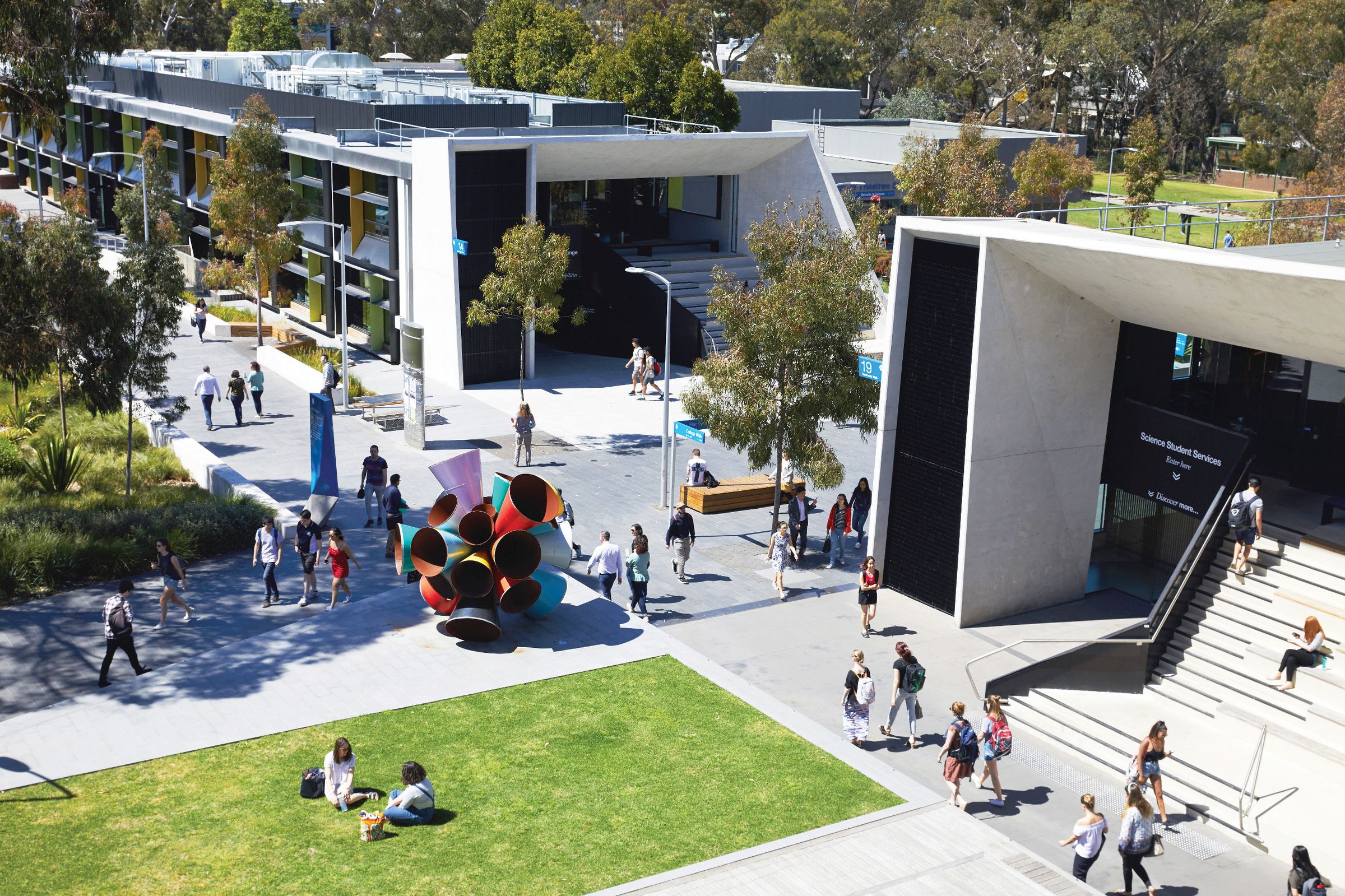
The 2026 Faculty of Science Education Innovation Grants support staff in developing interactive, technology-driven approaches to science teaching and learning.
Congratulations to the recipients of the 2026 Faculty of Science Education Innovation Grants, with five projects receiving funding to develop new approaches to teaching and learning across the Faculty.
The grants support educational innovation, excellence and design, enabling staff to develop, implement and evaluate initiatives that enhance student engagement, learning outcomes and the overall student experience.
This year, five projects have each been awarded $9,000, supporting innovations spanning quantum physics, laboratory automation, data science, robotic chemical synthesis and astronomy.
The projects are:
Dr Istvan Laszlo and Dr Vidya Kota, School of Physics and Astronomy
Accessing Quantum Physics in a Laboratory Setting
Dr Laszlo and Dr Kota will introduce modern photoelectric-effect equipment to give students a more accessible way to explore the counterintuitive behaviours that underpin quantum physics.
Simpler, faster and more precise data collection will allow students to spend less laboratory time gathering measurements and more time investigating their observations and understanding why classical physics cannot explain them. The redesigned activity aims to strengthen both practical laboratory skills and students’ understanding of fundamental quantum concepts.
Dr Tom Hiscox and Professor Mike McDonald, School of Biological Sciences
Advancing biology education through laboratory automation
Dr Hiscox and Professor McDonald will bring laboratory automation directly into first-year biology teaching by adding an on-deck absorbance plate reader to the School’s existing platform of three Opentrons Flex robots.
The technology will enable students in BIO1011 and BIO1022 to participate in and observe high-throughput quantitative measurements in real time, rather than working with data previously generated by teaching staff. The project will give students greater exposure to contemporary automated laboratory techniques while making data generation a visible part of the learning experience.
Associate Professor Matthew Hall and Associate Professor Keyne Monro, School of Biological Sciences
FLARE: Frictionless Learning Applications for R Education
Associate Professors Hall and Monro will make learning the statistical programming language R more accessible by embedding live, interactive lessons directly within webpages hosted on Moodle, GitLab Pages and internal Monash platforms.
FLARE builds on award-winning interactive lessons developed within the School of Biological Sciences, combining them with the Quarto scientific publishing system and webR technology. This allows R to run entirely within a web browser, reducing technical barriers and enabling students to engage directly with programming exercises as part of their learning materials.
Professor Tanja Junkers, Dr Peter Halat and Professor Bayden Wood, School of Chemistry
Robotic chemical synthesis in teaching laboratories
This project will bring electronics, programming, spectroscopy, automation and machine learning together in the chemistry teaching laboratory.
Students will first build an RGB photometer from individual components, developing their understanding of electronic signal processing while applying programming skills and strengthening their knowledge of chemical spectroscopy. They will then construct a simple flow-based synthesis machine and use machine-learning-supported Bayesian optimisation to investigate and optimise a chemical reaction.
The project will give students hands-on experience with an increasingly important combination of chemistry, automation and data-driven experimentation.
Associate Professor Michael Brown, James Upjohn, Professor Paul Lasky, Dr Manisha Shresthra and Associate Professor Anna Phillips, School of Physics and Astronomy
Using Smart Telescopes to Introduce Astronomical Data and Data Science
The team will purchase 10 smart telescopes, enabling astronomy students to collect and analyse their own observational data.
New laboratory activities will use smart-telescope observations to teach foundational astronomical concepts while introducing students to Python and data science. Supporting notebooks will provide a scaffold for learning Python within an authentic astronomical context.
By allowing students to work with data they have collected themselves, the project aims to create more authentic laboratory experiences, increase engagement and introduce important computational skills earlier in students’ studies.
Together, the five projects demonstrate the breadth of educational innovation underway across the Faculty, using emerging technologies not simply for their own sake, but to give students more authentic, engaging and effective ways to learn science.
Congratulations to all our 2026 Education Innovation Grant recipients.
Further information
Silvia Dropulich
Marketing, Media & Communications Manager, Monash Science
T: +61 3 9902 4513 M: +61 435 138 743
Email: silvia.dropulich@monash.edu