
The Danger of Politicising Climate Change Issues
A new research institute for climate change communication and implementation based at Monash University, Indonesia offers a new approach so all parties can feel the emergency.

Jakarta, 23 February 2023
A breakthrough is needed in conveying the issue of the climate crisis, which is much politicised, according to Associate Professor of Public Policy and Management at Monash University Indonesia, Ika Idris.
A new research institute for climate change communication and implementation based at Monash University, Indonesia offers a new approach so all parties can feel the emergency.
So far, in Indonesia, the issue of climate change still needs to be understood and attract public attention. Many advocacy and communication campaigns have raised public awareness and encouraged the government. However, the impact of environmental activists' strategies at the local and international affiliate levels has yet to be able to drive change at the structural level, such as encouraging a better government better policy on sustainable energy and the environment.
A general strategy pursued by local and international environmental activists is to do advocacy. On the one hand, the advocacy approach has the potential to get the attention of the public and the media. However, on the other hand, an educational approach is still needed to help the public understand arguments about environmental issues and climate change.
During the last General Election in 2019, a documentary film that raised the issue of the impact of coal mining on the environment and health shocked the public because it revealed the involvement of political candidates in the coal mining business.
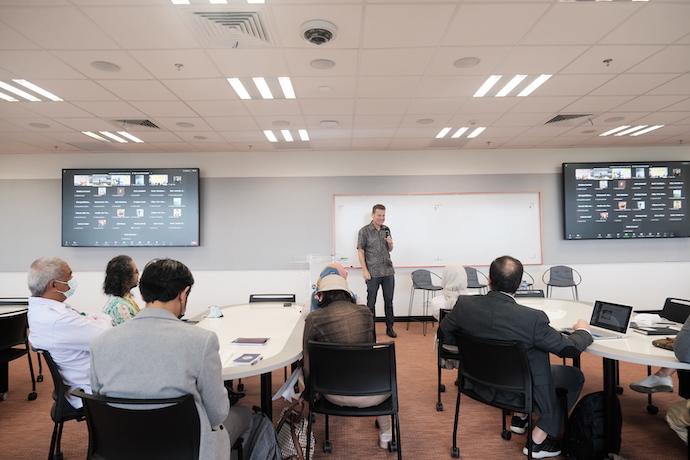
A study by Associate Professor of Public Policy and Management at Monash University Indonesia Ika Idris shows that public discourse regarding this documentary was still centered on political issues and has yet to be successful in raising public awareness regarding environmental damage issues or sustainable energy policies.
According to Ika, the discussions formed from advocacy efforts were still about political contestants, incidents in the documentary, and environmental issues. However, when talking about the environment, the dominant sentiment that emerged was positive, which showed public tolerance for the ecological damage that had occurred because the state needed to meet the people's energy needs.
"Talking about environmental and climate issues in a political year cannot be separated from the competing candidates. The problem is framing it so that political issues will not dominate more than the conversation about environmental problems.
“My research shows that only about 27% of the conversation themes relate to the environment; the rest discuss other themes. Conversations related to victims are also only 12.2%; the rest talk about the filmmaker, the central government, and political candidates," said Ika in the Seminar on Building Climate Change Literacy in Indonesia (23/02) at the Monash University Indonesia BSD Campus, Tangerang.”
The importance of climate change literacy
Since ten years ago, the world community's concern due to climate change's impact has increased, as revealed by the 2018 Global Attitudes Survey 2018 by the Pew Research Center. These results are not surprising because the effects of climate change are real and can be seen globally. However, the impact of climate change is still being debated and politicized, whether this is the impact of human behavior or has occurred naturally.
The Monash Climate Change Communication Research Hub (MCCCRH), sees that this is the importance of climate literacy so that the issue of climate change is not continuously being politicized. MCCCRH has a vision so that climate change is not politicized so that people can fully trust and understand the science and solutions offered by these sciences.
Director of MCCCRH Associate Professor of Communication and Media Science David Holmes emphasized that the approach taken by his institution was not advocacy but a non-persuasion communication strategy. David explained that a non-persuasion communication is a communication containing facts that are easily understood by the general public. This communication is also carried out repeatedly by trusted sources and targets a broad audience through various channels. For this reason, this non-persuasive communication has an overall impact with a low level of advocacy.
According to David, audiences who were exposed to non-persuasive climate change communications showed an increase in climate change prevention behavior by 16% compared to those who were not exposed to this information from the MCCCRH. Even audiences who received non-persuasive information showed a 2.8% increase in attention to climate change. In comparison, those not exposed to information showed a 4.8% decrease in engagement with climate change.
“We want to transfer this success from Australia to Indonesia because the vision of the MCCCRH is broader than just the Australian community. Talking about climate change is not possible only at the local level but at the global level.”
The Danger of Politicising Climate Issues
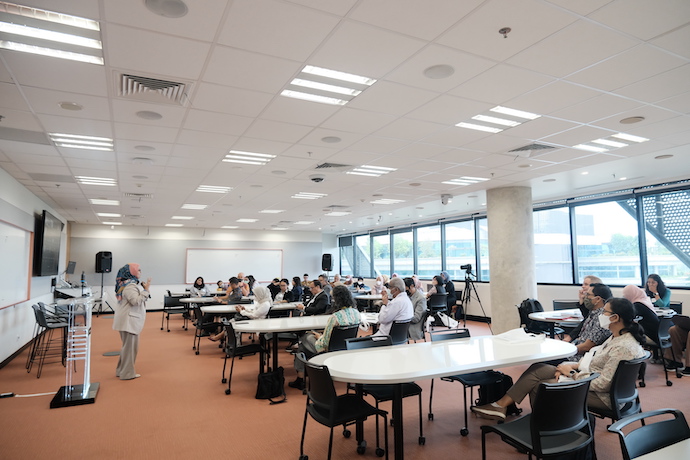
Derry Wijaya, Associate Professor of Data Science at Monash University Indonesia, warned about the dangers of politicising climate change issues like in America. According to her, the problem of climate change is challenging to solve, and choosing the right intervention for climate change issues also has its challenges.
"One of the factors is the polarization of the media, as happened in America. That way, suppressing policy changes related to climate change is difficult because the media agenda setting, public perception, and policymakers' understanding are not the same, "said Derry.
She added that, for this reason, all stakeholders need to see what media framing is like and whether there are common themes that can be carried out together.
Unfortunately, because the amount of data is huge, it is difficult for scientists in the social sciences to see it comprehensively. By collaborating with other disciplines, such as data science, it will be easier to understand what news framing and conversations around climate change are like. The MCCCRH Indonesia Node will also focus its research on climate change discrimination and climate bias to develop literacy in Indonesia. For this reason, MCCCRH will cooperate with many parties, such as the media, communication strategists, government, NGOs, and the community.
***
About MCCCRH
Established in 2016, the Monash Climate Change Communication Research Hub/MCCRH is based at Monash University, Melbourne, Australia, and has other research centers in Malaysia and now in Indonesia. MCCCRH draws on university resources to support climate change communications.
In Australia itself, MCCCRH collaborates with the latest media and research results. Climate change communication best practices can be achieved by linking media and research results.
In the future, MCCCRH in Indonesia hopes to build media, communication, and education programs to convey accurate, clear, relevant solutions and knowledge regarding climate change. MCCCRH also aims to facilitate global climate change literacy, where all stakeholders, the Indonesian government, the media, the business sector, and the public, can make decisions regarding the growing impacts of climate change based on the correct information.
Contact person:
Galuh Pangestu, Research Assistant, MCCCRH Indonesia Node - email: ika.idris@monash.edu
About Monash University Indonesia
Established as an official legal entity in Indonesia in October 2021, Monash University Indonesia is a manifestation of the commitment of Monash University and the Indonesian government to create knowledge that can contribute broadly to the development of the social, technological and economic sectors in Indonesia.
Monash University, Indonesia offers Master's degree courses with majors in Business Innovation, Data Science, Cyber Security, Public Health, Public Policy and Management, Urban Design and PhD, along with various executive and micro-credential programs aimed at specific sectors.
Monash University Indonesia is equipped with Monash University Australia standardised learning facilities and is currently opening applications for new student admissions, as well as scholarships for learning in October 2023 which are currently open for registration.
Monash has a proud long-term relationship with Indonesia and is a foreign university with the highest number of Indonesian graduates, compared to other foreign universities. The track record of good relations between Monash and Indonesia is manifested in collaborations between the two parties, such as the Herb Feith Centre, RISE, the World Mosquito Program, and the Citarum Action Research Program (CARP).
With a presence on three continents, international partnerships and study abroad programs around the world, Monash is Australia's largest university, ranking in the top 100 universities worldwide. Monash has a dynamic network of research and teaching sites in Australia, Italy, Malaysia, China and India.
The unique alliance with the University of Warwick (UK) sits alongside a series of international collaborations with leading universities and companies around the world, expanding the University's global network.
For more information about Monash University Indonesia, please visit our website here. And information related to academics at Monash University Indonesia can be obtained here.
Media Contact
PRecious Communications untuk Monash University
E: monashuni@preciouscomms.com