
Monash Impact Network Series (MINS): Our screens, our well-being: A dialogue on social media restriction on youth
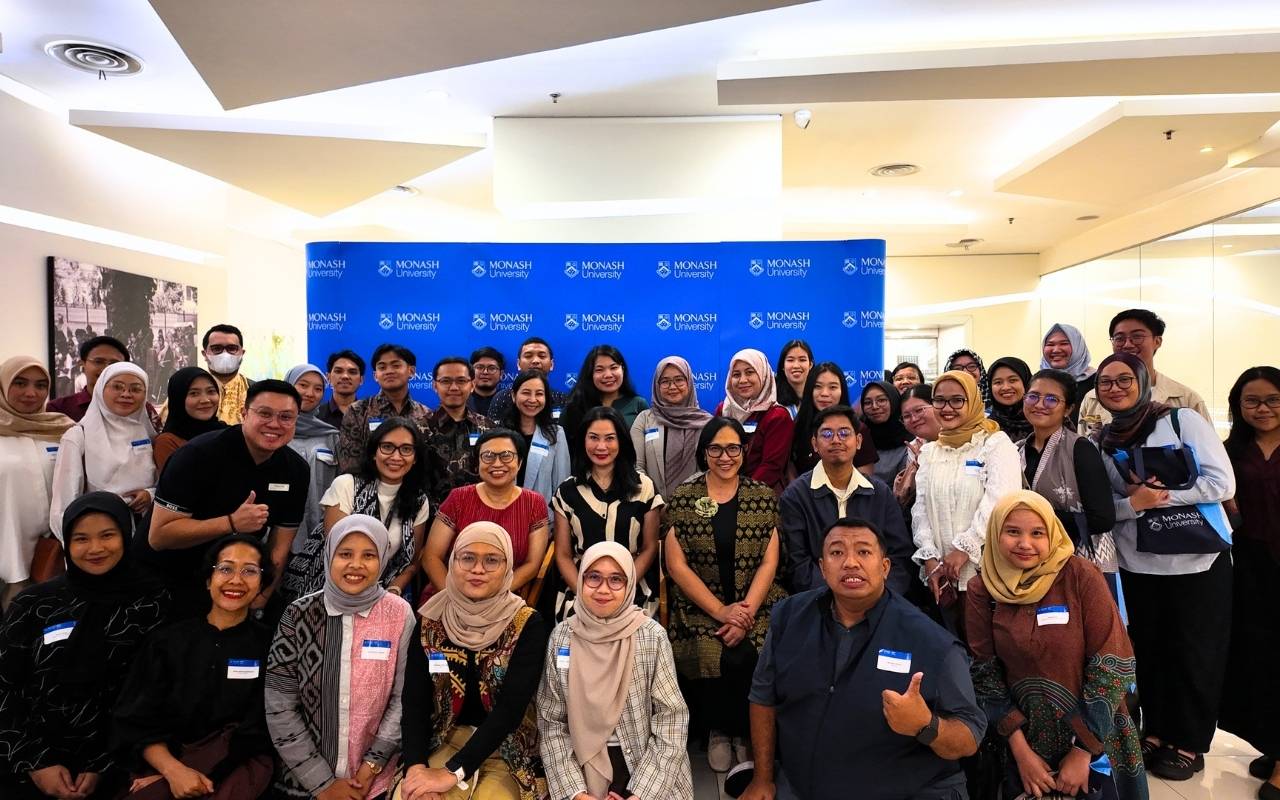 Participants and guest speakers gather for a group photo
Jakarta – Against the backdrop of increasing concern over young people’s digital well-being and the newly implemented social media restrictions in Indonesia, a hybrid talk show titled "Our screens, our well-being: A dialogue on social media restriction on youth" was held on Thursday evening, 30 April in Jakarta. The event brought together more than 50 participants, joining both in person and virtually. They came from academia, policy makers, healthcare professionals, researchers, students, and members of the public interested in youth mental health and digital policy.
The discussion featured a multidisciplinary panel of speakers offering diverse perspectives. Dyah Pitaloka, PhD, Associate Professor of Marketing & Digital Communications and Graduate Research Director at Monash University, Indonesia, highlighted the importance of digital literacy, responsible platform design, and evidence-based approaches when addressing social media restrictions for young people. She emphasised that policies should consider not only risks but also the role of digital spaces in learning, identity formation, and social connection.
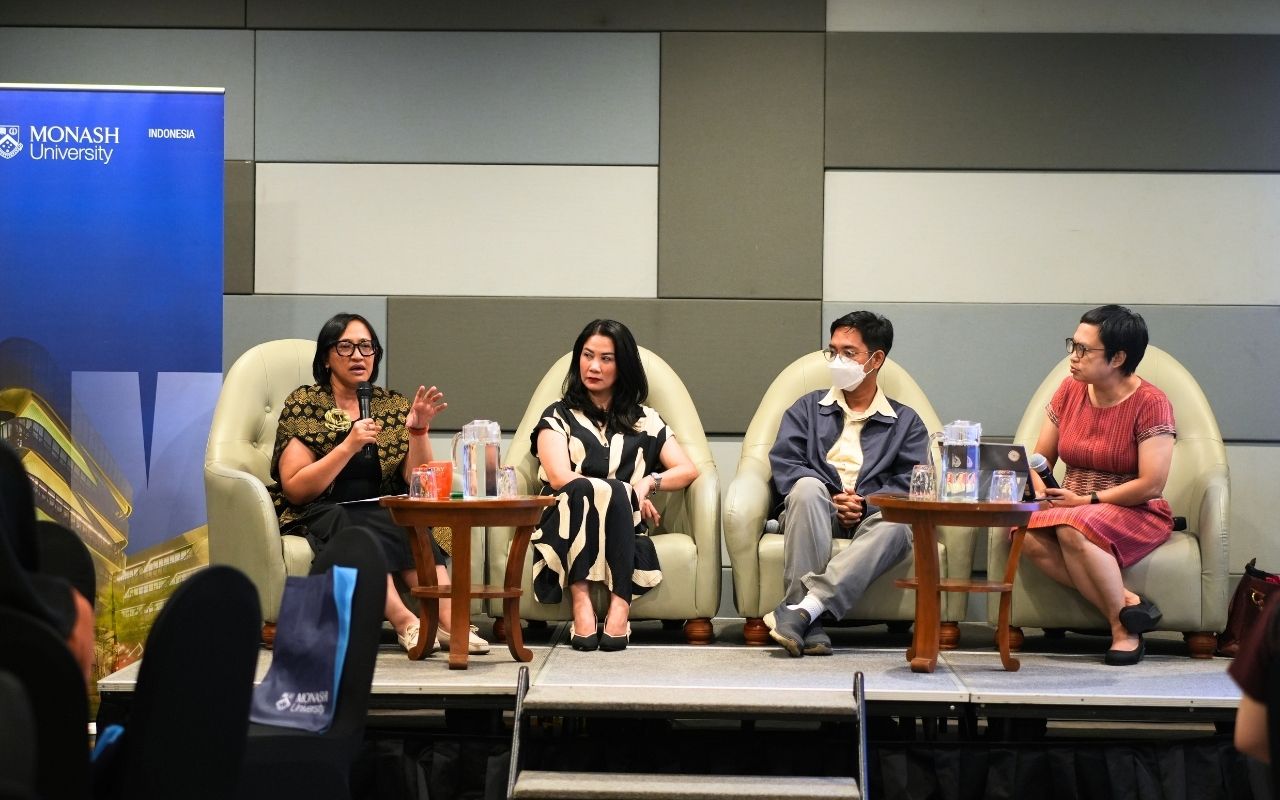 Expert panel discussion featuring guest speakers and Monash University, Indonesia academics
From a clinical standpoint, Kristiana Siste, MD, PhD, Addiction Psychiatrist and Chair of the Department of Psychiatry at Cipto Mangunkusumo General Hospital (RSCM), discussed the mental health implications associated with excessive internet use. . She outlined her research on how excessive internet use links to anxiety, depression, sleep disturbances, and digital addiction, not only among children and youth, but the general population. She underscored the need for early screening of internet addiction, the importance of family and environmental safeguarding, and facilitating guidance rather than purely punitive restrictions.
A youth critical perspective was also offered by Pradipa P. Rasidi, Research Officer for Technology and Violence at Monash University, Indonesia, on how regulation and restriction can have far‑reaching implications for young people’s agency. He highlighted the role of social media for digital natives as the physical public spaces for youth is increasingly limited. The discussion was moderated superbly by Grace Wangge, MD, PhD, Associate Professor of Public Health and Head of the PARTICIPATE Lab at Monash University, Indonesia, who invited participants to view the issue in a balanced way—between protecting mental health and safeguarding young people’s rights to be involved in digital health policy making.
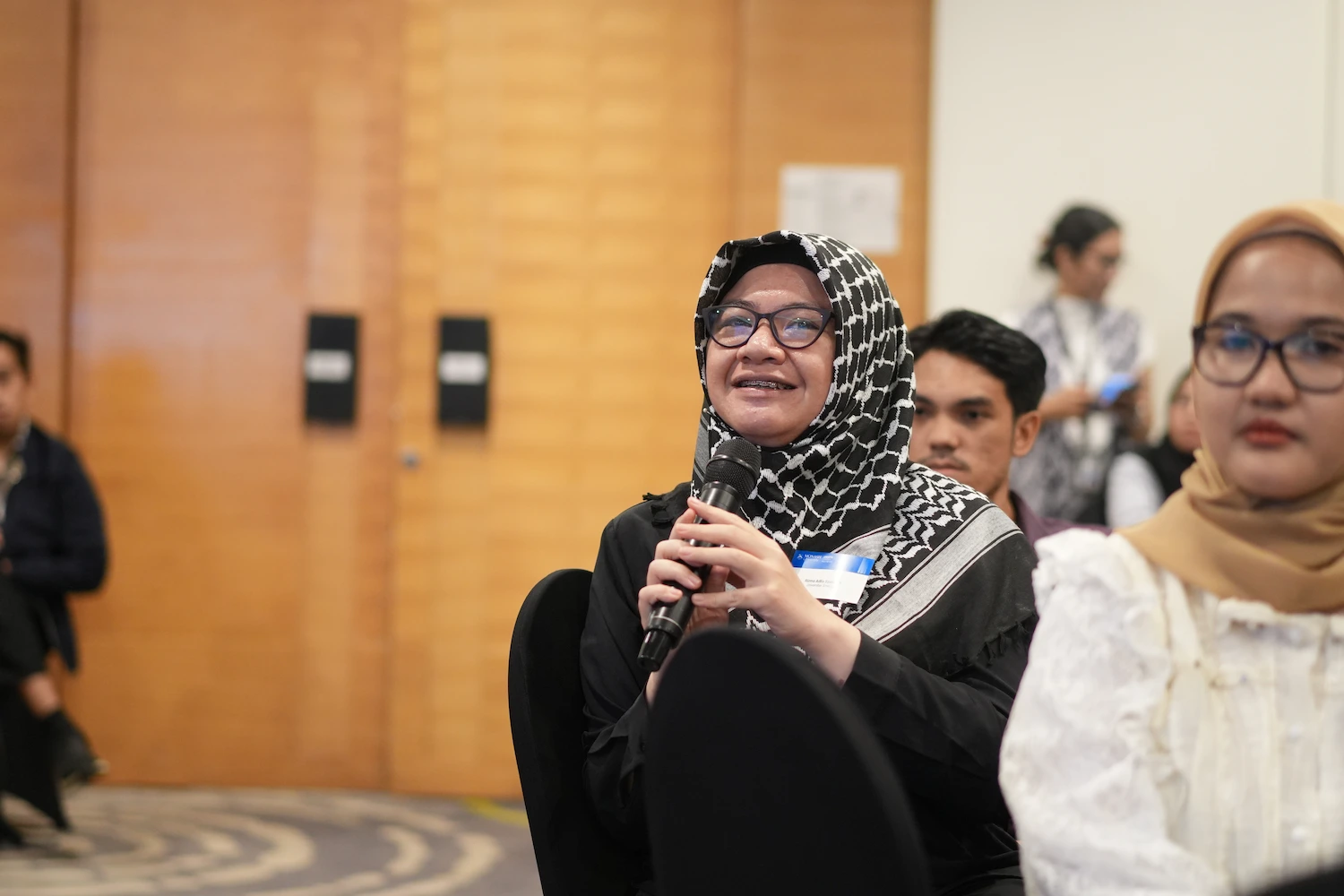
An engaging Q&A session: A participant poses a question to the panel
The event concluded with a lively Q&A session, reflecting that social media restrictions, such as those implemented in Australia, requires independent oversight, clear channels for resolution, and systemic safeguards against online monetisation. With internet addiction affecting up to 30% of Indonesian youth and their families, addressing this crisis requires structured filtering and parental education at home and school. Ultimately, the success of these regulations depends on establishing clear metrics to evaluate their effectiveness in the real world. “Our Screens, Our Well-being” reaffirmed the importance of cross-sector dialogue and the use of research evidence in shaping responses that protect mental health while respecting young people’s rights and living digital realities.