
Bone and Muscle Research Group
About Bone and Muscle Health Research
The Bone and Muscle Research Group (BMRG), nested within the Monash University Department of Medicine, is working to achieve:
- Falls and fracture prevention
- An advanced understanding of interactions between cardiovascular, metabolic and endocrine systems
- Healthy ageing in our local and global communities
- Better bone health for vulnerable patient populations
- Better treatment for osteoporosis patients
- Better detection of osteoporotic fractures
- Better understanding of genetic causes of atypical femur fracture and early detection and intervention/prevention
- Efficient and tailored exercise regimens for building and maintaining healthy bone
We offer a comprehensive platform for assessing bone and muscle health, physical performance and cardiovascular risk factors.
Fracture prevention for Aboriginal and Torres Strait Islander people - research uncovers perspectives on bone health
Research led by Associate Professor Ayse Zengin has identified unique perspectives and beliefs on bone health among Indigenous adults in Victoria.
Group Head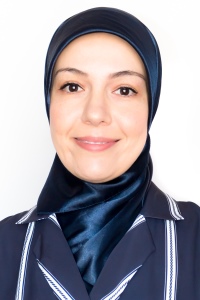 Associate Professor Ayse Zengin | Bone Banter - our podcast
| Contact us Ph: 03 8572 2919 Donate to Osteoporosis Research |
Research groups
Cardio-Skeletal Medicine Unit
View

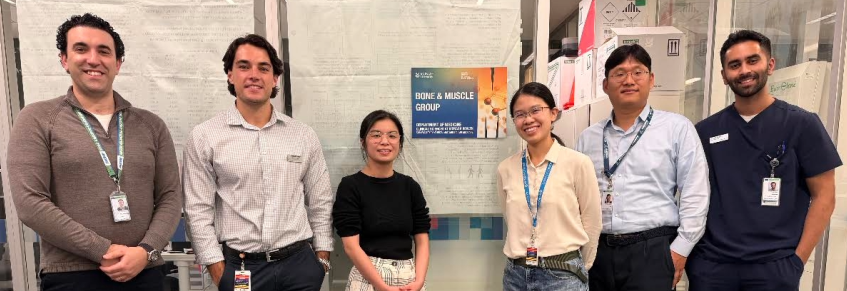
2026 Cardio-Skeletal Medicine Unit L-R: Dr Alexander Rodriguez (Group Lead); Harrison Hood (MBBS Hons); Dr Ruth Liu (Research Associate); Dr Dueanchonnee “Pam” Sribenjalak (Visiting Fellow in Endocrinology); Dr Hyeonmok Kim (Visiting Fellow in Endocrinology); Dr Arpit Sharma (Research Associate)
The Cardio-Skeletal Medicine Unit is a part of the Bone & Muscle Health Research Group based at the School of Clinical Sciences at Monash Health. Our programme of research is dedicated to medication safety and in identifying a group of patients (cardiac) who have under-recognised skeletal risk. Cardiovascular disease and osteoporosis frequently coexist, yet therapeutic decisions are often made in isolation between specialties. Ultimately, we want our work to lead to better treatment decision making to design the right treatment regimens for the right patients; and to build clinical pathways to improve the skeletal health in the cardiac population.
We undertake clinical studies using real-world hospital data to study the skeletal health of cardiac patients; a group that has an underappreciated burden of poor bone health. Additionally, through clinical and epidemiological studies, we examine the effects of osteoporosis medications on cardiovascular risk. We are also focused on understanding how atherosclerotic vascular disease influences responses to osteoporosis treatments, and how derangements in mineral metabolism influence the cardiovascular and autonomic systems. We have research collaborators across Monash University and Monash Health as well as nationally (ECU in Perth) and internationally in Denmark, USA, South Korea and UK. We undertake many systematic review and meta-analysis projects; with undergraduate biomed and final year medical students often leading these projects. We are clinicians, scientists, epidemiologists and data wranglers all wrapped in one.
Selected references (arising from student/associate projects)
- Liu, H., R. Hii, N. Nerlekar, P. Ebeling, and A. Rodriguez. "Coronary Artery Calcification Scores are Positively Correlated With Fracture Risk." Heart, Lung and Circulation 34 (2025): S638. DOI: 10.1016/j.hlc.2025.06.862
- Lo HZ, Leow K, Hii R, Nerlekar N, Ebeling PR, Rodríguez AJ. “Effect of osteoporosis medications on vascular and valvular calcification: a systematic review and meta-analysis”. Osteoporos Int. 2025 Apr 7; doi:10.1007/s00198-025-07468-3
- Rodriguez A, Hii R, Ebeling P, Nerlekar N, Caesar. Coronary artery calcification is associated with smaller increases in femoral neck bone mineral density with anti-resorptive therapy. European Heart Journal. 2023;44(Supplement_2):ehad655.1345doi.10.1093/eurheartj/ehad655.1345
- Shoung A, Shoung N, Hii R, Nerlekar N, Ebeling PR, Rodríguez AJ. Electrocardiogram Changes Following Intravenous Bisphosphonate Infusion: A Systematic Review and Meta-Analysis. J Bone Miner Res. 2023 Sep 8. doi: 10.1002/jbmr.4911
- Rodríguez AJ, Nerlekar N, Ebeling PR. Cardiac adverse events in bisphosphonate and teriparatide users: An international pharmacovigilance study. Bone. 2022 Dec 18;168:116647. doi: 10.1016/j.bone.2022.116647
- Seeto AH, Tadrous M, Gebre AK, Lewis JR, Fink HA, Ebeling PR, Rodríguez AJ. Evidence for the cardiovascular effects of osteoporosis treatments in randomized trials of post-menopausal women: A systematic review and Bayesian network meta-analysis. Bone. 2022 Nov 11;167:116610. doi: 10.1016/j.bone.2022.116610.
- Rodríguez AJ, Ernst MT, Nybo M, et al. “Oral bisphosphonate use reduces cardiovascular events in a cohort of Danish patients referred for bone mineral density”. J Clin Endocrinol Metab (2020); published online July 27. DOI:10.1210/clinem/dgaa481.
- Seeto AH, Abrahamsen B, Ebeling PR, Rodríguez AJ. “Cardiovascular safety of denosumab across multiple indications: a systematic review and meta‐analysis of randomized trials” J Bone Miner Res (2020) DOI:10.1002/JBMR.4157
Sarcopenia, Obesity and Lifestyle Laboratory
View
Research Overview
The Sarcopenia, Obesity and Lifestyle laboratory is led by Dr David Scott, a NHMRC Career Development Fellow within the Bone and Muscle Research Group at the School of Clinical Sciences at Monash Health. Our research explores the contributions of age-related changes in body composition to functional decline and loss of independence in older adults. We collaborate on a several national and international cohort studies to investigate associations of sarcopenia (the age-related decline in skeletal muscle mass and function) and obesity with development of poor bone health, disability and falls and fractures. We also utilise these datasets to identify lifestyle behaviours that prevent muscle and bone quality declines during ageing. We are currently conducting trials exploring how to best deliver lifestyle modification to community-dwelling older adults at high risk for functional decline. These trials include physical activity and nutrition interventions such as osteogenic exercise, resistance training, weight loss and vitamin D supplementation.
-
- NHMRC R.D. Wright Biomedical Career Development Fellowship: Reducing Risk Factors for Falls and Fracture in Obese Older Australians. PI: David Scott
- Rebecca L. Cooper Foundation Project Grant: Exercise for Musculoskeletal and Metabolic Health During Weight Loss in Sarcopenic Obese Older Adults. PI: David Scott
- American Society for Bone and Mineral Research Rising Star Award: The Exercise for the Prevention of Falls in Older Adults with Sarcopenic Obesity Pilot Study (ESPRESSO-P). PI: David Scott
- MIME-SPARK Scheme: Wearable sensors to optimise exercise for bone health. PIs: David Scott, Peter Ebeling
-
- Tasmanian Older Adult Cohort Study (TASOAC) – Prof. Graeme Jones and Dr. Dawn Aitken (Menzies Institute for Medical Research, Tasmania)
- Perth Longitudinal Study of Ageing Women (LSAW) – Dr. Joshua Lewis and Dr. Marc Sim (Edith Cowan University, Western Australia)
- Concord Health and Ageing in Men Project (CHAMP) – Dr. Vasant Hirani and Prof. Robert Cumming (University of Sydney, New South Wales)
- VITAL-D Study – Prof. Kerrie Sanders (University of Melbourne, Victoria)
- The Healthy Ageing Initiative – Prof. Anna Nordstrom and Prof. Peter Nordstrom (Umea University, Sweden)
-
- Sim M, Prince RL, Scott D, Daly RM, Duque G, Inderjeeth C, Zhu K, Woodman RJ, Hodgson JM, Lewis JR (2018). Utility of four sarcopenia criteria for the prediction of falls-related hospitalization in older Australian women. Osteoporosis International (In press).
- Sim M, Prince RL, Scott D, Daly RM, Duque G, Inderjeeth C, Zhu K, Woodman RJ, Hodgson JM, Lewis JR (2018). Sarcopenia definitions and their associations with mortality in older Australian women. Journal of the American Medical Directors Association (In press).
- Zanker J, Scott D, Reijnierse EM, Brennan-Olsen SL, Daly RM, Girgis CM, Grossmann M, Hayes A, Henwood T, Hirani V, Inderjeeth CA, Iuliano S, Keogh J, Lewis J, Maier AB, Pasco JA, Phu S, Sanders KM, Sim M, Visvanathan R, Waters DL, Yu SCY, Duque G on behalf of the Australian and New Zealand Society for Sarcopenia and Frailty Research Task Force on Diagnostic Criteria for Sarcopenia (2018). Establishing an Operational Definition of Sarcopenia in Australia and New Zealand: Delphi Method Based Consensus Statement. Journal of Nutrition, Health and Aging (In press).
- Scott D, Cumming RG, Blyth F, Naganathan V, Le Couteur DG, Waite LM, Handelsman DJ, Seibel MJ, Hirani V (2018). Does combined osteopenia/osteoporosis and sarcopenia confer greater risk of fracture than either condition alone in older men? The Concord Health and Ageing in Men Project. Journals of Gerontology Series A: Biomedical Sciences and Medical Sciences (In press).
- McMillan LB, Aitken D, Ebeling P, Jones G, Scott D (2018). The relationship between objectively-assessed physical activity and bone health in older adults differs by sex and is mediated by lean mass. Osteoporosis International (In press).
- Scott D, Shore-Lorenti C, McMillan L, Mesinovic J, Clark RA, Hayes A, Sanders KM, Duque G, Ebeling PR (2018). Associations of components of sarcopenic obesity with bone health and balance in older adults. Archives of Gerontology and Geriatrics 75:125-31.
- Scott D, Shore-Lorenti C, McMillan L, Mesinovic J, Clark RA, Hayes A, Sanders KM, Duque G, Ebeling PR (2018). Calf muscle density is independently associated with physical function in overweight and obese older adults. Journal of Musculoskeletal and Neuronal Interactions (In press)
- McMillan L, Zengin A, Ebeling PR, Scott D (2017). Prescribing physical activity for the prevention and treatment of osteoporosis in older adults. Healthcare 5(4):85.
- Sanders K, Lim K, Stuart A, Macleod A, Scott D, Nicholson G, Busija, L (2017). Diversity in fall characteristics hampers effective prevention: The precipitants, the environment, the fall and the injury. Osteoporosis International 28(10):3005-15.
- Rodriguez A, Scott D, Khan B, Khan N, Hodge A, English DR, Giles GG, Ebeling PR (2017). Associations between hip bone mineral density, aortic calcification and cardiac workload in community-dwelling older Australians. Osteoporosis International 28:2239-45.
- Scott D, Seibel MJ, Cumming RG, Naganathan V, Blyth F, Le Couteur DG, Handelsman DJ, Waite LM, Hirani V (2017). Sarcopenic obesity and its temporal associations with changes in bone mineral density, incident falls and fractures in older men: The Concord Health and Ageing in Men Project. Journal of Bone and Mineral Research 32(3):575-83.
- Scott D, De Courten BD, Ebeling PR (2016). Sarcopenia: A potential cause and consequence of type 2 diabetes mellitus in Australia’s ageing population? Medical Journal of Australia 205(7):329-33. IF = 3.369
- Scott D, Chandrasekara SD, Laslett LL, Cicuttini F, Ebeling PR, Jones G (2016). Associations of sarcopenic obesity and dynapenic obesity with bone mineral density and incident fractures over five to 10 years in community-dwelling older adults. Calcified Tissue International 99(1):30-42.
More about BMRG
Research studies
View
Our current research studies
TRAFFIC Study
View
This study aims to identify genetic risk factors that predispose people to these rare atypical femur fractures in order to find ways to prevent them.
Join our research studies: Recruitment Registry
Benefits to you
- Contribute to research into this rare type of femur or thigh-bone fracture
- Free 3D bone scans (HR-pQCT )
- Free DXA bone density scans (if you are due for them)
Commitment
Eligibility
- Atypical femur fracture
Visit website for further information. For further enquiries please contact med-bmrg@monash.edu
TRAFFIC Sub-Study
View
This sub-study aims to identify the incidence of atypical femur fractures, by reviewing medical records and radiological scans for all patients at Monash Health with femur fractures.
Join our research studies: Recruitment Registry
Benefits to you
- This is an audit of medical records with no participant involvement.
Commitment
- No commitment – information is obtained through medical records, and no new information is collected from patients.
Eligibility
- Femur fracture, identified using hospital coding
THOR Study
View
Haemophilia is a genetic condition where there is a deficiency in a blood clotting factor, and mostly affects men. The severity of haemophilia is determined by the extent of clotting factor deficiency, ranging from mild, moderate to severe.
Treatment for haemophilia has improved immensely over the past 30 years and has increased the life expectancy in haemophilia patients. Fracture rates are higher in patients with haemophilia, with disease severity affecting fracture risk. We don’t know why haemophilia patients are at a higher risk of fractures or if bone loss begins earlier than in the general population.
This research study will be the first to focus on bone and muscle in patients with haemophilia A to understand why fracture rates are higher.
Join our research studies: Recruitment Registry
Benefits to you
- Free health check-up that includes blood and physical performance tests, bone density and body composition scans
- Learning about musculoskeletal health
Commitment
- blood tests (we will provide a light breakfast)
- questionnaires
- muscle strength tests
- bone density and body composition scans
Eligibility
- Moderate or severe haemophilia A OR control (generally healthy)
- Male
- Aged >18 years
- Weigh less than 160 kg
- At least one side of the body free from any metal or other material that may interfere with imaging
- no existing medical conditions that may deem participation unsafe or inappropriate (e.g. inability to remain still due to a tremor)
For further enquiries please contact med-bmrg@monash.edu or 0492 467 012.
SIMBA Study
View
Aboriginal and Torres Strait Islander Australians have a substantially greater fracture and falls risk than non-Indigenous Australians. This research study aims to understand why falls and fracture risk is higher, in order to improve screening and diagnosis of osteoporosis.
Join our research studies: Recruitment Registry
Benefits to you
- Free health check-up that includes blood and physical performance tests, bone density and body composition scans
- Learning about musculoskeletal health
Commitment
- blood tests (we will provide a light breakfast)
- questionnaires
- physical performance tests
- bone density and body composition scans
Eligibility
- Aboriginal and Torres Strait Islander
- Aged >35 years
- Weigh less than 160 kg
- At least one side of the body free from any metal or other material that may interfere with imaging
- no existing medical conditions that may deem participation unsafe or inappropriate (e.g. inability to remain still due to a tremor)
- women who are not pregnant or have breastfed in the last 6 month
For further enquiries please contact med-bmrg@monash.edu or 0492 467 012,
TEPIN Trial
View
After menopause, women do not produce sufficient estrogen or testosterone necessary for good bone health. They experience progressive bone loss, increasing their risk of osteoporosis (weakened bone strength) and fractures at a young age. This research is to determine whether the use of an approved low-dose of testosterone therapy restores testosterone levels to those of premenopausal women, prevents bone loss and improves sexual function in women with menopause.
Join our research studies: Recruitment Registry
Benefits to you:
- May improve bone mineral density, and improvement in sexual function and sexually associated personal distress.
- Free health check-up that includes blood and physical performance tests and bone density scans
- Learning about musculoskeletal health
Commitment:
Eligibility:
- Women with menopause aged < 55 years
For further enquiries please contact med-bmrg@monash.edu
Osteogenesis Imperfecta Trial
View
This trial aims to assess how safe and well tolerated a single dose of SAR439459 is in participants with Type I or Type IV Osteogenesis Imperfecta to increase bone strength and bone mineral density. Recruitment has closed but if you’re interested in future trials for this condition please contact us at med-bmrg@monash.edu
Join our research studies: Recruitment Registry
Benefits to you:
- May increase bone strength and bone mineral density
- Free health check-up that includes blood tests, physical performance tests and bone density scans
- Learning about musculoskeletal health
Commitment:
- Blood tests
- Questionnaires
- Physical performance tests
- DXA bone density scans
Eligibility:
- Type I or Type IV Osteogenesis Imperfecta
For further enquiries please contact med-bmrg@monash.edu
OAS Load Instability Project
View
This study aims to assess risk factors for broken bones sustained at low trauma. Broken bones may occur in people with normal bone density when there is ineffective transfer by bones of the forces associated with usual daily activities or low trauma.
Join our research studies: Recruitment Registry
Benefits to you:
- May provide valuable information to improve the diagnosis, treatment, prevention or care of people who are at risk of developing a broken bone after low trauma in the future
- Free X-ray scanning of your pelvis/hips/upper thigh area
- Free DXA bone density scans (if you are due for them)
- Learning about musculoskeletal health
Commitment:
- Questionnaire
- X-ray scanning of the pelvis/hip/upper thigh area
- DXA bone density scans (if you are due for them)
Eligibility:
- History of low trauma fractures, and/or:
- Atypical femur fractures, and/or;
- A rare bone condition such as hypophosphatasia
For further enquiries please contact med-bmrg@monash.edu
HPP Registry
View
The research project is aiming to collect information on the presentation and long-term outcomes of patients with HPP, as well as information on the complications of both the condition and its management.
Join our research studies: Recruitment Registry
Benefits to you:
- Contribute to research into this rare bone condition
- Free clinical consultations with an Endocrinologist (optional)
- Learn about your musculoskeletal health
Commitment:
- Questionnaires
- Physical performance tests
Eligibility:
- Diagnosed with Hypophosphatasia (HPP)
For further enquiries please contact med-bmrg@monash.edu
Hickory Trial
View
This research project aims to learn more about an investigational medication called ALXN1850 (a trial medication similar to asfotase alfa): (i) to determine if ALXN1850 can be effective in the treatment of Hypophosphatasia; (ii) to better understand Hypophosphatasia as well as its associated health problems.
Join our research studies: Recruitment Registry
Benefits to you:
- Possible access to the study medication at the completion of the trial
- Regular consultations with an Endocrinologist
- Learn about your musculoskeletal health
Commitment:
- Fortnightly injections of the study drug/placebo
- Blood tests
- Questionnaires
- Novel HR-pQCT 3D scans
- Physical performance tests
Eligibility:
- Diagnosed with Hypophosphatasia (HPP)
For further enquiries please contact med-bmrg@monash.edu
STOP Trial
View
This trial aims to review the medicines taken by patients of the Osteoporosis Refracture Prevention Clinic, in order to reduce falls and fractures. Some patients will have their medicines reviewed by a home visiting pharmacist. Recruitment for this trial is closing soon.
Join our research studies: Recruitment Registry
Benefits to you:
- Learning about your medications
- Medication and dosing changes may be suggested by the study pharmacist, but will be managed by your own GP.
Commitment:
- Questionnaires
- Medication review
Eligibility:
- Osteoporosis with one or more fractures
For further enquiries please contact med-bmrg@monash.edu
REFERENCE study
View
The aim of this project is to collect bone and body composition scans using a high-resolution peripheral quantitative computed tomography (HRpQCT) scanner.
Join our research studies: Recruitment Registry
Eligibility criteria
- Healthy adults aged 18 to 80 years currently residing in Victoria
What we do
- Physical measurements
- Questionnaires
- Bone and body composition imaging
Total time to complete this will be under an hour.
Contact details
Contact the Bone and Muscle Research Group via email expressing your interest (med-bmrg@monash.edu)
Clinical imaging service
View
Our Clinical Imaging Service includes four devices, used to assess bone, muscle, cardiovascular and joint health. To our knowledge, we are the only group in the world with this complete suite of bone imaging machines. The Service is available to research groups and for clinical cases at the discretion of the Bone and Muscle Research Group (BMRG).
Dual Energy X-Ray Absorptiometry (DXA)
View
DXA (dual-energy X-ray absorptiometry) densitometer, used primarily to evaluate bone mineral density and body composition
 DXA has long been the gold-standard for bone mineral density (BMD) measurements at the hip, spine and forearm. BMD results are used to screen, detect, diagnose and manage osteoporosis and osteopenia. | |
 | |
| DXA uses have now expanded to include identification of atypical femur fractures, structural analyses of the hip and silent vertebral fractures. In addition, DXA is used to assess cardiovascular risk factors: abdominal aortic calcification and body composition – including lean mass and visceral fat. | |
 Complete Atypical Femur Fracture – Xray Imaging |  Extended Femur scans Early detection of atypical femur fractures can help prevent complete fractures, as shown to the left.  Instant vertabral assessment Vertebral fractures often go undetected, and can be a sign of undiagnosed osteoporosis. This scan allows analysis of the size, height and shape of the vertebral bodies (the bones in your spine), to detect these fractures. |
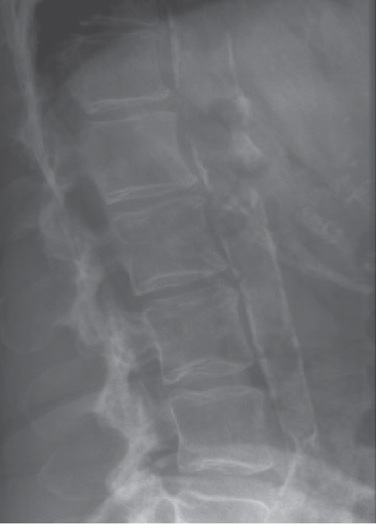 Abdominal aortic calcification Screening for abdominal aortic calcification using instant vertebral assessment may identify people at a higher risk of cardiovascular disease. | |
Body composition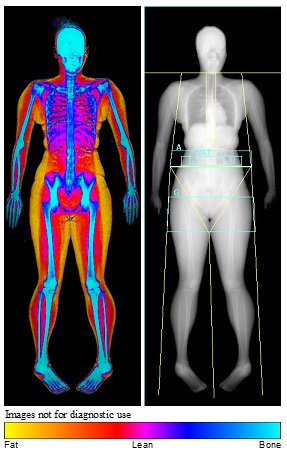 Skeletal muscle mass and adipose tissue can be quantified easily with a whole body DXA scan. | Hip structural analysis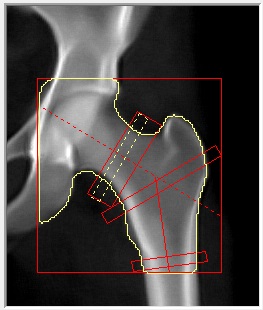 Geometry of the bone can be analysed to estimate measurements such as bone mass, cross-sectional area and cortical thickness. |
| With our specialised add-on program, our DXA machine can also analyse the deterioration of the micro-architecture of the lumbar spine by reporting a trabecular bone score (TBS). | |
 | |
| DXA uses a low dose of x-ray radiation and is otherwise non-invasive. You can view the product brochure here. | |
High-Resolution Peripheral Quantitative Computed Tomography (HR-pQCT)
View
HR-pQCT (high-resolution peripheral quantitative computed tomography): 3D assessment of cortical and trabecular density, cortical thickness and porosity, trabecular stress measures and more
 The HR-pQCT is a 3D imaging platform. While the DXA is the gold-standard for measuring BMD, the deterioration of the micro-architecture of bone is a key component of osteoporosis and is best assessed using HR-pQCT. | |
  The device scans the forearm and/or lower leg to assess volumetric bone density and 3D-structure of the tibia and radius (cortical and trabecular density and thickness, trabecular separation, cortical porosity and more). | |
Radius scan | Finite Element Analysis (FEA)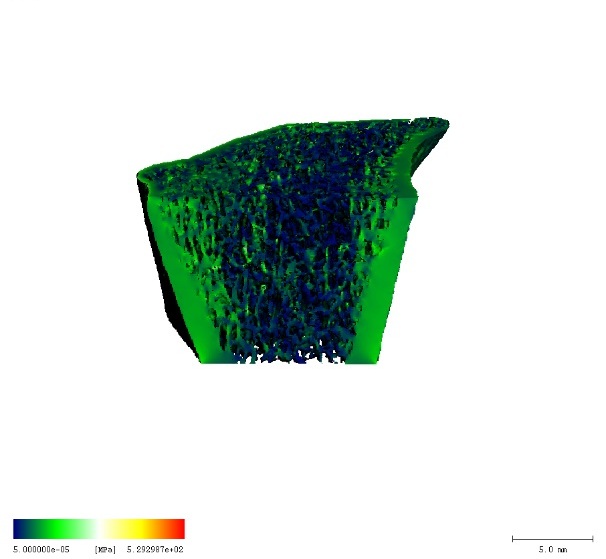 FEA can be used to calculate bone stiffness, failure load and more. |
Cortical density/thickness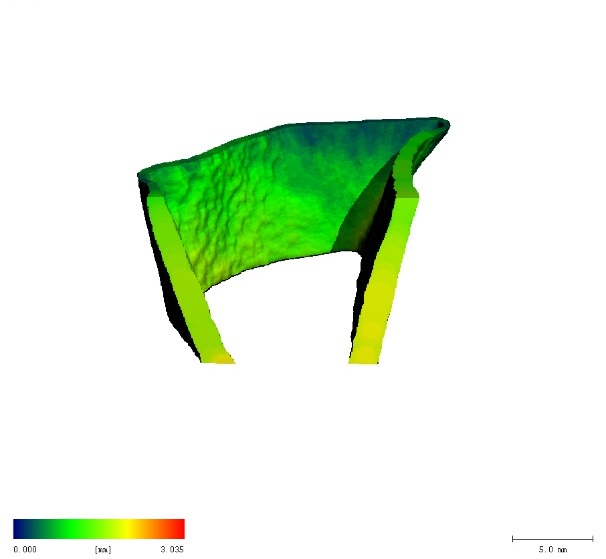 | Trabecular density/thickness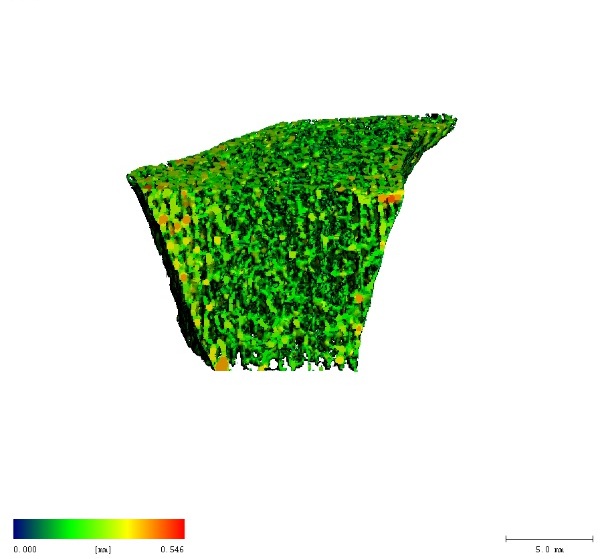 |
| Taking bone micro-architecture into account in combination with bone density improves fracture risk prediction and may aid in the management of patients with osteoporosis. This imaging modality uses a low dose of x-ray radiation and is otherwise non-invasive. You can read more about our device here. | |
Leonardo Mechanograph® Ground Reaction Force Platform (GRFP) Lite (LT)
View
The GRFP allows for dynamic measurement of ground reaction forces with respect to spatial resolution. Typical measurement duration is about 1 minute per test. The test procedures include different jumps for the analysis of individual anaerobic peak power, maximum voluntary muscular force and movement asymmetries. The well-established chair rise test enables falls risk analysis in geriatrics and can measure muscle power during the test. The multiple 1 leg hop (m1LH) is used to test peak muscle forces in the lower limb, where the participant is asked to hop on the ball of their dominant foot as hard and as fast as possible. The single 2 leg jump (s2LJ) is used to test peak muscle power where the participant jumps with both their feet as high as possible.
Peripheral Quantitative Computed Tomography (pQCT)
View
pQCT (peripheral quantitative computed tomography): 3D assessment of bone structure, composition and geometry at the radius and tibia
 Typical scans performed during a pQCT examination include the 4%, 30% and 66% site of the tibia. The trabecular bone density is assessed near the ankle at the 4% site, while cortical bone parameters can be assessed at the 30% and 66% sites. Muscle and adipose tissues are quantified at the 66% site.  | |
 Tibia Scan: 4% siteTrabecular bone density at 4% of the tibia |  Tibia Scan: 66% siteCortical bone density, muscle density, muscle area and fat area at 66% of the tibia. Muscle density has been related to important patient outcomes, for example physical performance, hospitalisation events and falls. |
| This imaging modality uses a low dose of x-ray radiation and is otherwise non-invasive. You can read more about our device here. | |
Quantitative Heel Ultrasound
View
Heel Ultrasound used to pre-screen for low bone mineral density
 The heel ultrasound device is mobile and can be used as pre-screening for osteoporosis. Using ultrasound, this device gives an estimate of bone density (expressed as “speed of sound”) which has been found to effectively predict osteoporosis risk. Although it cannot diagnose osteoporosis, this is an invaluable tool enabling researchers to identify those more likely to be at risk of developing osteoporosis, particularly in patients and community members who are isolated, have limited mobility or are unable to visit our clinics. |
Staff, students and collaborators
View
Researchers
Research Assistants
- Ms Vanessa Gan
Research Coordinators
- Mrs Chen Wang
- Ms Sarah Bullen
PhD Students
- Ms Lucy Collins
- Dr Simon Zhang
Honours student
- Mystica Jude
Alumni
- Ms Carol Alonso
- Ms Mavil Cervo
- Ms Anoohya Gandham
- Dr Amar Lakhani
- Dr Lachlan McMillan
- Mr Jakub Mesinovic
- Ms Carrie-Anne Ng
- Dr Eleanor Thong
- Mr Theo Di Pauli von Treuheim
Visiting Scientists
- Carol Daniela Alonso Gonzalez (2019): National University of Colombia
- Juan Diego Pena Rodriguez (2019): National University of Colombia
- Luisa Fernanda Rubio Pachon (2022): National University of Colombia
- Camila Andrea Rodriguez Gaitan (2022): National University of Colombia
- Cristian Andres Pena Rodriguez (2022): National University of Colombia
- Prof Dominik Schulte (2023) - University of Kiel, Germany
Monash Health Collaborators
- Professor Peter Fuller, AM NHMRC Senior Principal Research Fellow
- Associate Professor Amanda Vincent Adjunct Research Fellow
- Associate Professor Francis Milat, Hudson Institute/Monash Health
- Dr Phillip Wong NHMRC Early Career Research Fellow
- Dr Anne Trinh Monash Health Endocrinologist
- Dr Wei-Ling Chiu PhD student
National Collaborators
- Professor Richard Sinnott, University of Melbourne
- Professor Louise Maple-Brown, Menzies Institute of Medical Research, Darwin
- Associate Professor Cherie Chiang, The University of Melbourne/Austin Health/Melbourne Health
- Associate Professor Vivian Grill, Western Health
- Associate Professor Rory Clifton-Bligh, University of Sydney
- Associate Professor Christopher Yates, University of Melbourne
- Dr Shoshana Sztal-Mazer, Alfred Health
- Dr Christian Girgis, University of Sydney
International Collaborators
- Professor M Carola Zillikens, Erasmus University
- Professor Rajesh Thakker, May Professor of Medicine, University of Oxford
- Professor Bo Abrahamsen, University of Southern Denmark
- Professor Aasis Unnanuntana, Mahidol University, Thailand
- Associate Professor Kate Ward, University of Southampton
Student opportunities
View
Student Opportunities
If you are thinking of a career in musculoskeletal, endocrine, cardiovascular or metabolic research the BMRG is a great place to start. We are located at Monash Medical Centre (MMC) Clayton within easy walking distance of both Monash University Clayton Campus and the Clayton Shopping District. If you have any questions about a project, feel free to get in touch with the relevant researcher.
Available Projects
Honours/PhD
The effects of lifestyle differences on musculoskeletal health in ethnic populations
Genome wide association studies have shown that several genetic variants are associated with certain diseases, including osteoporosis and osteoarthritis. However, these genetic variants explain less than 10% of those diseases' variance – suggesting that the variability in disease susceptibility is mainly due to environmental lifestyle factors. Lifestyle factors include, but are not limited to: stress, physical activity, nutrition and socioeconomic status. This research project will look at the differences in lifestyle factors between ethnic populations from The Gambia, India and Vietnam, and how these are associated with bone and muscle health.
Supervisors: Dr Ayse Zengin, Dr David Scott, Professor Peter Ebeling
Contact: 03 8572 2918 or Ayse.Zengin@monash.edu
PhD
Musculoskeletal health of Indigenous Australians
Research on non-communicable diseases (NCD) in Indigenous Australians has mostly focused on diabetes mellitus, chronic kidney and cardiovascular disease. Musculoskeletal diseases, such as osteoporosis, share common comorbidities with these NCDs – with a combination further increasing bone fragility and fracture risk. There are no data on bone or muscle health in ageing Indigenous Australians. This research project will be the first to characterise the musculoskeletal health of Indigenous Australians using the latest bone imaging (DXA, pQCT, HRpQCT) and muscle function devices (jumping mechanography, grip strength).
Supervisors: Dr Ayse Zengin, Dr David Scott, Professor Peter Ebeling
Contact: 03 8572 2918 or Ayse.Zengin@monash.edu
Ethnic differences in bone health in The Gambia, India and Vietnam
There are differences in fracture risk between ethnic groups in both men and in women across the globe. Bone structure, geometry and strength, in addition to body composition affect mobility, fall and fracture risk. This epidemiological research project will utilise data from large studies from The Gambia, India and Vietnam to examine the ethnic differences in bone geometry and body composition in order to determine how these affect bone fragility and fracture risk.
Supervisors: Dr Ayse Zengin, Dr David Scott, Professor Peter Ebeling
Contact: 03 8572 2918 or Ayse.Zengin@monash.edu
Publications
View
Publications
Visit Pubmed for our recent publications.