
Invasive ragweed is rewriting its genome as it conquers new territory
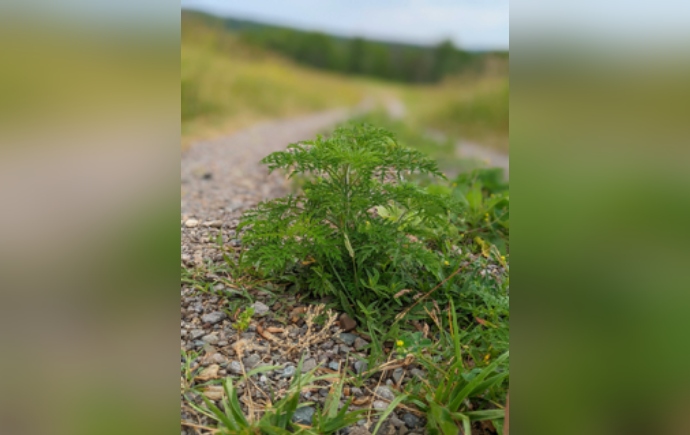
An invasive weed is rewriting its genome as it spreads.
An invasive weed responsible for severe pollen allergies around the world has revealed how rapidly plant genomes can change as species colonise new environments.
Researchers led by Monash University have found that common ragweed (Ambrosia artemisiifolia), a major invasive weed native to North America, has evolved striking differences in genome size across its global range, with Australian populations carrying significantly larger genomes than plants in North America and Europe.
Published in New Phytologist, the study analysed 439 ragweed plants from North America, Europe and Australia, combining whole-genome sequencing, genome-size measurements and climatic data to investigate what happens to a plant’s genome during invasion.
Lead author and Monash University School of Biological Sciences PhD candidate Byonkesh Nongthongbam said the results challenge the idea that genome size is a relatively fixed characteristic of a species.
“An invasion is an extraordinary evolutionary experiment, plants are suddenly exposed to new climates, new environmental pressures and major changes in their population structure,” Mr Nongthongbam said.
“What we found is that the genome itself can be part of that response. Australian ragweed populations have significantly larger genomes than populations in both North America and Europe, including the North American populations from which the Australian invasion is thought to have originated.”
Australian ragweed genomes were approximately 100 million DNA base pairs larger than European genomes and 120 million base pairs larger than North American genomes on average.
Much of the difference was associated with increased quantities of transposable elements, stretches of repetitive DNA sometimes called “jumping genes” because of their capacity to move or replicate within genomes. Transposable elements make up about 68.5 per cent of the common ragweed genome.
Professor Kathryn Hodgins, also from the Monash University School of Biological Sciences, said the findings provide a new window into the evolutionary processes that allow invasive species to establish themselves in unfamiliar environments.
“We tend to think about adaptation in terms of changes to individual genes, but this research shows that much larger-scale features of the genome can also be dynamic,” Professor Hodgins said.
“Genome size was associated with mean annual temperature across all three continents, while in North America and Europe we found evidence that differences among populations were greater than we would expect from genetic drift alone, a pattern consistent with natural selection.”
The researchers found warmer climates were associated with larger genomes across the species’ global range.
Australia presented a different evolutionary picture. Ragweed was introduced here around a century ago and underwent a substantial population bottleneck. Despite originating from more than one North American genetic source, Australian populations consistently carried larger genomes than their corresponding source populations. The study suggests demographic changes associated with invasion may have allowed transposable elements to accumulate, potentially alongside responses to the new environment.
“What's remarkable is how quickly this genomic change appears to have occurred,” Mr Nongthongbam said.
“Ragweed has been in Australia for only around 100 years. Yet we are seeing a clear, continent-wide difference in genome architecture compared with its ancestral range. It shows that genomes are not just static blueprints, they can be remarkably responsive to the ecological and demographic pressures that accompany invasion.”
Understanding that capacity is increasingly important as climate change alters the environments available to invasive species.
Common ragweed is a wind-pollinated invasive plant whose pollen is a major cause of hay fever and asthma. Knowing how rapidly invasive plants can respond to different climates could ultimately improve understanding of where troublesome species may establish and persist as environmental conditions change.
Professor Hodgins said the next challenge was determining exactly what the genomic changes mean for the plant.
“The question now is whether expansion driven by these jumping genes directly helps plants cope with new environments, or whether some of these changes initially arise because of the population bottlenecks associated with invasion and are then retained,” Professor Hodgins said.
“Distinguishing those processes will help us understand not only how ragweed evolves, but how genome architecture itself can influence the ability of invasive species to colonise new parts of the world.”
The researchers concluded that genome size should be viewed not simply as a fixed property of a species, but as an evolutionarily dynamic trait responding to demographic and ecological pressures during range expansion.
Further information
Silvia Dropulich
Marketing, Media & Communications Manager, Monash Science
T: +61 3 9902 4513 M: +61 435 138 743
Email: silvia.dropulich@monash.edu