Research Awards
The Faculty of Science Research Awards category recognises outstanding contributions to research across various stages and forms of impact.

The Faculty of Science Research Awards category recognises outstanding contributions to research across various stages and forms of impact.

This Award recognises research excellence by early career researchers who are within five years of the start of their research careers.
The winner(s) and nominees are:
Andrew is an emerging international expert in arid landscapes, who was awarded the 2024 AGU Luna Leopold Early Career Award and the 2023 ISAR Early-Career Research Award. He has published 18 peer-reviewed papers in four years, including lead-author papers in Nature Communications, Geology, and Geophysical Research Letters. Andrew’s H-index is 11, growing at 2.1/year, above the 85th percentile for his field. He is CI on three ARC and two NCI grants totalling $1.46M, and he co-wrote two grants supporting his PhD/postdoc ($1.13M).

Melissa is a Lecturer and ARC DECRA Fellow at the School of Mathematics, specialising in group theory, the abstraction of symmetry. Since earning her PhD from Imperial College London in 2021, she has solved key open problems and contributed to research on the Monster group. Her work appears in top journals and is widely cited. As President of the Australian Algebra Group and journal editor, Melissa is a leading figure in pure mathematics research and academic leadership.

Ariaan is an internationally recognised climate scientist with 35 publications in top-tier journals, including Nature Climate Change and PNAS. Her work has earned over 3,800 citations and an h-index of 26, with a field-weighted citation impact of 5.4, well above global averages. Ariaan collaborates widely, with half her papers involving international co-authors. Her research consistently demonstrates high impact and innovation, and she maintains an exemplary track record for her career stage.
In evolutionary and ecological genomics – the study of how genomic variation shapes organismal adaptation to environmental pressures – the pre-eminent research output is the peer-reviewed journal article. Earlier this year Paul co-led a study in Nature Ecology & Evolution which revealed just how quickly plants can evolve when introduced to new regions.

Rebekah’s research focuses on designing metal-based therapeutics to combat neglected tropical parasites. She pioneered novel antimony and gallium complexes, revealing parasite-selective inhibition and advancing metal-ligand synergy. Her work highlights the versatility of metals in drug design and their biochemical targeting. Beyond research, Rebekah contributes actively to undergraduate teaching, developing materials and delivering lectures in Bioinorganic Chemistry. Her strong SETU results reflect her excellence in both academia and education, making her a valued member of the Faculty.
Evgeni is a theoretical astrophysicist specialising in gravitational dynamics, compact object mergers, and planet formation. He has 41 publications (15 lead-author, two single-author), including a lead-author Nature paper, and over 1000 citations (h-index 18). His work appears in top journals like ApJ, MNRAS, and ApJL. He’s delivered 45+ seminars and 30+ conference talks, and was invited to speak at major workshops and schools across Europe and Australia, reflecting his growing international impact.
Yi-Xian researches tropical atmospheric dynamics, focusing on convective quasi-equilibrium to understand extreme rainfall. His work appears in top journals like Geophysical Research Letters, Journal of Climate, and Journal of the Atmospheric Sciences. He emphasises theory-driven, analytical approaches over case studies, using frameworks like vertical mode decomposition. Yi-Xian collaborates internationally with institutions in the USA, Japan, and Taiwan, contributing significantly to data analysis, interpretation, and coding in globally recognised climate science research.
The Researcher of the Year Award is designed to reward an individual who has achieved exceptional research outcomes in the previous one to two years. This award celebrates individuals who have not only achieved a pivotal research outcome but also embody the Monash University values and exhibit exceptional leadership both internally and across the wider research community.
The winner(s) and nominees are:

Kathryn is a leader in ecological genomics, known for pioneering work on structural variants and climate adaptation in invasive plants. Her first- and senior-author papers in Science, PNAS, and Nature Ecology & Evolution highlight her impact. Using museum specimens, she’s uncovered centuries of genetic change. She leads international, policy-relevant collaborations, promotes equity at Monash, and shapes the field through editorial leadership. Her nomination reflects sustained intellectual leadership and transformative contributions to evolutionary genomics.

Daniel is a mathematician specialising in geometry and topology. His recent work with PhD student Orion Zymaris connects spinors from physics with negative curvature geometry, leading to an extension of the 17th-century Descartes Circle Theorem. This breakthrough, solving a 380-year-old problem, has attracted significant media attention. Daniel’s research bridges deep mathematical and physical ideas, showcasing originality and impact in pure mathematics.
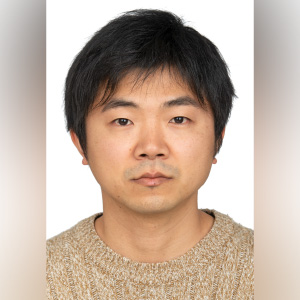
Ryosuke is a theoretical astrophysicist advancing stellar and binary evolution through cross-disciplinary modelling. His work spans Eta Carinae, X-ray binaries, supernova transients, and common-envelope interactions. He’s published 50+ papers in top journals (ApJ, MNRAS, PRD) with 1400+ citations and an h-index of 22. Ryosuke combines deep physics knowledge with innovative numerical models and has held leadership roles in OzGrav, ALManaC, and ANITA. He received the OzGrav Scientific Achievement Award for outstanding contributions to astrophysics.
The Research Team of the Year Award is designed to reward a team who has achieved an exceptional research outcome in the previous one to two years. Monash University is dedicated to research that spans the spectrum from discovery to impact, including challenge-led transdisciplinary teams and pure research teams. This award has been designed accordingly to reward research teams who have not only achieved a pivotal research outcome but those who also embody the Monash University values and exhibit exceptional collaboration both internally and across the wider research community.
The winner(s) and nominees are:
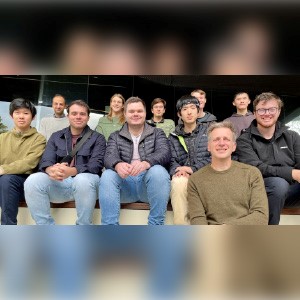
The Monash Experimental Particle Physics Group contributes to the LHCb experiment at CERN’s Large Hadron Collider, advancing our understanding of fundamental particles and forces. Their sustained involvement supports searches for new physics beyond the Standard Model. This year, the group’s achievements were recognised through the Breakthrough Prize in Fundamental Physics, awarded to all four LHCb collaborations. Monash’s role highlights its impact in one of the world’s most significant scientific endeavours.
The group consists of Dr Tom Hadavizadeh, Professor Ulrik Egede, Dr Riley Henderson, Dr Sam Dekkers, and HDR students Rongrong Song, Eliot Walton, Frank Liu, Riccardo Bonacci, and Tom Harris.
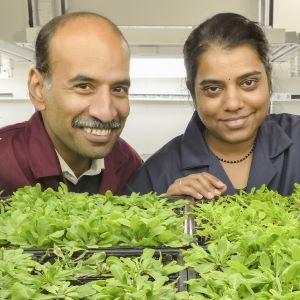
Led by Professor Sureshkumar Balasubramanian and Dr Sridevi Sureshkumar, this team pioneers plant molecular genetics, with landmark papers in Science and Nature Plants redefining temperature sensing and epigenetic regulation. Their work has broad implications for climate resilience and human health. They foster a collaborative, mentoring-rich environment and lead global, interdisciplinary projects. As thought leaders, they shape international discourse and drive innovation. Their sustained originality, impact, and integrity make them exceptional candidates for recognition.
This award recognises excellence by researchers who have achieved, or are currently achieving, outstanding economic and/or societal impacts.
The winner is:

Peter has transformed high-energy physics through his development of Monte Carlo event generators, sophisticated computer models that simulate particle collisions. Widely adopted by the global physics community, these “virtual colliders” underpin discoveries at CERN and have earned tens of thousands of citations. His work blends quantum theory with high-performance computing, enabling researchers to test fundamental physics and uncover new phenomena. Peter’s visionary leadership continues to shape the future of particle physics worldwide.
The Faculty of Science’s Award for Excellence in Research Commercialisation is designed to reward exceptional achievements by research staff who excel in transforming innovative research into practical, market-ready solutions. The award celebrates those who have translated an innovation into marketable solutions, products and services that meet the challenges of the age, leading to significant societal, economic, or technological benefits. It honours commitment to advancing research commercialisation and the impactful transition of academic discoveries into real-world applications.
The winner is:
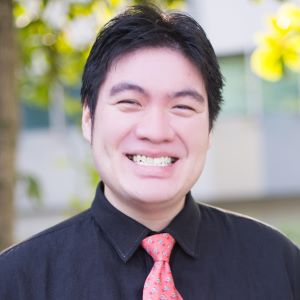
Joash has achieved a major milestone for Monash University Malaysia with the successful licensing of his nanocomposite technology—one of the School of Science’s first commercialisation agreements. Running through 2043, the partnership addresses a global challenge in atopic dermatitis treatment, impacting over 200 million people. Backed by award-winning innovation and high-impact research, Joash’s work exemplifies translational science, turning lab discoveries into real-world solutions through interdisciplinary collaboration and industry engagement.