
Where
Our Research Locations

Eastern Indonesia: Our research sites in Lombok, Makassar and Kupang
Our research was conducted in partnership with communities in three areas of Eastern Indonesia. Eastern Indonesia has one of the lowest per capita incomes in Indonesia. It is at risk of extreme climate-related disasters. The World Bank and the government of Indonesia have identified Lombok, Makassar and Kupang as areas at high risk of experiencing more extreme rainfall events such as flooding and drought. These disasters have knock-on impacts including water pollution, reduced food production, and barriers to access health services.
We chose Kupang, Lombok and Makassar as critical sites to understand the intersectional impacts of climate change on vulnerable communities.
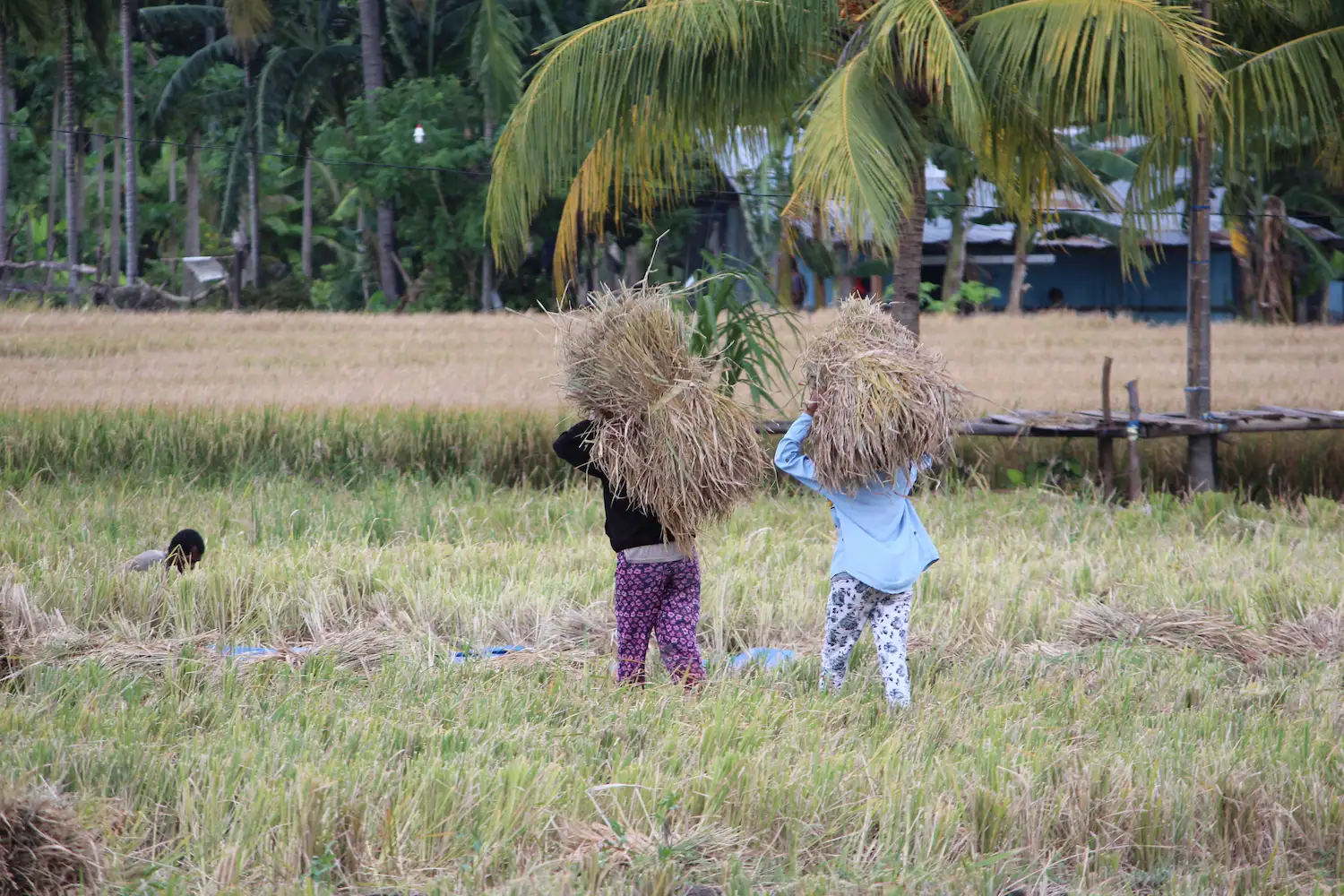
Two female agricultural labourers at harvest time in a rice field at a research location in Kupang
Kupang is the capital of the Indonesian province of East Nusa Tenggara, on the Island of Timor. Kupang Regency, the area around the capital, has a population of 366,383 people per 2020 census.The dry season lasts from April to October, followed by a rainy season from December to March.
The economy of Kupang Regency is heavily reliant on the agricultural sector which is already experiencing unusual climate variability. The region's economic well-being is increasingly precarious, with women and persons with disabilities facing greater barriers to accessing resources and decision-making power.
The impacts of climate change on Kupang Regency are multifaceted. The disruption of agricultural productivity, coupled with the increased frequency and intensity of extreme weather events, can exacerbate economic burdens, particularly for households already facing economic hardship.
As part of our research, we collected data from March to June 2024 with three communities across Kupang Regency, representing the broader demographic landscape of the region. Two of these communities are in low-lying hill areas, while the third community is coastal. The primary livelihood activities for these communities are farming and fishing. These are sectors that have been significantly disrupted by climate change.
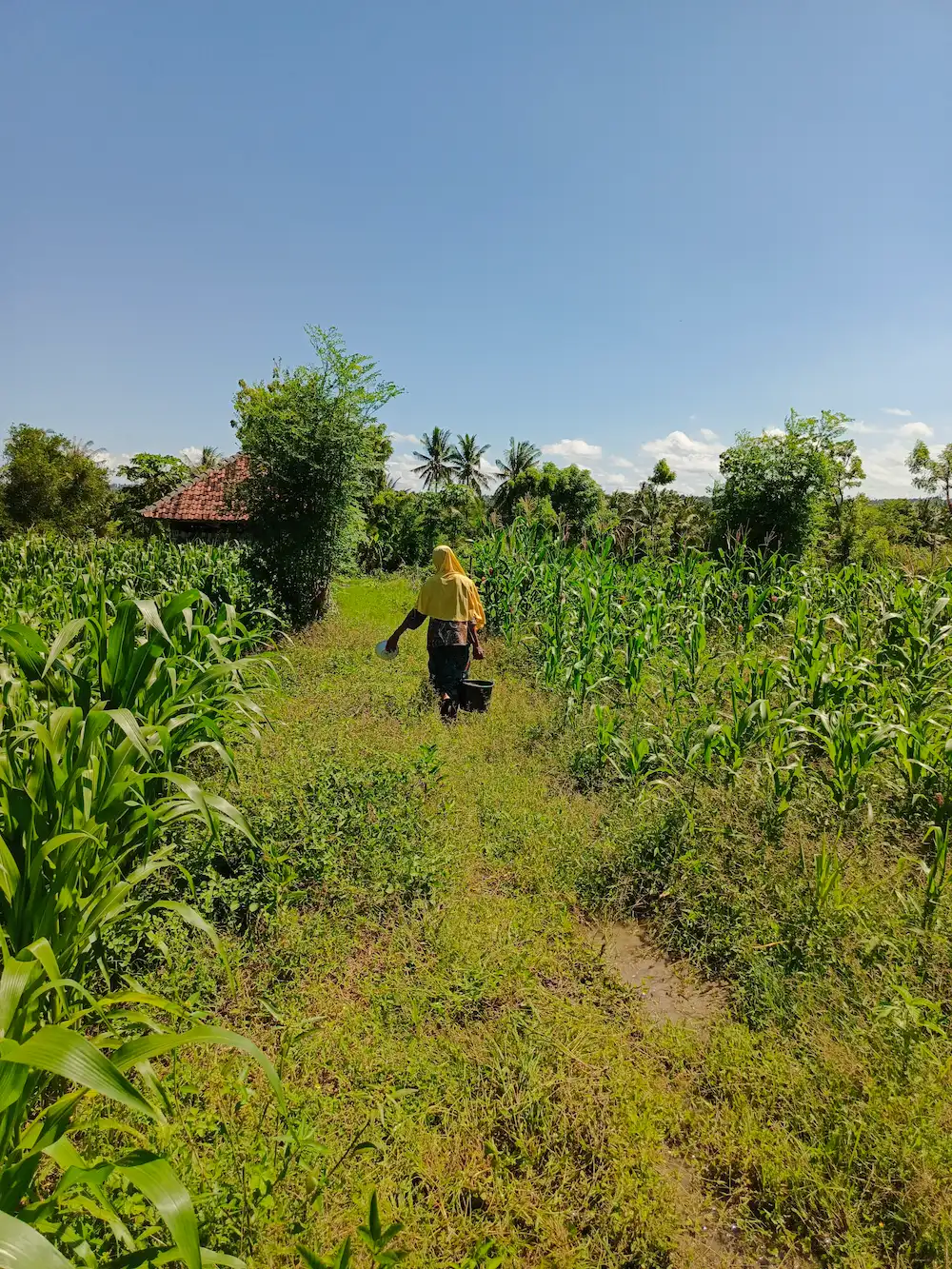
An older woman carrying water in a field in one of our Lombok research locations
Lombok is a small island in the Indonesian province of West Nusa Tenggara, located between the islands of Bali and Sumbawa. We worked in Pringgabaya, in East Lombok Regency, the most densely populated sub-district in Lombok. As of 2021, there were 112,373 people living in Pringgabaya spread across 15 villages and 86 hamlets.
Key livelihoods in Pringgabaya are crop farming (corn, rice, cassava, chilli peppers, shallots, and tomatoes) and fishing (fish and octopus). Minimum wages are low. The most commonly used drinking water sources by the residents are boreholes or pumps, piped water with meters, and directly from springs. Both the agricultural and seafood industries, as well as drinking water quality in Pringgabaya have been impacted significantly by changes in climate.
The area is prone to climate-related disasters. Both water shortages and inundation regularly occur. In 2020, drought in Pringgabaya meant that rainfall was just 1,078 mm³, with rain occurring on just 68 days that year. 2019- 2020, Pringgabaya also experienced two floods, 151 earthquakes and four tidal waves. It is rare to have local comprehensive disaster mitigation protocols (only existing in one village, Labuhan Lombok).
Our data collection took place from March to May 2024 in two villages in Pringgabaya. One village is very densely populated, and the other has rice fields and plantations, as well as residential areas. Residents of both villages are mostly farmers, farm laborers, traders, and fisherpeople. Residents of both villages described significant impacts of climate change.

An alleyway between houses in one of our Makassar coastal research locations
Makassar is the capital city of the Indonesian province of South Sulawesi. It is the largest city in Eastern Indonesia and the fifth-largest city in Indonesia. By 2020, 1.5 million people lived in Makassar. The four main ethnic groups of South Sulawesi are the Bugis, Mandar, the Toraja and the Makassar.
Since the 14th Century, Makassar has been an important trading port in the Malay Archipelago. The Port of Makassar today is the major shipping hub for eastern Indonesia. Key industries in Makassar are trade, logistics, manufacturing (especially ship-building), food processing, and tourism. The city is home to several universities and research institutes, making it an important educational centre for Eastern Indonesia.
Makassar faces various challenges related to climate change. The city has a tropical rainforest climate with high temperatures year-round. Rainfall is high, with an average of over 200 mm per month. One of the significant climate challenges is the increased risk of flooding. As a coastal city, Makassar is particularly vulnerable to rising sea levels, storm surges, and heavy rainfall, which can lead to frequent and severe flooding. Recent dry-season droughts have seen water shortages for many residents.
We collected data in four research sites in Makassar from March to May 2024, including three coastal communities and one agricultural community. At the coastal sites, major industries are fish processing, ice production, shipyards and handicrafts. Most community members work informally in fishing and casual labor. Education levels are low, on average less than 9 years of basic education. Challenges faced in those areas include relatively high poverty rates and environmental problems such as sanitation and waste management. For the agricultural research site in Makassar, the key industries are crop production such as rice, corn, cassava, and various fruits and vegetables. Agricultural productivity remains relatively low, with many small landholdings and traditional farming methods. Farmers often struggle with limited access to irrigation, credit, and markets. Older people, people with disabilities, and women across the four sites reported limited access to information, resources, and decision-making power, limiting their ability to prepare for and respond to climate-related emergencies.