
StigmaBeat
StigmaBeat project
Little is known about the experience and impact of intersectional stigma experienced by rural young people (15 – 25 years) who have parents with mental health challenges. The StigmaBeat Project evolved from a collaboration with international researchers, a specialist mental health service, Satellite Foundation and young people from Gippsland.
In this novel participatory project, a co-design approach was employed with parallel research and intervention processes to co-create a series of short films that identify and challenge mental health stigma, from the perspective of young people who have experienced this phenomenon. Co-design with young people is a dynamic and engaging method of collaborative research practice capable of harnessing lived experience expertise to intervene in social issues and redesign or redevelop health services and policies. The participatory approach involved trusting and implementing the suggestions of young people in designing and developing the films and creating the physical and social environment to accommodate this; embedding trauma informed approaches and creativity, a critical element to the project’s methodological success.
During two weekend workshops co-facilitated by young peer leaders, data was collected via pre and post workshop surveys, ethnographic field notes, photographs and the group discussion notes. The data were analysed using an abductive method, through the lens of epistemic injustice. Results indicated that young people’s experiences of stigmatisation can be effectively understood as experiences of epistemic injustice. Participants expressed that their experiences comprised ‘more than’ stigma, and their responses suggest the centrality to their experiences of being diminished and dismissed in respect of their capacity to provide accurate accounts of their experiences of marginalisation and distress. The co-created films could be seen as counter-narratives that challenge stigmatising discourses (for example, regarding age, mental health, sexuality, gender and socio- economic conditions), and also shed light on alternative perspectives that challenge dominant understandings of stigmatisation.
A year later, the researchers returned to collaborate with some of the young people from the original project, to co-design an advocacy and education workshop, featuring the films. The purpose of this package was to identify and disrupt stigma in the places the young people described experiencing it: in families and neighbourhoods, education settings, GP clinics, emergency departments of hospitals, in the mental health sector, emergency relief and housing/homelessness services and in workplaces. This workshop has now been successfully piloted at a national conference (TheMHS) and at an Innovation Breakfast in Morwell, Gippsland (where the project took place).
News: StigmaBeat project
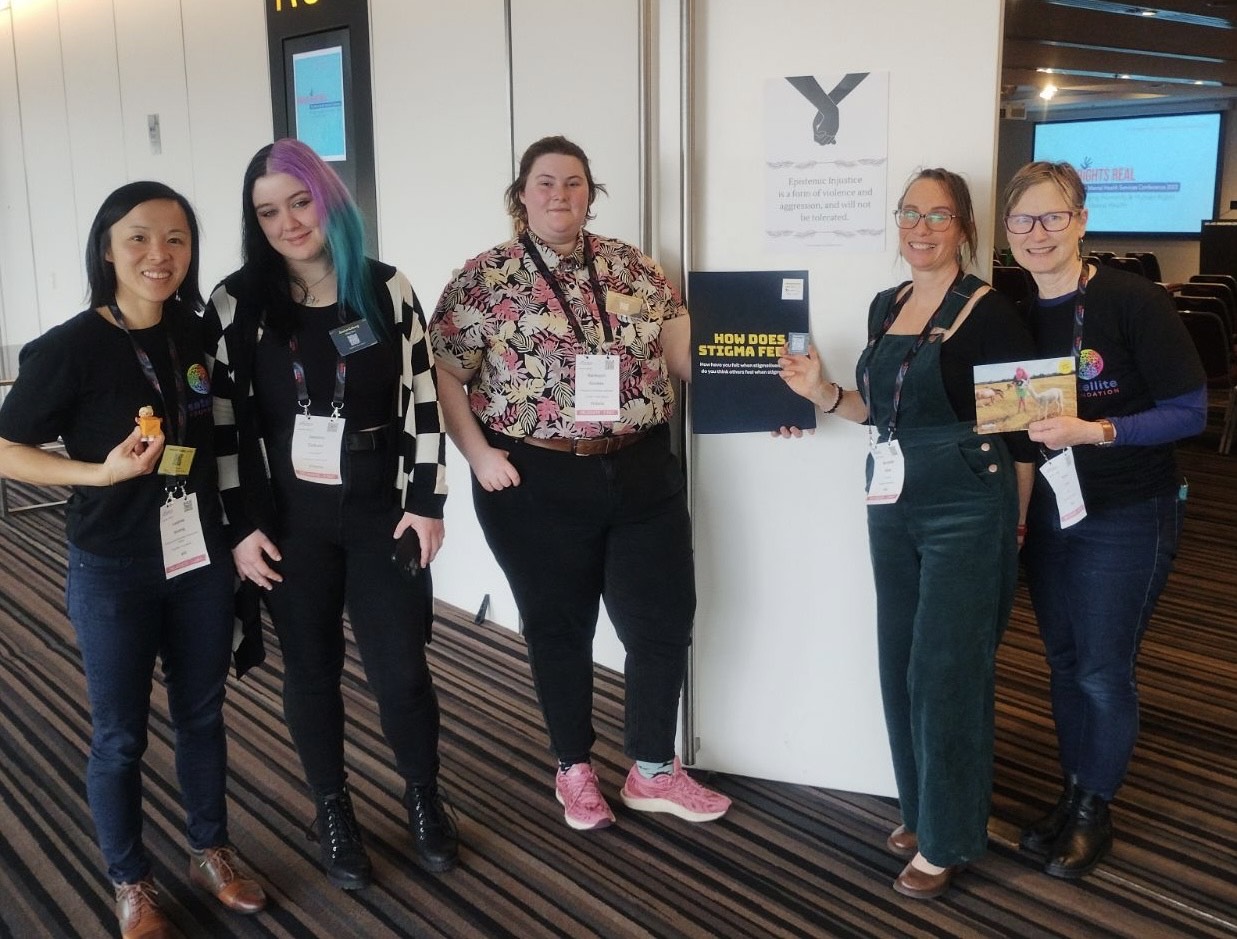


StigmaBeat Investigators
Graduate research opportunities
The StigmaBeat study will provide a range of opportunities for graduate research students looking for rewarding honours, masters or PhD projects.
Please contact Dr Rochelle Hine.