
A different lens for recognised stigma faced by children of parents with mental health challenges
A ground-breaking study conducted with Gippsland children of parents with mental health issues, reveals widespread feelings of being diminished and dismissed when discussing their experiences of marginalisation and distress.
Around one million children across Australia grow up in a family where a parent has a mental health challenge. In Gippsland, this equates to 5,000 children. A ground-breaking study conducted with Gippsland children of parents with mental health issues, reveals widespread feelings of being diminished and dismissed when discussing their experiences of marginalisation and distress.
The international co-design film-making study with 18 young people from the Latrobe Valley, published in the Journal of Sociology of Health and Illness and led by Associate Professor Scott Yates from De Montford University in Leicestershire and Dr Rochelle Hine from Monash Rural Health, looked at how the young people’s experiences could be understood through a lens of epistemic injustice. Epistemic injustice refers to what happens when a person’s account of their experiences is dismissed because of perceived stigmas. In the case of this study, the researchers looked at epistemic injustice young people who have parents with mental health challenges.
According to Dr Hine, parental mental health issues can bring challenges for all family members and for family relationships.
“Children of parents with mental health challenges speak about having opportunities to develop empathy, understanding and many strengths. Many of them lead healthy lives. However, we also know that they may have an increased risk of developing mental health difficulties themselves, as well as experiencing behavioural, interpersonal, academic and social difficulties,” she said.
“We found that mental health stigma interacts with and exacerbates other forms of stigma and discrimination, such as sexism, racism and homophobia. We were curious to find out how these findings might resonate for a cohort of rural young people.”
In response to the issues experienced by children of parents with mental health challenges, the researchers developed, alongside community partners and stakeholders, the StigmaBeat project in rural Australia.
This study conducted a detailed analysis of the collected data from the participants. The study found that the concept of stigma was insufficient as a means to represent the breadth of their experiences of the various overlapping ways of being marginalised, disempowered, devalued and discriminated against. This led the researchers to analyse these experiences through the lens of epistemic injustice.
The StigmaBeat project is a set of activities aimed at exploring the experiences of stigma of young people with parents with mental health challenges and to produce anti-stigma resources that could be used for education and advocacy in the settings in which young people identified experiencing stigma. The Monash research team, including a young lived experience expert, partnered with a non-government community-based mental health service, Satellite Foundation, who specialise in providing programs and support to children and young people who live in families where a parent or another family member experiences mental health challenges.
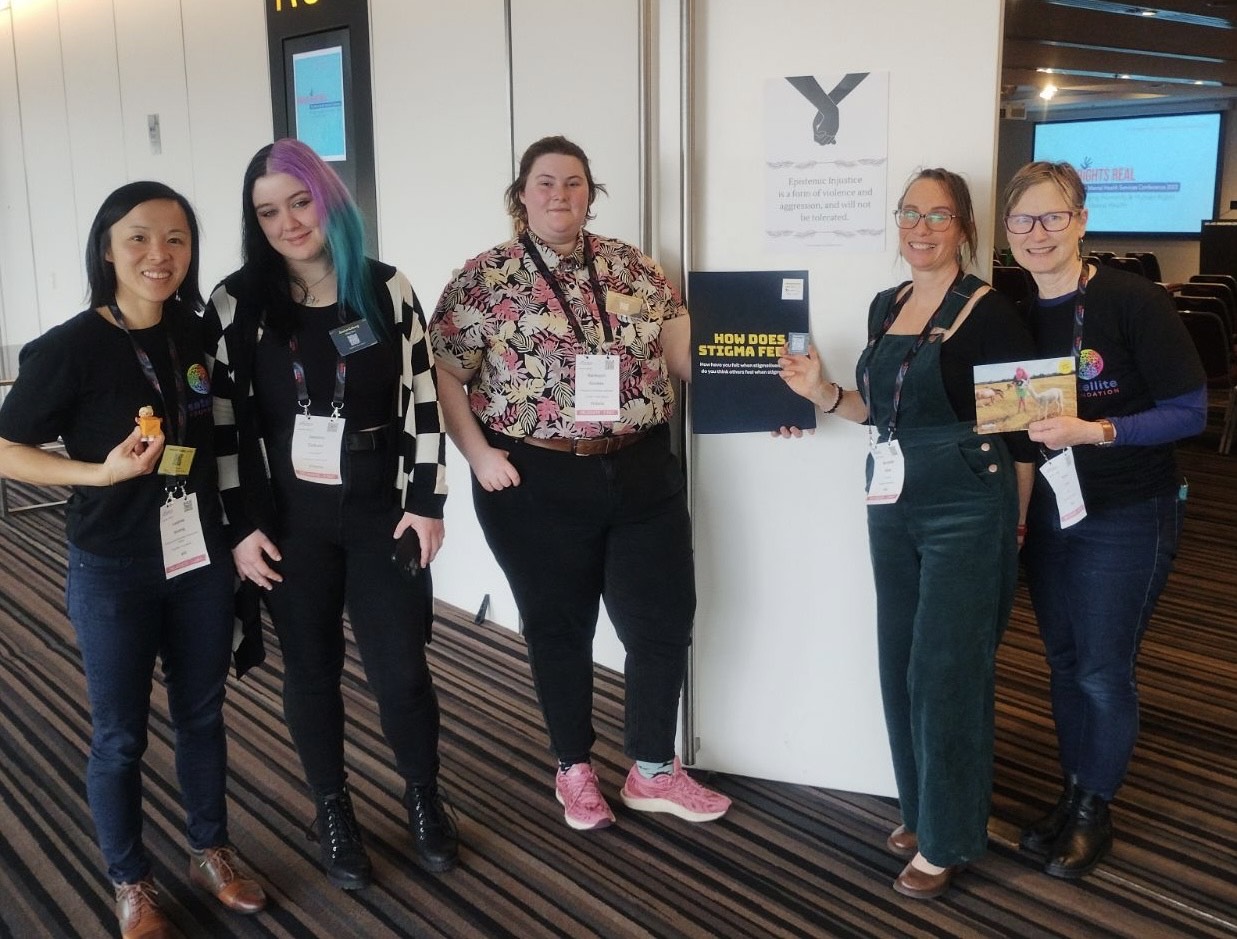
This project involved the design and implementation of two workshops to enable young people who have parents with mental health challenges to share their understanding and experience of different forms of stigma. It led to the production of multiple forms of data by and with 18 young people who took part, including a series of short films, photo-stories, artworks, group discussions and focus groups.
Participants were aged between 15 and 24 years with an average age of 18.4. Eleven young people identified as female, four as male and two as non-binary. They all resided in a rural location in Gippsland and all were engaged with youth mental health support services of some type.
The participants identified the experience of stigma not only in their capacity as children of parents with mental health challenges, but also as young parents, as members of sexual minority groups, as people with learning disabilities and as mental health service users themselves.
According to Dr Hine, there was a strong sense of stigma being experienced in a wide range of settings, including within families and from people in health and education “such as teachers, peers and others in the school environment, employers, GPs and doctors (hospitals in general were also identified as sources of stigma), other services young people interact with such as ‘Food Aid’, ‘Shelter Aid’) and older generations,” she said.
“Using the lens of epistemic injustice allows us to propose a new perspective on the experiences of stigma in the lives of young people with parents with mental health challenges. It helps us move beyond a focus on mental health stigma alone, to recognise in the young people’s accounts and reflections of their struggles, individually and interpersonally, experiences of having their testimonial input into their own lived experiences invalidated, dismissed and overridden.”