
Deep Dive: Professor Richard Reina, Faculty of Science Deputy Dean Education, on why tomorrow’s scientists need more than science
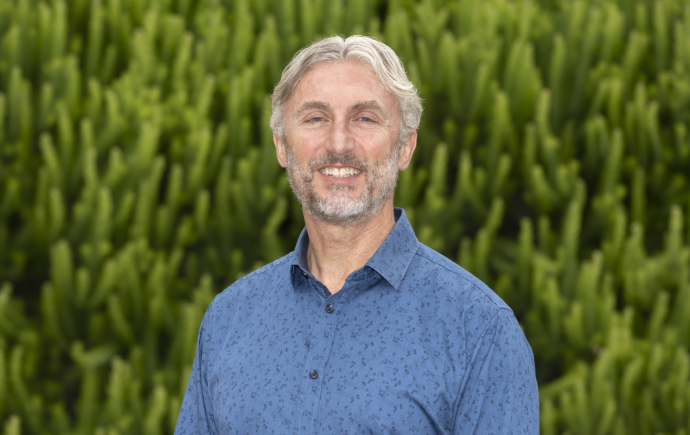
Professor Richard Reina, Faculty of Science Deputy Dean Education
“The biggest challenges facing humanity don't belong to one discipline. Likewise, our approach to science education must include multiple approaches.”
Professor Richard Reina has spent much of his career looking beneath the surface.
As one of the world’s leading marine vertebrate researchers, who also leads the Ecophysiology and Conservation Research Group he’s become accustomed to challenging popular assumptions. From misunderstood sharks to vulnerable sea turtles, and Victoria’s city-dwelling and country penguins, Richard’s research has always been driven by a fascination with the gap between perception and reality. Whether challenging fear or protecting species at risk, his work asks people to look beyond first impressions and that same philosophy now shapes the way he thinks about science education.
While public attention gravitates towards the rare shark encounter or cute turtle hatchling, his research tells a different story, one of species under increasing pressure, ecosystems under strain and the scientific evidence needed to understand and protect them.
It’s a philosophy that extends well beyond marine biology.
"The world's biggest problems often look simple on the surface," Professor Reina says.
"When you dig deeper, you realise they’re incredibly complex. That’s true in ecology, and it’s equally true in education."
As Deputy Dean Education in the Monash University Faculty of Science, a position he’s held since 2022, Professor Reina believes universities face a defining question.
How do we prepare graduates for problems that don't yet have solutions?
It’s a question he's been exploring for much of his academic career.
Before taking on faculty-wide educational leadership, Professor Reina led the education program in the School of Biological Sciences, shaping curriculum while continuing to build an internationally recognised research profile.
For him, research and education have never been separate pursuits.
"If science keeps evolving, then education has to evolve with it," he says. "Otherwise, we're preparing students for a world that no longer exists."
That world is changing faster than ever.
Artificial intelligence is reshaping scientific discovery. Climate change is transforming ecosystems and economies. Food security, biodiversity loss, sustainable manufacturing and emerging technologies increasingly demand scientists who are comfortable working across traditional disciplinary boundaries.
"The next generation of scientists will still need deep disciplinary expertise," Professor Reina says. "But they'll also need to connect ideas, work collaboratively and understand how science translates into solutions."
Professor Reina argues that universities shouldn't simply respond to change; they should anticipate it.
"Our responsibility isn't just to prepare students for today's workforce," he says. "It's to prepare them for the scientific challenges that are only beginning to emerge."
That philosophy has shaped the Faculty's educational direction for many years.
Long before interdisciplinary science became one of higher education's defining themes, the Faculty introduced the Bachelor of Science Advanced – Global Challenges (Honours), one of the first degrees of its kind in Australia.
Built around the United Nations Sustainable Development Goals, the program challenged students to think beyond scientific discovery alone. Tackling climate change, food insecurity, biodiversity loss and responsible production require more than scientific knowledge. It demands graduates who can navigate complexity, influence policy, collaborate across sectors and translate evidence into meaningful action.
What began as an innovative educational model has become increasingly relevant.
"The challenges our graduates will inherit don't fit neatly into academic silos," Professor Reina says. "Our education has to reflect that reality while remaining grounded in rigorous scientific thinking."
The same long-term thinking underpinned the Faculty's decision to establish the Master of Environment and Sustainability, recognising early that environmental challenges would demand graduates capable of integrating science with economics, governance, policy and community engagement.
Rather than viewing sustainability as a discipline in its own right, Professor Reina believes it has become a way of thinking that strengthens science education across every field.
"Science education is increasingly a shared endeavour," he says.
"As the importance of cross-disciplinary collaboration within science has grown, so too has the opportunity to strengthen programs in the portfolio, bringing together expertise from across the Faculty while ensuring students experience one integrated science education."
It’s a philosophy reflected across the Faculty’s broader postgraduate portfolio.
Rather than developing master’s degrees simply to expand choice, the Faculty has deliberately invested in emerging areas where scientific discovery intersects with some of society’s biggest challenges.
Programs such as Genome Analytics anticipated the rapid growth of genomics and precision medicine. Green Chemistry and Sustainable Technologies recognised the global transition towards cleaner manufacturing and circular economies. Behaviour and Systemic Change acknowledged that solving complex problems requires understanding human behaviour as well as scientific evidence. Food Science and Agribusiness brought together expertise spanning science, food production, sustainability and global supply chains.
Some of those programs began with relatively small cohorts.
"That's often what innovation looks like," Professor Reina says. "When you're educating for industries that are still emerging, demand doesn't always arrive immediately."
Over time, many of those once-specialised programs have grown alongside the industries they were designed to serve. What might have initially been seen as niche offerings have become increasingly relevant as governments, business and communities grapple with the scientific, technological and environmental challenges reshaping the global economy.
For Professor Reina, this isn't a coincidence.
"A university shouldn't simply follow where the world is going," he says. "Part of our responsibility is to help shape where it's going."
That belief reflects a broader view of what science education should achieve.
The role of a university isn't simply to produce graduates with technical expertise. It is to develop people who are intellectually curious, comfortable with uncertainty and capable of drawing together evidence from multiple perspectives to solve problems that no single discipline can solve alone.
The science itself will continue to evolve. The technologies will change. Entire industries will emerge that scarcely exist today.
"The most important thing we can teach students isn't just what we know now," Professor Reina says. "It's how to keep learning, adapting and asking better questions throughout their careers."
It’s why the marine metaphor feels so fitting.
For decades, the public conversation has focused on the visible drama of shark encounters.
But science tells a much deeper story.
Professor Reina believes the future of science education deserves the same perspective.
The real challenge isn't teaching students what we know today.
It’s preparing them to discover what nobody knows yet.
Further information
Silvia Dropulich
Marketing, Media & Communications Manager, Monash Science
T: +61 3 9902 4513 M: +61 435 138 743
Email: silvia.dropulich@monash.edu