Global Challenges

Global Challenges

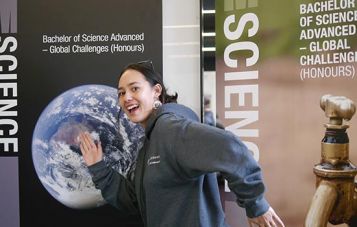
The Bachelor of Science Advanced - Global Challenges (Honours) includes all the elements of a Bachelor of Science, but with more. If you love science, and you are curious, adventurous, creative and prepared to challenge the status quo, then this course is for you.
Work Experience 1Work Experience 2Work Experience 3

Have you got what it takes to change the world?

“We need a new generation of science graduates equipped with a broad set of skills and experiences that push the boundaries of what is possible.”

Course Director Djuke Veldhuis


The Monash Bachelor of Science Advanced – Global Challenges (Honours) is a one of a kind degree in Australia that pushes the boundaries of science and uses science to tackle some of the world’s biggest challenges from climate change and food insecurity to responsible consumption and production. Using the United Nations Sustainable Development Goals as our platform for understanding we combine our love of science with society. We want to know “How do we get from ideas to workable realities?”

This undergraduate course is for science students who have the drive and passion to use science to influence business, government, the not-for-profit sector and the wider community to affect real change. Big solutions to even bigger challenges need more than just brilliant scientific minds; we need leaders, deep thinkers, adventurers and innovators.

We need a new generation of science graduates equipped with a broad set of skills and experiences that push the boundaries of what is possible and bridge the boundaries that exist between industries.

Our global graduates will be equipped to look at the world from multiple perspectives, step into the shoes of those experiencing global challenges and consider how to solve them by collaboratively drawing on industry, government and scientific practices.

An industry-based approach to learning

The Global Challenges course takes an industry-based approach to learning. From day one our students meet and collaborate with leaders across industry, government, not-for-profit and research sectors. Doing so provides our students with the skills, networks and confidence to tackle the pressing issues that our society faces today. This approach is known as ‘Work Integrated Learning’ (WIL) and the concept is specifically aimed towards creating meaningful and positive benefits for both partner organisations and our students. By harnessing the energy and expertise of Global Challenges students, organisations gain by having access to highly engaged, advanced science students with class-leading communication skills, a holistic perspective as well as a keen desire to gain experience that will contribute to their future careers.

How we teach

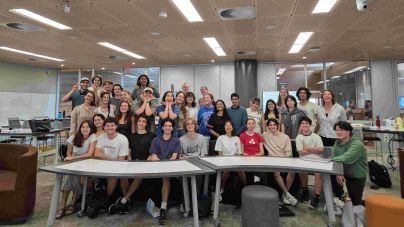
We encourage you to think differently. Our educational approach is hands-on, highly interactive and often pushing the boundaries of what a classroom is or should look like. Our view is that if you want to foster change makers, you’ve got to get them to think outside of the box.

During the course, students will learn to think and act like global change advocates and leaders, not necessarily leading from the front, but nonetheless driving meaningful and systemic change within organisation and broader society. Our responsive program design provides an absorbing and creative learning environment where students can stretch their thought processes and find new ways of creatively approaching the same challenge.

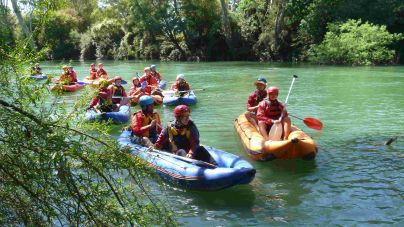
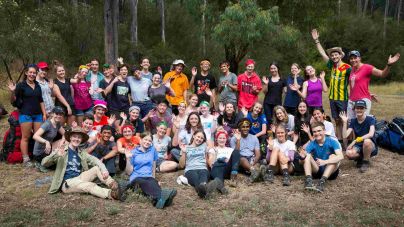
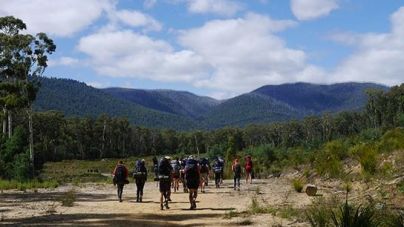
By using retreats, play-based learning, mindfulness practice, community/industry excursions and leadership activities conducted only within the degree, Global Challenges brings a strong multidisciplinary framework to a science-based course. Students are equipped to pursue industry-based work and/or further study beyond their undergraduate degree. . This is because today it takes more than just a strong scientific background to affect change; in addition to studying the scientific discipline of your choice – from the broad range available at Monash – you'll receive in-depth training in leadership, persuasive communication, entrepreneurship, policy, ethics and corporate social responsibility.

Activities like student-led seminars, dialogues with business and government leaders, working with leading scientific researchers and undertaking internships both locally and overseas, highlights the unique intersection of communication, leadership, business and science that Global Challenges integrates together.

event photo

If you love science and are curious, adventurous, creative and prepared to challenge the status quo, then this course is for you.

In addition to meeting the course prerequisites, applicants for the selective-entry Bachelor of Science Advanced (Honours) – Global Challenges may be invited to attend an online interview.

The interview allows the Global Challenges team to learn more about you beyond your school marks and grades. It’s an opportunity for you to share your passions and your motivation for applying to this degree.

Application  🡪 interview  🡪 offer

Djuke Veldhuis

Associate Professor / Course Director
- Bachelor of Science Advanced - Global Challenges (Honours)

Djuke is passionate about engaging at the intersection of science and society. She has developed and delivered science communications training to hundreds of people across the globe. Previous roles include managing FameLab, an international science communication competition in partnership with Cheltenham Festivals, The British Council and NASA, as well as work with the US Global Development Lab’s “Partnership for enhanced engagement in research. She holds a BA (hons) in Archaeology & Anthropology, majoring in Biological Anthropology, from the University of Cambridge. Her subsequent doctoral research, also at Cambridge, examined the effect of social and environmental change on human health and well-being in Papua New Guinea. This interdisciplinary research background sits alongside extensive teaching experience and a first-class MA degree in science journalism from City University, London.

Diana Renner

Senior Lecturer  

Diana Renner has been involved with the Global Challenges degree since its inception in 2014. She is an educator, consultant and award-winning author. Her work weaves together adaptive leadership, adult development and process-oriented psychology, nurturing creativity and building skills for successfully managing uncertainty and making progress on complex challenges. Diana believes that leadership is an activity that anyone can engage in, regardless of background or position.

Diana has taught on a variety of leadership programs, including as a guest faculty member with Harvard University Kennedy School of Government for ‘The Art & Practice of Leadership Development’ program, Melbourne & Monash Business Schools, the Australian Public Services Commission, and the Australian Institute of Police Management.

Diana is a co-author of ‘Not Knowing: the art of turning uncertainty into opportunity’, winner of the ‘Management Book of the Year' award in the UK and 'Not Doing: the art of effortless action'. The books have been translated in more than 12 languages.

Grant Ennis

Lecturer

Since 2020 Grant has been an adjunct Lecturer at Monash University. Grant’s teaching and research focuses on the political and commercial determinants of health, primarily exploring the political influence of the sugar, road, and fossil fuel lobbies. The author of the acclaimed book Dark PR: How Corporate Disinformation Undermines Our Health and the Environment, his work has been referenced in the Journal of Transport & Health, Traffic Safety Research, Alcohol Clinical & Experimental Research, the Australian, Michael West, the Australian Financial Review, the Irish Times, the Irish Examiner, the Irish Independent, among others. His scholarship has had international reach and has contributed to parliamentary discussions related to nutrition and transport in Australia, Ireland, and the United Kingdom.

Jake Port

Lecturer - Bachelor of Science Advanced Global Challenges (Honours)

“Global Challenges is the course that I did at Monash University and would still be the course I'd do today if I had my time again. Having worked at a big 4 accounting firm in R&D Tax, as a science journalist and as someone who loves bridging industries and thinking outside of the box, I am proud to be part of the team delivering this content and excited to see where our students take their learnings in the future.”


Rosemarie Herbert

Senior Teaching Fellow in the Faculty of Science

“I started at Monash as an undergraduate science student and have never left! I completed my PhD investigating the genetic basis of Wolbachia’s protective effects in preventing A. aegypti mosquitoes from transmitting dengue virus in 2017. My current interests include developing student recognition of transferable skills, and promoting student employability through work integrated learning”