
Demitra Edward
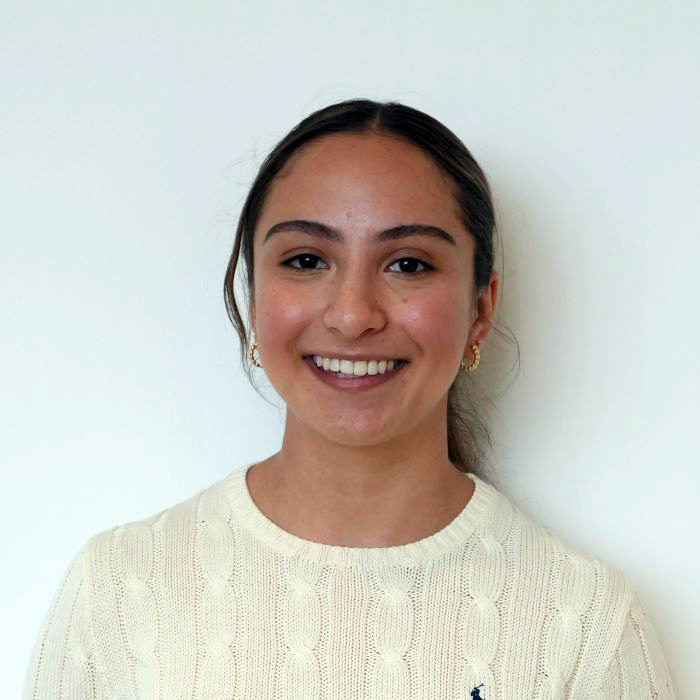 Direct Entry Medicine
Extended Rural Cohort
Tell us about your pathway to studying medicine.
I completed most of my schooling in the UK before my family relocated to Gippsland when I was in year 9, and I finished high school in Sale. By year 12, I was certain medicine was the path for me. I'm passionately curious - I always want to understand how and why things are the way they are, and medicine offers a lifetime of learning. I also have a deep appreciation for the trust people and communities place in their doctors, especially during some of their most challenging times. It's a privileged position to be trusted with.
Why did you choose to study medicine at Monash? What encouraged you to preference the Extended Rural Cohort?
I was looking for an undergraduate pathway with hands-on learning opportunities available early on, and Monash offered exactly that - I'd heard especially good things about how central practical learning is to the Extended Rural Cohort (ERC) program. I'd also had a wonderful experience moving to a regional town after leaving the UK, and I was eager to spend more time in regional Victoria. The ERC program let me do exactly that through my clinical placements.
Where have you completed your placements so far? What have been some of the highlights of these?
I completed Year 3B at Latrobe Regional Health in Traralgon. During Year 4C, I was fortunate to be accepted onto an exchange to the Karolinska Institute in Stockholm for the first half of the year, where I undertook rotations in women's and children's health. For the second half of 4C, I was placed at Latrobe Community Health Service in Morwell for my GP rotation, and back at LRH for psychiatry.
This year, I'm completing my BMedSc(Hons) at the Victorian Heart Hospital in Clayton.
For me, the highlight has been the sheer breadth of opportunities available. I've met medical students from across Europe through the exchange, built research skills through my honours year, and grown in confidence clinically - placements in a regional environment have given me enough independence to be challenged, with enough support to keep growing."
What other activities or opportunities have you been involved with as a Monash medical student?
My exchange experience was incredible - I spent five months in Stockholm, immersing myself in another culture, language, and healthcare system, while building lasting connections with students from Spain, France, Germany and the Netherlands.
Monash also has a huge range of student-led committees that form a big part of the culture. Whatever specialty you're interested in, there's almost certainly a student group for it. I've been involved with MECCSIG, the emergency and critical care student interest group, which runs skills workshops where you can extend your learning and pick up extra skills in your area of interest. There's also WILDFIRE, the rural health committee, which I'd definitely encourage engaging with if you're on rural placement — they run social events like free dinners and movie nights that strengthen the close-knit feel you get on rural placement.
What are your career aspirations at this stage?
My goal is to pursue a career in anaesthetics. I was fortunate to have a rotation in anaesthetics early in third year, where I had hands-on learning from day one. I learnt something new every day and felt part of a team where I could ask every question and receive brilliant teaching in return.
As someone who's always wanted to know the ins and outs of every process, I love the nuance and depth of knowledge that anaesthetics demands. It draws on physiology, pharmacology and critical thinking all at once.
What advice would you give a rural secondary student considering applying for medicine?
Go for it. Medicine is a massive undertaking and shouldn't be taken lightly, but if it's something you're passionate about, pursue it - don't let where you go to school make you think it's out of reach. Make sure you look into the schemes available to support rural students, such as the Dean's Rural List, to maximise your chances of getting in. It's also worth reaching out to your school careers advisor or local health service to see if they know of any rural-specific bursaries or mentoring programs that aren't always well advertised.
Finally, remember that your rural background and experience of healthcare access gives you a unique perspective - it's worth reflecting on this rather than viewing it as a disadvantage.