
Morgan Williamson
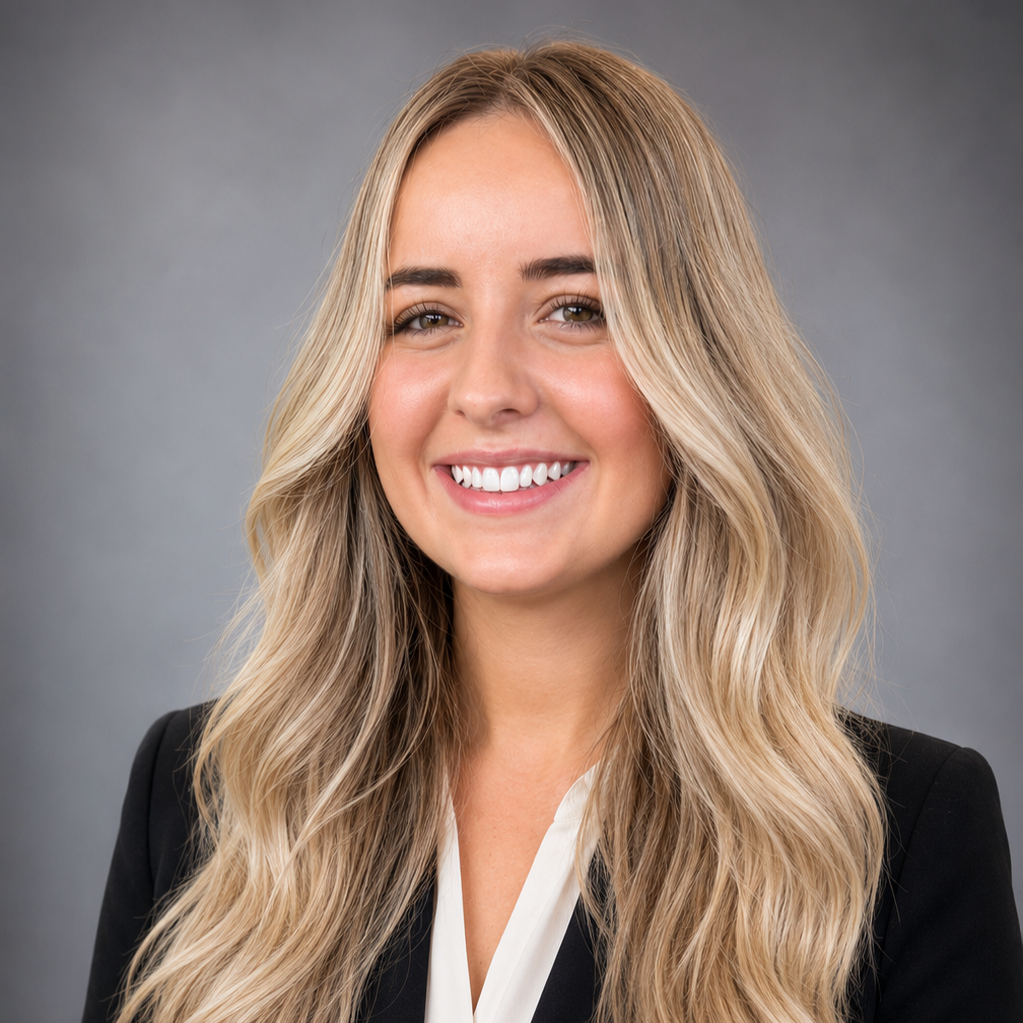 Direct entry medicine
Tell us about your pathway to studying medicine.
I’m a country girl who grew up in Cobram and Shepparton and always had a strong interest in STEM subjects during my schooling. I vividly remember sitting in my year 9 science class on immunology and being completely fascinated, realising how much more we have to learn about the human body and how exciting it would be to work in an ever-evolving field such as medicine. To me, it was the perfect combination of an intellectual challenge and genuine human connection. So, I picked classes that would allow me to apply to medical schools across the country and achieve the highest possible ATAR, completed the UCAT exam, applied, interviewed and was lucky enough to be accepted!
Why did you choose to study medicine at Monash?
Monash offers a direct entry pathway, and having known I wanted to pursue medicine for years, why would I delay starting if I could get in? Despite being accepted into a few different direct-entry medical schools across Australia, I had heard incredibly great things about Monash, particularly the hands-on learning they offer from day one. Studying at Monash would also allow me to stay near my family who I am incredibly close with.
Where have you completed your placements so far? What have been some of the highlights?
The first 2 years I completed at the Monash Clayton campus with a focus on theory and lectures combined with clinical skills classes. Following this, I completed two years of rural placements at Latrobe Regional Health, Bendigo Health and Brooke Street Medical Centre in Woodend. This year, I’m based in Melbourne at Bayside Health (Caulfield, Sandringham, and The Alfred) and finally at Cabrini Malvern.
The absolute highlight of my medical degree was my 6-week Geriatrics rotation I completed at Caulfield Hospital at the start of this year. I was placed with the most amazing team of doctors who heavily included me in patient care decision-making and created unlimited teaching opportunities."
What are your career aspirations at this stage?
I would love to pursue dual specialty physician training in Geriatrics and Palliative Care. Both specialties are inevitably intertwined and combine complicated internal medicine and polypharmacy, alongside complex social discharge planning and heavy family involvement.
One of the unique issues I noticed during my Geriatrics rotation was the sheer prevalence of carer stress experienced by family members, and most prominently those in a group known as the “sandwich generation”; adults in their 30s to 60s caring for both their children and their parents. I had the privilege of observing our team provide not only incredible care to the patient but also help family members navigate vulnerable moments and relieve some of the weight they had been carrying through appropriate discharge and end-of-life care planning. After seeing the substantial impact these doctors had on so many people, I decided that I too, wanted to pursue a career in Geriatrics and Palliative Care.
Whilst my family lives in Shepparton and I love going home, metropolitan hospitals provide a wider variety of Geriatric subspecialties. It would be an amazing opportunity to be exposed to such subspecialties in my upcoming years as a junior doctor, and for this reason, I have decided to stay in Melbourne for now.
What advice would you give a rural secondary student considering applying for medicine?
Of course, my advice would be to study hard, achieve the grades you need, and only apply to medicine if you are passionate about it, but most secondary students already know this.
Whilst academic performance is incredibly important to be accepted into medical school and become a competent doctor, in my experience, you will never achieve favourable outcomes in life and medicine if you cannot interact with others in a way that benefits both of you.
As medical students, we have the unique opportunity of witnessing years of clinical interactions between numerous clinicians and patients with varying degrees of vulnerability. You naturally begin to compare and contrast approaches, emulating qualities which you admire and avoiding those with less favourable outcomes. I only became actively conscious of this during my clinical placement, but I would recommend starting now. Observe your everyday interactions and disputes with curiosity, as there are always new communication strategies to utilise, or to avoid, no matter how experienced you are. I believe people would surprise themselves with how much room for growth there is when they approach their routine interactions with a willingness to learn.