
Mark Éliás Czeisler
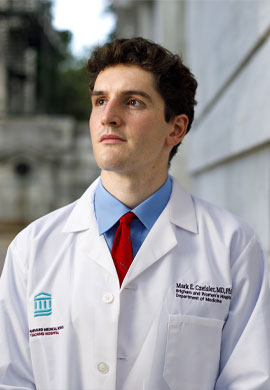
Mark Éliás Czeisler
- Student type: Domestic
- Degree type: PhD
- Degree(s): Doctor of Philosophy
Doctor of Philosophy
Tell us a bit about yourself
My interest in research was spurred by a lecture during my first year as an undergraduate at Harvard College, when a professor explained that neurons in the central clock located in our brains communicate in specialized ways that were not yet understood. The lecture prompted me to join a lab where I conducted four years of basic science research in circadian biology, a formative experience in the scientific process and the reward of discovery. In parallel with my interests in research, I was inspired to pursue clinical training, and my dual interests prompted my pursuit of clinical research at Monash.
What inspired you to study at Monash?
Having developed a research interest in circadian biology and sleep physiology, I was drawn to pursue studies at Monash as a leading institution in these fields. The Monash Sleep Network is renowned for its multidisciplinary approach to scientific research and for its commitment to translating findings to have real-world impact. Moreover, having been born and raised in the United States, I was enthusiastic about the prospect of exploring and experiencing the rich culture in Melbourne.
What did you enjoy most about your time studying at Monash?
The people! My research mentors were exceptionally committed to ensuring that I was both supported in my own research activities and exposed to ongoing projects across their groups and institutions. Coming from the United States without having friends or family nearby, I felt immediately welcome through an Australia Day barbeque followed by several lab outings. Everyone made time to get to know each other both on professional and personal levels. The result has been a strong and sustainable sense of community with a strong spirit of collaboration leading to long-term initiatives based on shared interests extending well beyond my PhD project.
What are your goals for the future?
After having completed my studies at Monash, I completed studies for a Medical Doctorate (MD) at Harvard Medical School, where I developed a clinical interest in Cardiology. I am currently in the first year of a three-year clinical training program as a medical resident in Internal (General) Medicine at Brigham and Women's Hospital in Boston, Massachusetts. Each day is different, as we rotate through different medical specialties (e.g., General Medicine, Cardiology, Oncology, Intensive Care, Primary Care) caring for patients with mentorship from senior clinicians. Looking ahead, I am eager to continue training to practice medicine as a Cardiologist while conducting research on biological rhythms using digital health technologies to unveil insights about human health and performance. In doing so, I aspire to enhance efforts to apply principles of biological timing (e.g., circadian rhythms) and use real-time health information to harness intrinsic properties of human physiology to improve health and performance, both in clinical populations and the general public.
How did your studies at Monash prepare you for your career?
My experience at Monash was nothing short of transformative. Empowering mentorship, enthusiastic collaborators, and unwavering institutional support throughout the COVID-19 pandemic laid the foundation for my growth as an independent investigator with development of both technical skills (e.g., study design, data analysis, funding acquisition, academic publishing) and leadership.
What professional or personal achievements at Monash are you most proud of?
My time at Monash was memorable for many reasons. I will forever remain grateful to my mentors and to Monash because after my initially planned clinical research project was halted due to the COVID-19 pandemic, Monash remained committed to ensuring I continued advancing in my studies, allowing me to rapidly refocus on a pandemic-prompted public health project called The COVID-19 Outbreak Public Evaluation (COPE) Initiative (www.TheCOPEInitiative.org), which served as the foundation of my PhD thesis. With a mission to assess public attitudes, behaviors, and beliefs about COVID-19 and mental and behavioral health during the pandemic, we coordinated geographically and professionally diverse teams (including researchers at Monash, clinicians at Austin Health, public health officials at the US Centers for Disease Control and Prevention, and scientists at Harvard Medical School and Brigham and Women's Hospital). Findings from The COPE Initiative were cited by public health officials and policy documents, including a US Presidential Executive Order expanding access to mental and behavioral health resources (https://trumpwhitehouse.archives.gov/presidential-actions/executive-order-saving-lives-increased-support-mental-behavioral-health-needs/), and led to more than $1.5 million in funding including a CDC research contract to support continuance of The COPE Initiative after my PhD project was completed.
What advice would you give to current or future students considering a career in Medicine, Nursing or Health Sciences?
Speaking with people across disciplines will offer insights that either reinforce and reaffirm current thinking or provide new perspectives. Healthcare is an incredibly rewarding, purpose-driven field that depends entirely on teamwork. Establishing connections across disciplines unified in purpose will help to amplify impact, as the most meaningful advances whether in patient care, research, or policy often happen at the intersections of ideas.