
Jessica Dean
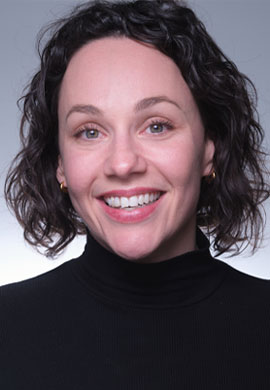
Jessica Dean
- Student type: Domestic
- Degree type: Honours
- Degree(s): Bachelor of Medical Science (Honours)
Bachelor of Medical Science (Honours)
Why did you choose to study your degree and why did you choose Monash?
I’ve actually chosen Monash three times now. For my undergraduate studies, Monash was the only university in the southern hemisphere that offered the Medicine–Law degree, which was really appealing to me, so choosing Monash made sense. Most recently, I’m doing a PhD in philosophy. Again, choosing between the Melbourne-based universities, but the bioethics centre at Monash is world-leading and the individuals are so impressive. I’ve also generally found Monash to be quite young and innovative, which comes through in the culture, tutorials, and the accessibility of tutors. My supervisors have an incredible wealth of knowledge, while still being accessible and a real joy to interact with. Altogether, that’s why I chose Monash.
Highlights of your time at Monash?
One of my highlights was when I finished medicine and was still doing a few law subjects. I used to be on campus and would pop into Chris Wright’s office. He had been my tutor in the first year for this super nerdy subject, the maths or science behind medicine, and I absolutely loved it. We would have the most amazing chats, and we still catch up. I ended up going into intensive care, which was his area of medical specialty, although we never actually worked in it at the same time. In hindsight, I was really lucky to find someone who was similarly curious about the world and was really supportive of me. I found him so deeply inspiring, and over the years, I’ve spoken to other intensivists who’ve said he had a similar impact on them and was part of the reason they chose intensive care as a speciality. I imagine there are many people like that throughout medical school who’ve had a profound impact on students’ specialty choice or their identity as a doctor. I just feel really fortunate to have had such a wonderful mentor.
Did you complete a clinical placement/internship or study abroad during your course? How has this benefited you both personally and professionally?
One of the more unique placements I did was a medical student placement in medical administration with Professor Erwin Low at Monash Health when he was the Chief Medical Officer. It was very unusual, and I found it incredibly helpful. It helped me realise that medical administration and clinical governance are areas that I'm really interested in and hopefully will become part of my future in some form. It was a unique opportunity, and I was fortunate to have people around me who helped make it happen. I also completed a term in forensic medicine at VIFM, which helped me realise I didn’t want to be a forensic physician or pathologist, but that I did want to work somewhere at the legal interface of medicine. Experiences like these have shaped my direction and helped clarify where my interests lie. Overall, these placements have benefited me enormously. They contributed to the foundation of my dual training as an intensive care specialist and a lawyer, and they've helped me understand how I want to position myself professionally, particularly in relation to research, policy, education, and the legal–ethical dimensions of medicine.
Any professional achievements you’d like to share?
One of the things I'm probably most proud of is the impact I've been able to have through my board career. I’ve retired from Beyond Blue after reaching the maximum nine-year term, and I’ve also retired from AMA Federal for the same reason. I currently sit on the boards of Violet, a charity improving end of life planning, and of Grampians Health, which includes Ballarat, Horsham, Edenhope, and Stawell Hospitals. In these board roles, I have the opportunity to be part of initiatives that make a huge difference to people’s lives. It’s so exciting and such a privilege. As an example, one of my proudest achievements would be with Beyond Blue; ‘The Way Back’ program. We launched a pilot looking at models of aftercare after someone attempts suicide, and it decreased the likelihood of completing suicide. We supported a pilot, evaluated it - it was very effective. We funded a larger rollout and evaluation, and over 5 to 10 years, we secured government funding. Now aftercare is federally government-funded and is the accepted model across Australia. Being involved at that strategic level is incredibly fulfilling, especially because in my clinical job I only treat one patient at a time, I can help them through the immediate crisis, but often am powerless to address the underlying reasons they presented. My board work balances that, because I get to make system and policy changes that eventually translate to helping my next patient. The same is true of my current restraint policy work, creating a decision-making framework for patients without capacity who are agitated. For me it’s about creating system change that has real clinical benefit.
What has been your biggest challenge and how did you overcome it?
My biggest challenge was completing specialty training, including the specialty fellowship exams, with a toddler, pregnant with a second, and having a husband who was also completing specialty exams at the same time. I imagine that historically, both of our specialties would commonly have had a supportive, often stay-at-home, partner, and neither of us had that. We were very fortunate to have good role models, mentors, and a lot of infrastructure around us. We both got through on the first attempt, which wasn’t that common in our respective specialties, and that’s something I’m proud of.
Words of advice for future students or other alumni?
Think about what your interests are and have some sense of what you want to use your degree for. Some of the most amazing contributions come from people with a second skill set. Having another area, whether it's arts, maths, physics, philosophy, or something else, can be incredibly valuable, and it’s not a waste of time to develop those interests. My own career is a good example where the combination of fields led to many opportunities, but it has to align with what you want. Some people didn’t make it through the degree because the extra workload wasn’t worth it for their goals, something like a Masters of Health Law would have been totally sufficient.
Finding mentors is really important too. They can help you visualise what you want to do with your skills, especially if they work across both spaces you’re interested in. Medicine often comes with pressure to do only medicine, and it definitely requires focus and commitment. But if there's something else you're passionate about, you don’t have to give it up. Many people continue with interests like music or engineering alongside their medical studies, and often something meaningful comes out of it later on. For me, studying both areas at the same time kept me more engaged, they satisfied different parts of my brain, and I really enjoyed how different the two types of education were. In saying that, the extra interest has to be something you enjoy, otherwise it just adds workload pressure. Medicine is such a long career, so it has to be sustainable. Pick a pace and a style that fits you in the long term.
How has your Monash degree supported your career trajectory?
My Monash degrees in medicine, law, and now philosophy have shaped my career by giving me a unique varied skill set. The innovative environment, strong bioethics community, inspiring mentors, and diverse clinical placements helped me understand both the clinical and systemic sides of healthcare. That combination has enabled my work in ICU, as well as research, ethics, and meaningful policy and board-level contributions.