
Luis Mascaro
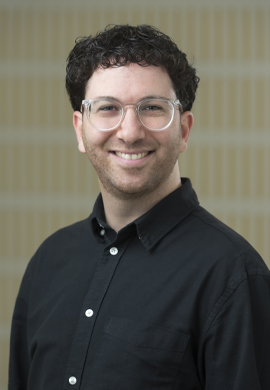
Luis Mascaro
- Student type: Domestic
- Degree type: Honours
- Degree(s): Bachelor of Psychology (Honours)
Bachelor of Psychology (Honours)
What has your career journey looked like since we last featured you?
I completed my Bachelor of Psychology (Honours) in 2019. In 2020, I took a year off to gain some clinical-relevant exposure and increase my competitiveness for entry into a postgraduate clinical psychology program. I also took this time to diversify my research experience and consolidate my goals for postgraduate research. I was ultimately fortunate to be accepted into the Doctor of Philosophy (PhD) (Clinical Psychology) at Monash University, commencing in 2021. As part of this program, I completed three placements on the way to becoming generally registered as a psychologist. For my PhD research, my thesis investigated sex differences in the relationships among sleep, circadian timing, mental well-being, and performance in elite athletes. As a postgraduate student, I also co-authored several research publications and worked as a teaching associate in undergraduate psychology.
What role are you currently in, and what excites you most about your work?
I am currently working as a Teaching & Research Academic. For my research, I am a postdoctoral research fellow working across several projects related to athlete populations, sleep, circadian rhythms, wellbeing and performance. I work with the Facer-Childs Sleep and Performance laboratory, and our group has a particular focus on working with female athletes. As part of this role, I collect data, analyse data, write up publications, manage projects, and contribute to the supervision of graduate research students. For my teaching, I am an assistant lecturer working across the postgraduate clinical psychology programs with a focus on initiatives related to programmatic assessment. In this role, I am also involved in unit coordination and marking. Separately, I am also a chief examiner for a capstone unit in undergraduate psychology.
My range of roles and responsibilities share overarching goals related to fostering the next generation of scientist-practitioners and promoting the relevance and application of psychological knowledge and data in the real world. Working actively towards these goals are tightly aligned with my values, and these goals genuinely excite me and motivate me.
How did your MNHS degree prepare you for where you are now?
My undergraduate degree laid the foundations of theoretical and applied psychological knowledge and afforded me a series of co-curricular opportunities that broadened my understanding of career paths and study pathways. This meant that I exited undergraduate studies wanting to be both a psychologist and researcher. My postgraduate degree (also with MNHS) allowed me to achieve those goals. The coursework, placement, and research components of that degree gave me all the skills I needed to carry out my clinically informed research duties today. While my degrees did not include a component on teaching per se, the scientist-practitioner model is embedded throughout both undergraduate and postgraduate psychology, which meant my passion for promoting evidence-based practice logically informed my approach towards teaching and lecturing today.
Have there been any unexpected opportunities or career pivots along the way?
Following the conferral of my PhD, I initially had hoped to work clinically in addition to staying involved in research and teaching. That goal was difficult to achieve at the time, as I was struggling to find a way to contractually and practically make all three roles and employment opportunities fit together. At the same time, the opportunity for a combined contract of Teaching & Research came along, and so I pivoted to take advantage of that great opportunity. This meant that I took a pause from actively working with clients as a psychologist. I do consider this career pivot as a positive one, as it meant that I took a break from the unique challenges of working clinically, which was perhaps needed following a long and challenging PhD! I do intend to return to working clinically as a psychologist in the near future, but, in the meantime, I am making the most of the clinically informed research and teaching I am currently doing to build my skills in those domains.
What advice would you give to students considering this field today?
For students in undergraduate psychology, I encourage them to think broadly about the different career pathways that are available with the skillsets of their degree, and to strongly consider engaging with co-curricular activities that help gain that insight. For students that want to become a psychologist, my advice is to consider that not everyone may want to, or be able to, do such a role full-time – and that is okay. For students that are considering a PhD, my main piece of advice is to ensure that this is something you absolutely do want to do before enrolling. It is a challenging degree! To help make that decision, consider the potential post-PhD career pathways you’re interested in pursuing, and evaluate whether those roles really require a PhD, or not. If a student considers these factors and maintains interest in wanting to do a PhD, then my next piece of advice is to remain realistic about the competitiveness of entering such a program, and to build your academic track record (e.g., research publications, conference presentations) as much as early as possible.
What does “success” look like to you now compared to when you graduated?
Today, success is seen in my everyday actions and responsibilities. Success is seeing students learn and grow. Success is also seen in each step I make in scientific inquiry. In my field, success, by some, may also be measured by the number journal articles published and grants won; however, my values and personality see me prioritise my focus on the everyday actions and impact I make on the people and work around me rather than metrics. In many ways, this definition of success is not too dissimilar to success as a student upon graduation. Back then, I was satisfied if I felt like I gave my studies my best effort without losing sight of my values, and this attitude remains the same today.
Learn more about the Bachelor of Psychology (Honours) here.