
William Yan
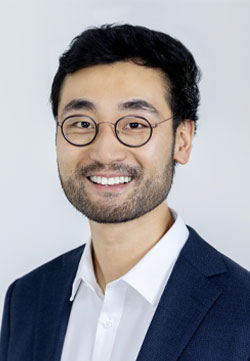
William Yan
- Student type: Domestic
- Degree type: Double Degree
- Degree(s): Bachelor of Medical Science and Doctor of Medicine (MD)
Formerly Bachelor of Medicine & Bachelor of Surgery (now Bachelor of Medical Science and Doctor of Medicine)
Dr William Yan’s connection to Monash University began long before he enrolled as a medical student. Growing up, he spent much of his childhood around the Clayton campus – visiting the Faculty of Engineering while his mother completed her PhD and training in swim squads at the Doug Ellis Swimming Pool.
So when it came time to choose where to study medicine, Monash felt like a natural fit.
The University’s Bachelor of Medicine and Bachelor of Surgery (now known as the Bachelor of Medical Science and Doctor of Medicine), gave William a strong foundation in medicine, particularly through early exposure to clinical environments and reasoning.
“I had terrific mentors and tutors throughout the clinical program who showed me how to think through difficult scenarios and to stay curious when things are uncertain. Those habits have been useful at every stage, whether in a fellowship overseas, presenting at international conferences, or managing a complex case in theatre,” said William.
It was an elective rotation at The Royal Victorian Eye and Ear Hospital (RVEEH) during his degree that inspired William to pursue ophthalmology as his specialty. After graduating, he completed his internship and part of his residency at Monash Medical Centre (Monash Health), before undertaking a Master of Philosophy (Ophthalmology) at The University of Melbourne.
Alongside his clinical interests, William developed a passion for technology-driven approaches to improving healthcare access and sustainability. In 2016, he was part of the team that won the Google Impact Challenge, leading to a year-long collaboration with Google in Sydney to develop screening tools for detecting vision impairment.
In 2017, William returned to clinical training and became a surgical registrar at St. Vincent's Hospital. That same year, he was selected as Australia’s G20 Young Global Changer and attended the World Health Summit in Berlin.
Two years later, he became Chief Editor of the Journal of Mobile Technology in Medicine and received a Fulbright Scholarship to undertake a Fellowship in Ophthalmic Innovation at the Stanford Byers Eye Institute in California.
‘[The Fulbright Scholarship] opened my eyes to the intersection of technology and clinical medicine. It deepened my understanding of translational research, technology development, and how health data analytics can support efficient and evidence-based clinical decision-making in Australia,” said William.
In 2024, William completed vitreoretinal fellowships at the Royal Devon University Healthcare NHS Foundation Trust in Exeter and later at RVEEH in Melbourne, where he now works as a consultant ophthalmologist and vitreoretinal surgeon.
His work ranges from outpatient clinics and teaching registrars to urgent, technically demanding procedures involving retinal detachment, severe infections and complex diabetic eye disease.
Alongside clinical practice, William continues to pursue research examining whether current surgical approaches remain the most effective for patients. So far he has been involved in studies on endophthalmitis surgery, diabetic retinopathy screening and other ophthalmic clinical challenges.
“The variety is something I genuinely appreciate – it keeps the work interesting and means I’m constantly problem-solving and challenging my mind in different ways,” said William.
Reflecting on his career so far, William credits curiosity – rather than careful career planning – as the driving force behind many of his opportunities.
“When I graduated, I was focused on hitting the next milestone – getting onto training, finishing exams, getting a fellowship, becoming a consultant,” he said.
“I think about it differently now. It’s more about the quality of the work and day-to-day moments: looking after patients well, teaching the next cohort of trainees and contributing something useful through research.”
William’s advice to aspiring medical students is to stay curious and embrace opportunities beyond core clinical training.
“Time spent in research, experiences overseas and getting involved in global health has made me a better clinician, even if it wasn’t obvious at the time. Being patient with the process also helps – the groundwork you lay early eventually pays off!”
Learn more about the Bachelor of Medical Science and Doctor of Medicine