
Reflecting on CAHA’s 2025 Climate + Health Summit
Reflecting on CAHA’s 2025 Climate + Health Summit
26–28 October 2025 | Yugambeh/ Kombumerri Country (Gold Coast)
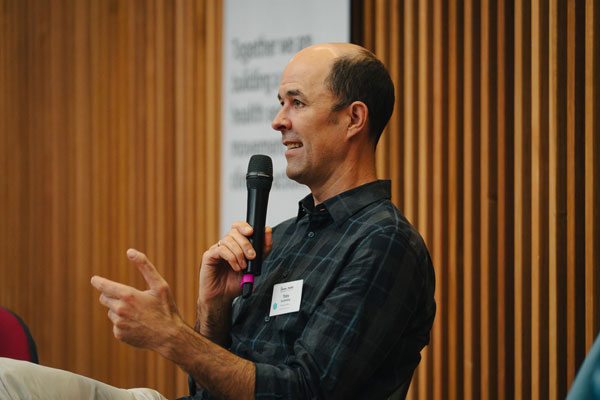 The Climate + Health Summit has a distinct feel, moulded by a historical emphasis on healthcare system sustainability and a focus on equity and Indigenous voices, infused with a deep passion for the environment, and driven by an urgency in responding to the climate crisis. This year's event took place on Yugambeh/ Kombumerri Country (Gold Coast) and was punctuated by thought-provoking contributions from a diverse array of climate leaders, researchers and advocates.
Emma Rawson Te-Patu’s powerful talk set the tone, focussing on the cultural determinants of health and the importance of decolonising public health. Emma is the first Indigenous woman to hold the role of President-Elect of the World Federation of Public Health Associations and used her time to emphasise her people’s long-held understanding that “climate has never been separate from health.”
In one of the more shocking presentations from the 2-day event, Dr Louise Woodward, a paediatrician from Darwin, drew attention to the gross underestimation of harmful chemical emissions from the gas industry. Emphasising poor regulation of harmful volatile organic compounds, in particular a reliance on ‘dispersion modelling’, Dr Woodward highlighted a case where emissions of the toxic compound benzene - a known cancer-causing chemical with no known safe threshold - were found to be 136 times higher than original industry estimates.
Litiana Lagibalavu, representing the Alliance for Future Generations, provided a climate resilience perspective from Fiji. This session also included Dr Inez Fainga’a-Manusione, who educated us on Pasifika ways of being and, in the summit’s best interactive moment, taught us the haka! It also included A/Prof Nina Lansbury, who described her work in pushing for the inclusion of Indigenous authors in IPCC reporting (see this paper published in Nature).
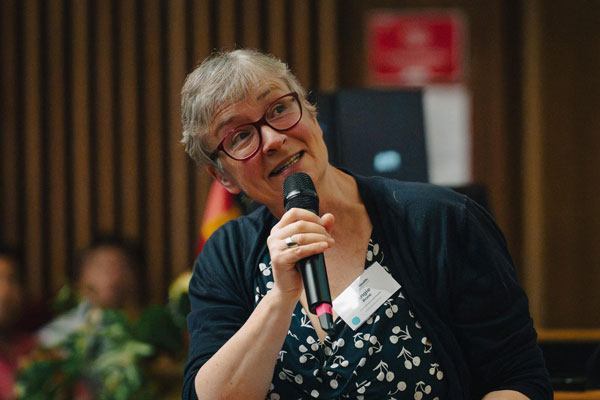 Our own session on healthy and resilient housing was skilfully moderated by Prof Angie Bone. I provided a public health angle to the conversation around energy and thermal efficiency in houses. Troy Gersback, from the City of Gold Coast, outlined the specific challenges his local community faces from extreme weather to the built environment. However, there was no doubt that Greg Webb of the Resilient Building Council stole the show with his moving story (including video footage) of losing his Lake Conjola house to the Black Summer bushfires and his subsequent mission to build a fire-resilient home in its place.
The summit reminded us that extreme weather impacts local health systems: the 2013 Bundaberg flood meant the entire hospital had to be evacuated, and 2025’s Tropical Cyclone Alfred meant 800 staff were forced to stay overnight at Princess Alexandra Hospital. It also reminded us that breakthroughs are possible in this global challenge - human rights lawyer Solomon Yeo reflected on this year’s International Court of Justice Advisory Opinion, which traces its roots to 27 law students in the Pacific.
Overall, the Climate & Health Summit proved a great success. While retaining a focus on sustainable healthcare transformation, this year’s program included broader discussions on climate adaptation, public health, and policy reform opportunities. It did not feel like just another conference, with one of my highlights being the lunch-time guided walking tour of the Griffith University campus – apart from the grass, every plant is native and many are exceedingly rare. There is always a trade-off between the value in making connections face-to-face and the costs (both financial and emissions-related) of an in-person meeting. CAHA did a great job of limiting climate impacts, offsetting 100% of the event’s emissions, providing locally-sourced vegetarian catering, and minimising waste.
It seemed appropriate that the summit took place as the Gold Coast endured record October heat (high-30s scorcher on the Monday) and a deluge (constant rain on the Tuesday). A reminder, if we needed it, of the importance of addressing the escalating impacts of climate change.
– Dr Toby Cumming