
Right Here, Right Now 2025 Global Climate Summit
Expert panel represent the Health and Climate Initiative at UN Climate Summit
5 June 2025 | Online
Speakers:
- Professor Karin Leder, Director, Health and Climate Initiative
- Opening remarks: Dr Sandro Demaio, Director and Head of the WHO Asia-Pacific Centre for Environment and Health
- Professor Tin-Tin Su, Director, South East Asia Community Observatory and the Regional Hub for Asia Climate Change and Health
- A/Prof Zerina Lokmic-Tomkins, Associate Professor, Maternal and Child Health Climate Adaptation and Resilience
- Dr Gabriela Fernando, Assistant Professor in Public Health
- Facilitator: David Sweeting, Manager Strategy and Operations, Health and Climate Initiative
The Health and Climate Initiative proudly represented Monash University at the Right Here Right Now 2025 UN Global Climate Summit on World Environment Day, June 5 2025. The 24-hour global academic plenary brought together leading thinkers and practitioners at the intersection of climate change and human rights and was broadcast live across time zones.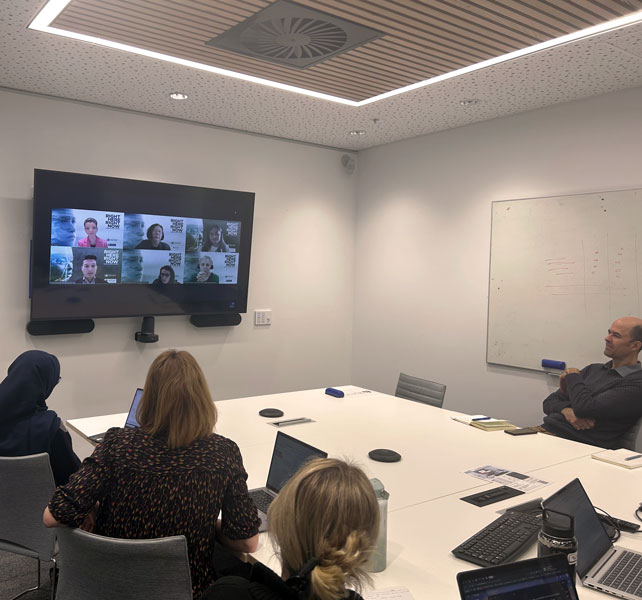
As one of three members of the Monash University program, the Health and Climate Initiative hosted a panel of regional experts to discuss the state of climate impacts on human health in the Indo-Pacific, the role of universities in advancing climate and health adaptation research, and the potential for climate and health research to influence policy and protect the rights to health and healthy environment.
We were honoured to receive an introduction from distinguished guest, Doctor Sandro Demaio, Director of the WHO Asia-Pacific Centre for Environment and Health. Dr Demaio described climate change as the “defining health issue of our century”, expertly articulating the pressing health challenges posed by climate change in the region and setting the stage for an engaging discussion.
It was then over to our panellists. Health and Climate Director, Professor Karin Leder got things underway by discussing the emerging opportunities and challenges for climate and health adaptation within the current political, social and economic landscape.
Prof Leder said, “The global climate crisis presents an undeniable threat to human health and well-being. We know that climate impacts on almost all aspects of physical and mental health, as well as healthcare delivery. While often overlooked, investing in sustainable and adaptive climate health solutions offers significant social and economic benefits. This infers that with the immense challenges that lie ahead, there are equally enormous opportunities to build a low-carbon, resilient, and equitable future that prioritises health for all.”
Dr Gabriela Fernando and Prof Tin-Tin Su provided their perspectives on the most urgent health issues posed by climate change in their respective regions
Dr Fernando said, “Countries like Indonesia and my home country, Sri Lanka, are facing a sharp rise in climate-related disasters, leading to increased displacement and climate-induced migration, rising mortality from heat stress and shifting disease patterns – including increased prevalence of dengue fever and chronic respiratory conditions. Climate change is also deepening food insecurity, malnutrition and stunting, particularly among children and women, issues for which Indonesia ranks among the most affected countries, globally.”
These sentiments were echoed by Prof Tin-Tin Su who shared findings from a recent regional stakeholder survey, “We gathered input from 94 stakeholders across 14 countries in the region. The findings are very consistent with what Gabriela mentioned in India and Sri Lanka. Stakeholders identified extreme weather events such as floods & tropical storms, increasing temperatures, heat waves and air pollution as top climate concerns. They also expressed concerns about the physical and mental health impacts of issues like growing threats to food security and nutrition.”
“It is highly recommended that climate-resilient health systems and facilities, coupled with a climate-literate or climate-ready health workforce are needed to address these challenges.”
A/Prof Zerina Lokmic-Tomkins shared her insights on the role of universities like Monash in addressing these challenges, “I like to think of the universities as a kind of societal “triage” point. When communities experience or are at risk of experiencing climate-related health issues, universities can help diagnose the root causes and connect those communities to the right experts. This enables shared decision-making and co-designed solutions that are evidence-based, financially sustainable, and rooted in equity.”
Prof Leder finished by providing two standout examples of climate-health research and implementation programs at Monash, The Revitalising Informal Settlements and their Environments (RISE) Program, “a bottom-up, community engaged and community led initiative to improve water and sanitation management and climate resilience in informal settlement communities in Indo and Fiji.”
And the World Mosquito Program, “which is working with local communities in Asia, Latin America and Oceania to reduce the transmission of mosquito-borne diseases, particularly dengue, through insertion of a non-toxic bacteria called Wolbachia into mosquitoes so that the mosquitoes cannot transmit dengue, or other viruses.”
The message was clear: universities like Monash play a vital role—not only in research and education but as connectors, driving evidence-based, equitable, and locally grounded solutions.
The event also marked the announcement of the inaugural Strategy for the Health and Climate Initiative (2025-2030), which is set to launch publicly in the coming weeks.
Don’t forget to stay tuned to our socials for more health and climate news and information! @HealthandClimateInitiative