
Sal Bozkurt
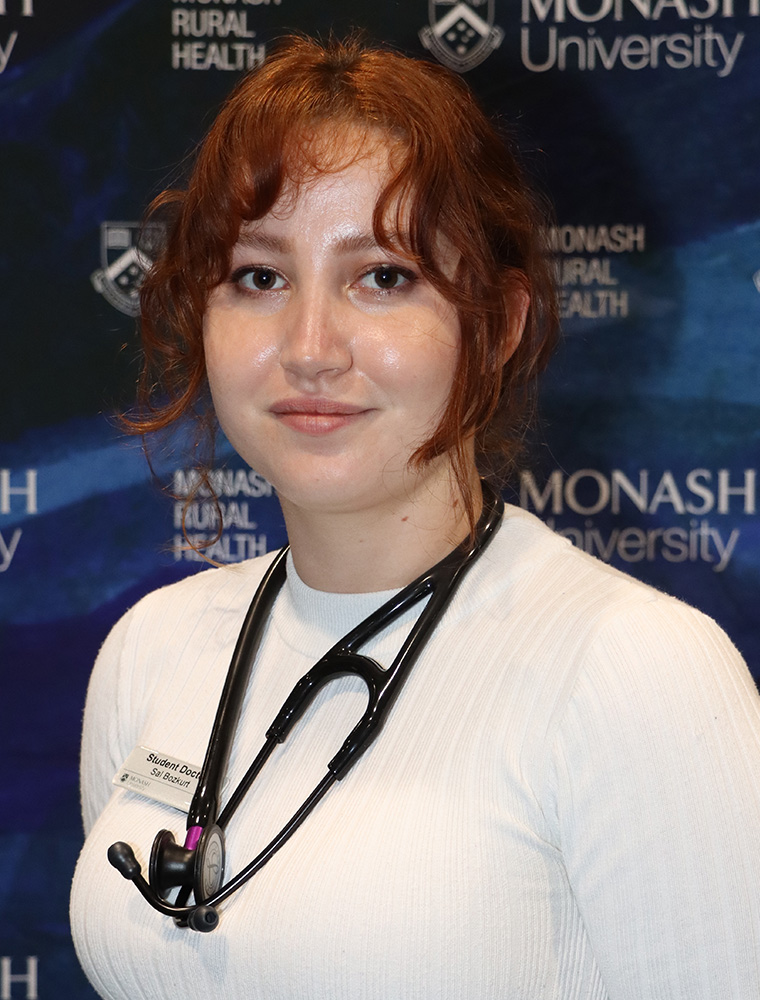
Sal Bozkurt
- Student type: Domestic
- Degree type: Degree
- Degree(s): Bachelor of Medical Science and Doctor of Medicine (MD)
“I'm a Bachelor of Science graduate and had some freedom in choosing my academic background - I had majors in developmental biology and human pathology. Through this, I connected with a couple of lab groups from the Alfred Centre which allowed me to pursue my interests in regenerative neuroscience by conducting pre-clinical research. This was an experience that I found to be invaluable and solidified my desire to become a clinician-scientist one day.
The End-to-End Rural Cohort appealed to me as an opportunity to gain more hands-on experience in my medical studies, as I read that there was more autonomy and responsibility afforded to rural students compared to their metro counterparts. I also found it an excellent opportunity to begin to walk down a path towards my future life; the ultimate goal surrounding becoming a resource that assists those in need and helps others fulfil their potential by reducing healthcare barriers. I also dream of a quieter life where I can be part of a community that builds each other up, rather than another face that can be lost in the crowd.
On medical placements, the logbooks are one thing that all 3B students have to do, in rural areas the opportunity to do procedures are a guarantee. We are expected to do at least 3 cannulas, vena punctures and catheters on real patients and contribute to their care. Scrubbing in and assisting in surgeries is also an exciting opportunity for students; there have been numerous times this year when we have been summoned to assist because registrars and consultants have been unwell and they need an extra pair of hands. As rural medical students, we're definitely part of the team and are appreciated for the roles that we play within the hospital environment. The community aspect within the rural cohorts is one unlike any other.
I’ve spent this year in Bendigo. Bendigo is beautiful, the first thing you're greeted with as you drive up to the student accommodation is this gorgeous cathedral which catches the light perfectly at so many times of the day. The town itself is alive, the people are friendly, the things to do are plentiful. The Great Stupa is a gorgeous landmark, the infrastructure has so much character and there's always an event on each weekend. The food and drink scene is to die for, you can find a great variety of different cuisines. Many students have joined local gyms, sports teams and clubs within the town.
Medicine is one of those careers that whether you decide to do your training in a metro site or a rural one you are still expected to cross over into the other world. As you move through training after medical school, you have to do some rural time, some metro time and some time anywhere else in between. The majority of those attracted to healthcare do so to make a difference and improve the lives of others, and when you contemplate the injustices within the Australian healthcare landscape you can see that rural Australians are disproportionately affected by barriers to healthcare. One day, you will be an incredible resource as a doctor, and you'll have the ability to affect change and make a huge difference in the lives of others.
The last thought I would ask you to consider is one more long-term, growth within metropolitan locations only has two options: build up or build-out. With this in mind it's not long before rural locations turn from towns to cities, and so if there is any part of you that is considering going rural, I would say do it - you won't regret it.”