
Hepatitis B
Hepatitis B is a viral disease that affects your liver and is a major public health problem worldwide. It can cause serious illness and long-term liver damage, including chronic hepatitis, cirrhosis or liver cancer.
The virus spreads through direct contact with infected blood or other body fluids.
Immunisation
Hepatitis B immunisation is recommended for anyone involved in healthcare (including first aiders) or working with human biological matter.
Working with biological matter
Immunisation is recommended. See working with biological matter.
Contact your doctor or the Healthy Safety & Wellbeing team (email hsw@monash.edu) for specific advice on working with a particular type of biological matter or organism.
First aiders
Immunisation is recommended. This applies to all newly qualified first aiders, as well as those renewing their certificates.
As a first aider, you’re at a higher risk than others of contracting hepatitis B, because you'll be managing injuries involving blood loss. You can't know if someone is carrying the hepatitis B virus when you're treating them.
You can start the immunisation program as soon as you complete your first aid training.
If you've already been immunised, you can check your immunity with an antibody blood test result. If you don't have a copy of your result, you can get another blood test to check.
The immunisation process
You need three injections over six months:
- first injection: month 0
- second injection: month 1
- third injection: month 6
- blood test to check immunity: month 7 (one month after the final injection).
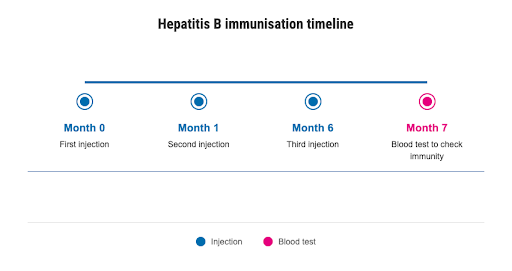
Most people develop adequate immunity after three injections. You'll have a blood test one month after your third injection to check.
If the test shows you have sufficient immunity, you won't need any more injections. If you don't develop enough immunity, you'll get further injections as needed.
If you’re already immunised
If you’ve already been immunised, you can send written evidence of your hepatitis B immunisation to the Health Safety &Wellbeing team. You can provide any of the following:
- a letter from your doctor confirming adequate hepatitis B immunity
- your immunisation record with a hepatitis B antibody result
- a hepatitis B antibody result from any time.
If you’ve only partially completed an immunisation process before, contact the Health Safety & Wellbeing team to discuss your situation.
Arranging your immunisation
Complete the Universal Immunisation Form and email it to BPD-OHNC@monash.edu.
Your department, school or unit will pay for your immunisation and blood tests.
If you're exposed
If you’re exposed to blood or body fluids, follow the first aid protocol immediately. Then report the exposure as soon as possible, even if you've been immunised.
First aid for exposure to blood or other bodily fluids
If you come into direct contact with blood or body fluids:
- Remove contaminated clothing if needed as soon as possible.
- Clean the affected area:
- skin – wash thoroughly with soap and water. You can also apply an antiseptic.
- nose and/or mouth – flush with large amounts of water.
- eyes – keep your eyes open as you gently but thoroughly rinse them with water or normal saline.
- Report the incident immediately to your local safety officer (they will contact the Health Safety & Wellbeing team).
- See a doctor as soon as possible for assessment.
- Complete a hazard and incident report through SARAH.
Need help?
For more information, contact the Health, Safety & Wellbeing team.