
Cryogenics
Cryogenic liquids are liquified gases that are kept in their liquid state at very low temperatures, with boiling points below -150°C (e.g. liquid nitrogen). All cryogenics are extremely cold, and small amounts of liquid can expand into very large volumes of gas.
At Monash University, liquid carbon dioxide (dry ice) is included in this category, even though it has a slightly higher boiling point.
If your supervisor has identified that you’ll be involved in cryogenics activities (such as working with liquid nitrogen) after completing the training needs analysis checklist, you’ll need to complete the following:
- The Cryogenic Material Basic Safety Principles training.
- A practical local induction to any cryogenic facility you’ll need access to – local or outside your normal area.
All training needs to be recorded using the local area induction checklist and revised every three years.
You don’t need to complete gas cylinder training in order to work with cryogenics.
More information
If you use liquid nitrogen as part of your work or study at Monash, you’ll need to follow specific safety practices.
What’s liquid nitrogen?
Liquid nitrogen (LN₂) is a cryogenic liquid. It’s the liquefied form of nitrogen gas at atmospheric pressure and sub-zero temperature.
| Property | Value |
|---|---|
| Dangerous goods class | 2.2 (non-flammable, non-toxic gas) |
| Boiling point (°C) | -196 |
| Colour of gas | None |
| Odour of gas | None |
| Taste of gas | None |
| Expansion ratio | 790× |
| Gas density (27°C air = 1·18g/L) | 1·14 |
GHS classification
Physical hazards
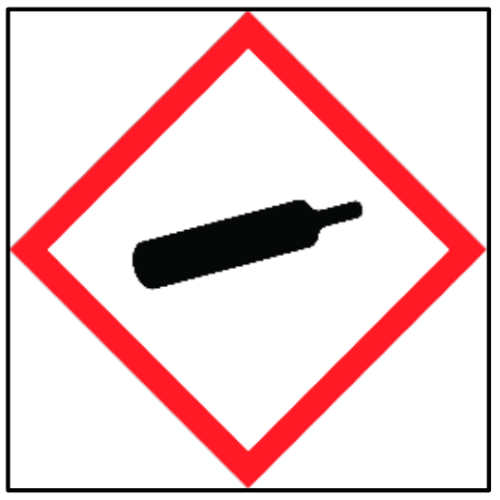
Classified as: gases under pressure, refrigerated liquified gas.
Health and environmental hazards
Not classified as a health or environmental hazard.
Health risks
Asphyxiation risk
View

Cold burns and frostbite
View
Fire risk from oxygen build-up
View
Pressure build-up and ice plugs
View
First aid
Remember, it’s never safe to go into oxygen-depleted environments to help another person.
Asphyxiation
- Call emergency services by:
- contacting Security on x333 (990 53333 from a mobile)
- calling 000.
- Wait for emergency personnel – they will manage the situation.
Cold burns
- Rinse the affected area with room-temperature tap water. If skin has adhered to a cold metal surface, run cold water between the skin and the metal surface (rather than attempting to pull skin away from the surface).
- Cover the affected area with a non-stick dressing.
Risk management
Each area that handles or stores LN₂ needs to complete a risk assessment based on:
- the Safety Data Sheet (SDS) for LN₂
- the guidelines on this page
- knowledge of the task being performed and the amount of LN₂ needed.
From your assessment, develop clear safe work instructions and control measures.
You’ll also need to complete the required induction and training.
Need help?
For more information, contact the Health, Safety & Wellbeing team at hsw@monash.edu.