
Fume cupboards
This page explains how fume cupboards work, how to use them correctly, and when extra equipment is needed.
What are fume cupboards?
A fume cupboard is a ventilated box with an adjustable front opening. It draws air in through the opening and removes any fumes produced inside. It’s designed to have a smooth and even airflow (called laminar flow). Fume cupboards are a key safety feature in many Monash laboratories, designed to protect you by removing harmful fumes from your workspace.
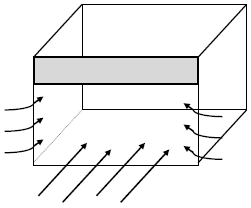
Baffles at the back of the cupboard help maintain this flow by drawing air from different heights. If you block these baffles (e.g. by storing items in front of them), the airflow will become uneven and fumes may escape into the lab.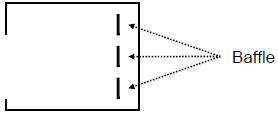
Whenever anything is placed within the fume cupboard, it creates turbulence – this could lead to fumes escaping. If a fume cupboard isn’t used properly, fumes could escape out of the front of the cupboard towards you, especially if you’re using heavier vapours like formaldehyde.
Make-up air
Fume cupboards remove air from the room. For a fume cupboard to work properly, there needs to be enough air available. If you’re in a small room or using many fume cupboards, there won’t be enough ventilation. You’ll need an additional air supply: make-up air.
If make-up air is limited or switched off, the fume cupboard won't be able to maintain the right face velocity, so it won’t remove fumes effectively.
Using the fume cupboard
To keep the cupboard working effectively and protect yourself:
- Use ventilation and make-up air: Always switch on room ventilation and make-up air before you use the cupboard.
- Minimise foot traffic: Movement in front of the sash can create turbulence and let fumes escape.
- Keep nearby doors and windows closed: Draughts affect airflow and fume containment. Doors within a metre of fume cupboards should stay closed.
- Check alarms and monitors: Make sure monitors and alarms show the cupboard is working correctly and there is air movement before you start.
- Follow sash height guidelines: Use the recommended sash height.
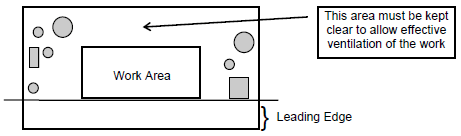
- Only work within the safe areas: Avoid the front edge and keep the back clear.
- Limit the number of items inside: If you’re using hazardous materials, use secondary equipment (e.g. spill trays) for safety and make sure all chemicals are clearly labelled.
- Avoid blocking baffles: Don’t place large equipment (like ovens) inside. If you must, elevate them to allow airflow underneath.
- Close the sash: Make sure you close the sash completely when you finish.
If you’re using radioactive materials, avoid porous bench surfaces (e.g. terracotta tiles).
Precautions
Avoid the front edge
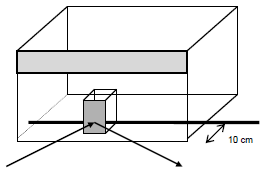
Don’t work within 10cm of the front edge. Air can bounce off objects placed in this area and carry fumes out of the cupboard. This can be dangerous, especially if you're standing directly in front of the fume cupboard.
Keep the back area clear
You should always keep the space behind your work area clear to allow for ventilation.
If your setup includes a Perspex screen, make sure you leave enough space behind it. If not, you may create a dead zone where air doesn't circulate, increasing the risk of fume escape.
Performance and sash height
Fume cupboards must meet standards in AS/NZS 2243.8:2014 Safety in Laboratories – Fume Cupboards. This includes having an average face velocity of at least 0.5 m/s across the cupboard face (with no more than ±20% variation).
The Australian Standard requires fume cupboards to be tested regularly. Face velocity and smoke testing should happen once a year.
Monash has around 650 fume cupboards. Our fume cupboards vary in design and features, meaning not all are able to achieve adequate face velocity at full sash height. To manage this, we have implemented two programs.
Recommended sash height program
In the short term, we’re regularly performing face velocity and smoke tests to check what the maximum safe sash height is for every fume cupboard.
Each cupboard has a yellow sticker on its side showing its maximum sash height. This sticker also has the date of the last test and the initials of the tester.
When you use a fume cupboard, make sure the sash height is as low as possible. If a cupboard is not functional it will be labelled with a red sticker.


Keep in mind, Variable Air Volume (VAV) fume cupboards do not require a recommended sash height label.
Variable Air Volume (VAV) fume cupboards
VAV cupboards are fume cupboards found in new or upgraded labs. They adjust air volume automatically based on sash height, so they can achieve a face velocity of 0.5 m/s at all sash positions.
VAV cupboards are tested in the same way as all other fume cupboards, but they don’t have recommended sash height stickers (since their sash height doesn’t affect their face velocity). But, to reduce energy use and operating noise, we recommend you lower the sash as much as possible while using them.
Extra precautions

Risk management
Each area that handles or stores perchloric acid and/or hydrofluoric acid needs to complete a risk assessment based on:
- the Safety Data Sheet (SDS) for the chemical
- the guidelines on this page
- knowledge of the task being performed and the amount of the chemical needed.
From your assessment, develop clear safe work instructions and control measures.
Need help?
For more information, contact the Health, Safety & Wellbeing team at hsw@monash.edu.