
Working out the meaning of life
 The mystery of consciousness, and why and how consciousness exists are some of the oldest questions in philosophy.
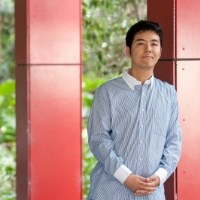
They are also questions that Monash University Associate Professor Nao Tsuchiya from the School of Psychological Sciences is attempting to answer.
Through his research in neuroscience, Associate Professor Tsuchiya is working towards expanding our knowledge of how and why electrochemical activity in the brain gives rise to subjective conscious experience.
It is this research that has led Associate Professor Tsuchiya to receive the prestigious Young Scientists Prize (age below 40) in the Commendation for Science and Technology by the Japanese government’s Minister of Education, Culture, Sports, Science and Technology.
The award recognises innovative, revolutionary, original research conducted by a young investigator who promises a high-level research capability and who has made a substantial contribution to the field.
In short, Associate Professor Tsuchiya is using neuroscience to find the meaning of life. No small feat by any stretch of the imagination. To achieve this, he is using psychological experiments and sophisticated brain imaging to define the “neuronal basis” of consciousness.
“Consciousness defies easy definition,” he explains. “In simple terms, it is everything we are aware of when we are awake. It is also central to what makes us human.
“It’s really critical to understand what is generating consciousness in order to better understand the meaning of life. As yet, no one can say why we have consciousness.”
Scientific experiments that track brain activity challenge assumptions and raise new questions. Associate Professor Tsuchiya says neuronal activity can be detected even before people are conscious of deciding to act – as in what are the implications of that for notions of free will? And could a robot, or an iPhone, have consciousness.
“One obvious suggestion of why we need consciousness - that we need it in order to function in the world – is undermined by such phenomena as ‘blindsight’, which is observed in some people whose primary visual cortex is damaged. They cannot see, but will still avoid furniture as they walk about a room.
“There is an alternative pathway from the retina to other areas of the brain, but that seems to be insufficient to create this conscious sensation. These people are processing visual information without becoming conscious of it or aware of seeing.”