
First year medical student mentoring program helps with wellbeing and confidence
A mentoring program which partners first year graduate entry medical students at Monash Rural Health Churchill with medical students from the previous year as a mentor is showing positive benefits for student wellbeing, as well as building mentoring skills for future rural health professionals.
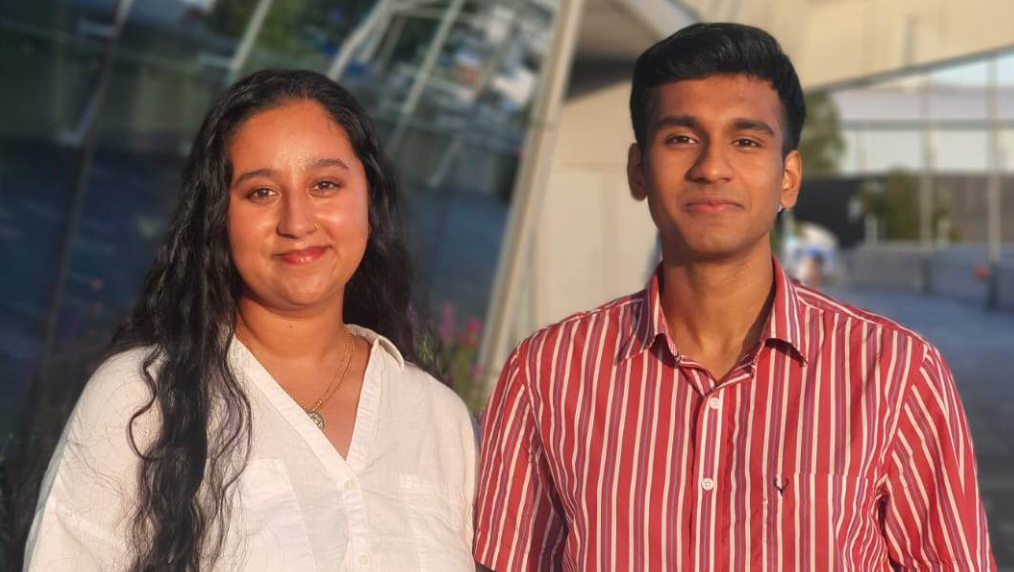 Working with near-peers as mentors helps to create trust, as older students have a more recent experience of being a first year medical student and understanding of what they are going through.
Third year medicine student Ananya Kaswan found her experience as a mentor taught her how to support her mentees by taking feedback and implementing individualised strategies one-on-one.
“Coming from a lived experience, my tips and tricks helped my mentees manage their time, focus on the important things and prioritise their goals. I was available for them if they had any questions academically and regarding the social aspect of Year A which I hope helped alleviate stress.”
This approach was appreciated by her mentee Amarnath Menon, who recognised the need to maintain a strong work life balance and positive mental health throughout medical school.
“As medical school and eventually life as a doctor can be stressful, it is important to build strong coping mechanisms and support systems early in your journey. Ananya encouraged me to continue my hobbies such as playing sport while also being available to discuss solutions to challenges I was facing in Year A.”
Ananya also encouraged Amarnath to get involved with clubs like the Monash University Surgical Interest Group (MUSIG), which exposed him to new skills such as suturing, using laparoscopic simulators and hand tying.
“As a member of MUSIG I also researched surgical procedures such as skin cancer removal techniques and their prognosis. Ananya helped me understand more about the surgical specialty which can often be intimidating to early medical students.”
Coming from a similar background of studying biomedical science, Ananya enjoyed supporting Amarnath with this transition into medicine.
“Being able to support Amarnath with this transition and making it less stressful for him was rewarding. Helping him navigate life in Churchill, balancing relationships and managing expectations was a fulfilling experience, as I could see his stress levels reducing by getting advice from someone who had gone through the same thing.”
For his part, Amarnath appreciated her first hand insights into the realities of Year A, from accommodation and study tips to the course content and learning approaches.
“As she was also a biomedical science graduate, she understood these differences in learning styles and the adaptations required to tackle medicine. Overall, Ananya highlighted the importance of remaining flexible when learning medicine and supplementing theory with real life experiences on placements.”
For students in later years of the medicine course who are considering mentoring first year students, Ananya offered insight into some of the benefits of getting involved.
“It is so rewarding talking to younger students, helping them and learning from them. It enriches your experience and encourages you to reflect on your experiences and you realise how far you have come. Getting to know more people and building your network is also a great outcome of mentoring. It is satisfying and rewarding to make friends with your mentees, opening up opportunities for them. Having been in their shoes, reminiscing and a bit of nostalgia is fun!”
Amarnath also offered some advice for students about to embark in the medicine course considering being supported by a student mentor.
“I would strongly encourage prospective students to get involved with mentoring as it can be beneficial for both mentors/mentees and establishes positive long-term connections. Mentoring can help alleviate anxiety about new experiences by demystifying procedures and underscoring the most important skills for success. It helps combat imposter syndrome which commonly affects medical students and establishes a sense of belonging.”
Are you a current 3B Monash medical student interested in helping support incoming Year A medical students? Apply to become a 2023 mentor by contacting:
Nicola Epps
Rural End to End Coordinator
Monash Rural Health
E: nicola.epps@monash.edu
Ph: 03 5122 7833
Applications close 31 January 2023.