
A journey of hope and possibility: Aboriginal and Torres Strait Islander Framework launched in Gippsland
Monash Rural Health has strengthened its commitment to Indigenous health and healthcare education with the launch of the School’s Aboriginal and Torres Strait Islander Framework 2021-2030 on Gunaikurnai country in Churchill and Bairnsdale last month.
The consecutive events - held on 18 and 19 April - brought Monash Rural Health staff together with representatives from local health services, local government and community groups.
 In Churchill, Michelle Dow from Gunaikurnai Land and Waters Aboriginal Corporation opened the launch with a Welcome to Country, while in Bairnsdale Ashleigh Munro, a proud Gunaikurnai woman and chair of the Centre of Excellence for Aboriginal Health in East Gippsland provided the Welcome to Country.
A video message from Dr Aunty Doris Paton was played and reflected upon the journey to develop the framework which began four years ago as one of “hope and possibility”.
Aunty Doris acknowledged Monash Rural Health’s leadership, including previous Head of School Professor Robyn Langham, for recognising the need to understand the School’s role with Aboriginal communities and making the decision to contribute to real change.
“This is a way forward to work meaningfully with Aboriginal and Torres Strait Islander communities in the Monash Rural Health school footprint. This framework will document within each community a positive and constructive way to work together to create collaborative partnerships based on trust and respect, that will build stronger relationships for the future.”
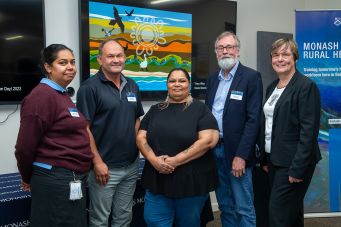 Head of School, Professor Shane Bullock, spoke to the School’s commitment to working in partnership to meet the framework’s four overarching pillars, including incorporating Aboriginal and Torres Strait Islander knowledge and perspectives into the medical curriculum delivered through Monash Rural Health, facilitate opportunities for community members to have long-term careers working at Monash, supporting First Nations students in healthcare degrees, providing culturally safe environments and supporting research that addresses the needs of Aboriginal and Torres Strait Islander communities.
“We need to listen properly and respectfully to the needs of local First Nations communities in order to develop and maintain trust,” said Professor Bullock.
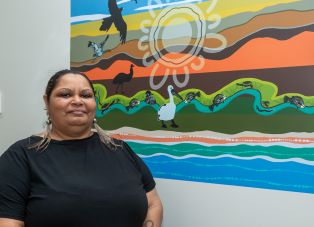 Attendees also heard from Barkindji Ngiyampaa Maligundidj artist Tracy Wise, who created ‘Koote Wurrin’ (One Day in Gunaikurnai language), the artwork on the cover of the framework. Tracy shared the artwork’s story, which is inspired by the creators Bunjil and Waa, Emu and Brolga and Borun and Tuk. The artwork reflects the colours of the sky, the landscape, the waters and the sea, and each First Nations group within Monash Rural Health’s locations; Dja Dja Wurrung, Latji Latji, Ngintait, Gunakurnai and Bunurong/Boonwurrung of the south east Kulin Nation.
David Byrnes, Monash Rural Health’s Aboriginal Communities Engagement Lead, led the events and highlighted some of the local actions already underway, helping to meet the strategic priorities outlined in the framework.
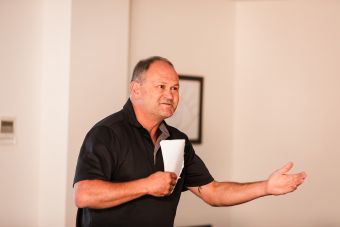 These include establishing the Gippsland Pathways Committee - made up of representatives from Gunaikurnai, the Department of Education, Federation University and Monash University - who will explore and promote pathways for local Indigenous students into health studies, engaging with Indigenous students from Warragul Regional College with an inspiring session on healthcare careers led by local Aboriginal healthcare workers, and with a hands-on session for Warragul Regional College students and participating in the Centre of Excellence for Aboriginal Health in East Gippsland’s Camp Marook.
“These launches were an amazing opportunity to bring everyone together and share our plan for implementing the framework and the role we can all play to make these changes happen within our communities,” said David.