
Virtual training program upskills Pacific Islands surgeons to provide better care

A virtual surgical training program that provides high-quality education for Pacific Island surgeons is improving surgical outcomes for people in low-resource countries such as Fiji, Vanuatu, and Samoa.
Led by Professor Ram Nataraja from the Department of Paediatrics in the School of Clinical Sciences at Monash Health, the Pacific Islands Virtual Online Training in Surgery (PIVOTS) program is a 6-week educational program, developed by Monash Children’s Simulation at Monash Children’s Hospital Simulation Centre (MCS) in collaboration with Fiji National University (FNU) and in partnership with the Royal Australasian College of Surgeons (RACS). Since its launch, PIVOTS has been delivered to six partner countries with 107 surgeons completing the training, 71per cent of whom were women. The program is delivered free thanks to funding support from the RACS Global Health Pacific Islands Program (PIP).
Healthcare delivery for the approximately 2.5 million people spread across hundreds of Pacific Islands is often challenging, thanks to geographical remoteness, small populations and a lack of local health infrastructure and services, including shortages of specialist doctors, nurses and other clinical staff. Many Pacific Island countries rely on visiting medical teams or overseas medical referrals to meet specific patient health needs, and developing and sustaining a strong local health workforce remains a challenge.
PIVOTS specifically addresses the unmet need for excellence in surgical education in the Pacific Islands. This need was especially apparent during the COVID-19 pandemic when, due to border closures and strict travel restrictions, many external surgeons, surgical educators and their teams were limited from providing regular care, guidance and interventions. A simulation-based education (SBE) approach combined with virtual educational methodology and novel technology was proposed to address the problem.
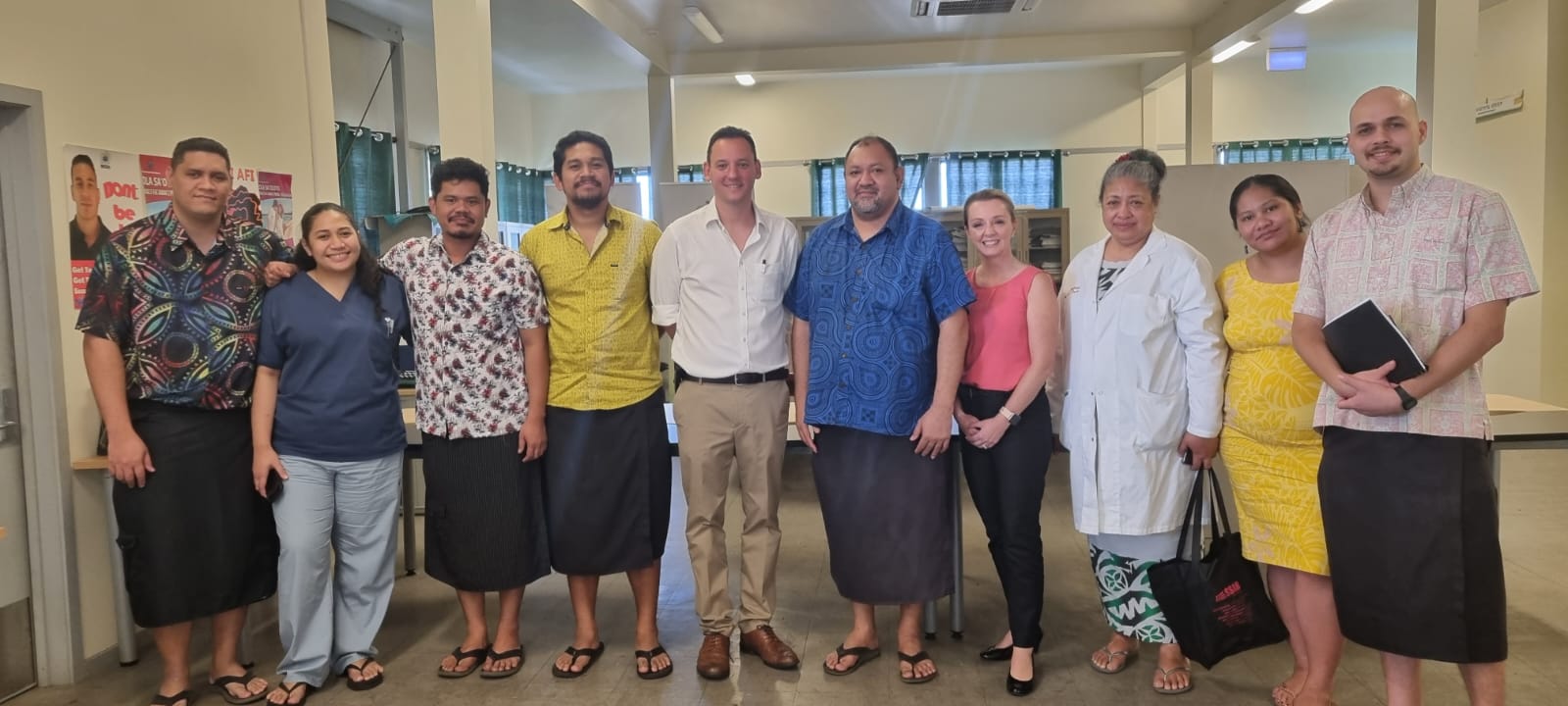
Surgical trainees use portable training labs and home-based simulators provided by the PIVOTS program. Trainees also complete a comprehensive suite of online learning modules and receive feedback and guidance on their learning and performance via interactive webinars with the PIVOTS team.
To ensure the cultural relevance and applicability of the content for the Pacific Islands’ surgical settings, a local cultural liaison officer continuously assesses and revises the content prior to the launch of each training course. The programme is also evaluated using rapid cycle evaluation that continually adapts to the individual ILOs alongside learner and stakeholder feedback.
Professor Ram Nataraja said that the PIVOTS program is making a significant difference in the delivery of global surgical healthcare education. “We know that approximately five billion people globally don’t have access to good surgical care when they need it,” he said. “The training that PIVOTS provides ensures that we’re maximising outcomes in limited resource settings by ensuring that the surgical care given is optimal and that surgeons in countries such as Fiji, Vanuatu, and Samoa can access surgical education at any point at any time.”
Watch the video to learn more:
About Monash University
Monash University is Australia’s largest university with more than 80,000 students. In the 60 years since its foundation, it has developed a reputation for world-leading high-impact research, quality teaching, and inspiring innovation.
With four campuses in Australia and a presence in Malaysia, China, India, Indonesia and Italy, it is one of the most internationalised Australian universities.
As a leading international medical research university with the largest medical faculty in Australia and integration with leading Australian teaching hospitals, we consistently rank in the top 50 universities worldwide for clinical, pre-clinical and health sciences.
For more news, visit Medicine, Nursing and Health Sciences or Monash University.
MEDIA ENQUIRIES