
Project to improve long-term outcomes for lung transplant recipients awarded MRFF funding
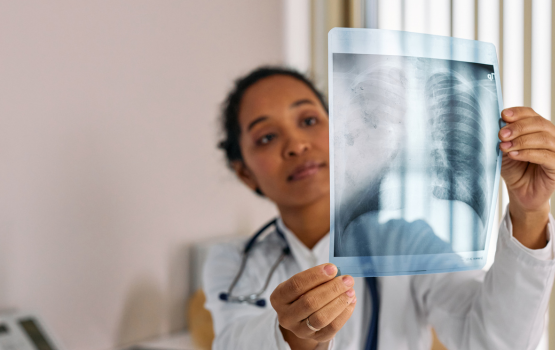
Credit: cottonbro studio from Pexels
Lung transplantation is life-saving for individuals with end-stage lung disease. But despite remarkable short-term success rates, with over 90 per cent of people surviving their first year after a transplant, only 30-40 per cent survive beyond 10 years.
A newly funded study is bringing together Australian lung transplant recipients, scientists and clinicians to defeat lung transplant’s greatest challenge: chronic rejection - known as chronic lung allograft dysfunction (CLAD), described as the ‘Achilles heel’ of lung transplants.
A team led by immunologist Professor Benjamin Marsland and lung transplant physician Professor Glen Westall, including bioinformaticians Dr Giulia Iacono and Matthew Macowan from the School of Translational Medicine, together with lung transplant champion Wendy Jenkins OAM, has been awarded a $1.8M Medical Research Future Fund (MRFF) Chronic Respiratory Conditions grant to predict CLAD.
They will develop a multi-omics and AI-driven platform to identify key biomarkers that are present before CLAD is diagnosed in current clinical care. Early diagnosis is crucial to allow therapeutic interventions to help slow disease progression. Once established, there is no cure for CLAD
The team will first train the model on what is known as a discovery cohort of lung transplant recipients. They’ll then stress-test the model on a validation cohort.
The team will also develop a world-first Artificial Intelligence (AI) foundation model as a tool to improve diagnostic accuracy of lung transplant recipients at risk of CLAD, thereby creating an early window for therapeutic intervention.
In the discovery cohort, the study team will assess molecular biomarkers identified in their forerunner studies that are predictive of CLAD in standard-of-care sampling of broncho-alveolar lavage (BAL) and blood. They will also validate these biomarkers of CLAD in the BAL and blood from a recently established validation cohort. They will then construct a world-first AI foundation model as a tool for clinicians to predict the early onset of CLAD and improve patient management.
Professor Marsland said he was very pleased to receive the MRFF funding. “The success of the project will impact early detection, diagnosis and treatment strategies, transforming lung transplantation into a truly curative therapy for vulnerable Australians with end-stage lung disease,” he said.
“Tackling CLAD is the single-most important thing we can do towards making lung transplants a lasting cure, not just a temporary solution. Developing biomarkers as a diagnostic tool has the potential to give people back years of life.”
About Monash University
Monash University is Australia’s largest university with more than 80,000 students. In the 60 years since its foundation, it has developed a reputation for world-leading high-impact research, quality teaching, and inspiring innovation.
With four campuses in Australia and a presence in Malaysia, China, India, Indonesia and Italy, it is one of the most internationalised Australian universities.
As a leading international medical research university with the largest medical faculty in Australia and integration with leading Australian teaching hospitals, we consistently rank in the top 50 universities worldwide for clinical, pre-clinical and health sciences.
For more news, visit Medicine, Nursing and Health Sciences or Monash University.
MEDIA ENQUIRIES
E: media@monash.edu