
Clinical trial to assess melanoma surveillance photography
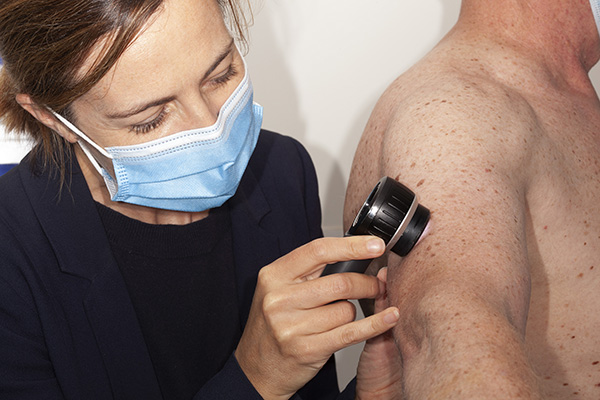 One of the most important and effective tools in the battle against melanoma is early detection. Identifying and treating melanomas as early as possible is associated with a lower risk of them spreading to other parts of the body.
A clinical trial led by Associate Professor Victoria Mar is examining the efficacy of Melanoma Surveillance Photography – state-of-the-art technology that aims to improve surveillance for people at high risk of melanoma.
Melanoma Surveillance Photography (MSP), conducted as either 2D or 3D total body photography with tagged dermoscopy, allows future comparison of suspicious moles to detect changes early.
The IMAGE trial, coordinated by Melanoma and Skin Cancer Trials (MASC Trials), is comparing MSP surveillance to standard care (i.e. monitoring without MSP) to determine which method results in fewer unnecessary biopsies in patients at high and ultra-high risk for melanoma.
The IMAGE trial activated its first site early in 2021 and by the end of the year was operating across six Australian metropolitan and regional sites, and had recruited almost a quarter of its total number of participants. More sites are currently being opened, particularly in regional Australia, with the aim to recruit up to 580 patients.
Regional sites are included in the trial to ensure a true representation of melanoma patients in the community and to provide regional residents with more equitable access to breakthroughs in medical care.
Chief Investigator for the trial and MASC Trials Board member, A/Prof Mar, said there was a lack of randomised-controlled trial evidence of MSP’s benefit and cost-effectiveness for patients and the health care system.
“As we don’t have sufficient evidence, MSP is not used routinely during skin examinations as part of ‘standard care’ and is not reimbursed by Medicare. With each imaging session costing around $450, MSP is out of reach for many,” A/Prof Mar said.
To take part, participants must be diagnosed with a primary melanoma within the last two years and have some or many moles. Participants will be randomly allocated to having either MSP or ‘standard’ clinical surveillance without MSP.
Participants in both groups will continue surveillance with their usual doctor (dermatologist, GP or surgeon) over two years in the community and/or hospital setting, as appropriate. Participants in the control group will be offered 3D imaging at the completion of the trial.
“The high-quality data gathered in this trial will assist the Federal Government’s Medical Services Advisory Committee to decide if MSP should be covered by Medicare, which would provide more Australians with the opportunity to undergo MSP,” A/Prof Mar said.
The IMAGE Trial is funded under the Medical Research Future Fund’s Targeted Health System and Community Organisation Research initiative, sponsored by Monash University, coordinated by MASC Trials, and approved by the Alfred Hospital Ethics Committee.