
New ARC-funded research project set to put death in its place
A new research partnership, led by Monash Rural Health’s Associate Professor Rebecca Kippen, exploring the relationship between the built environment and individuals’ health outcomes has been awarded over $440,000 in Australian Research Council (ARC) Linkage Project funding.
The project, Putting Death In Its Place, in collaboration with Libraries Tasmania, will link individuals and their families to the locations where they were born, lived and died, using over 890,000 Tasmania population records from 1838 to 1930. Using innovative matching techniques and Tasmania’s wealth of digital archives, the project is the first of its kind in Australia to link a data set of this size to a reconstructed historic landscape. It aims to assess the influence that the quality and location of housing and public infrastructure had on life expectancy and other health and social outcomes.
The research team includes experts from the University of New England, the University of South Australia and the University of Guelph. Associate Professor Kippen, a demographer, will be joined by an archaeologist and geographic information systems expert, an archivist, as well as business, economic and digital historians.
“We chose to focus on Tasmania—a place blessed with good records and relatively small population,” explained Associate Professor Kippen.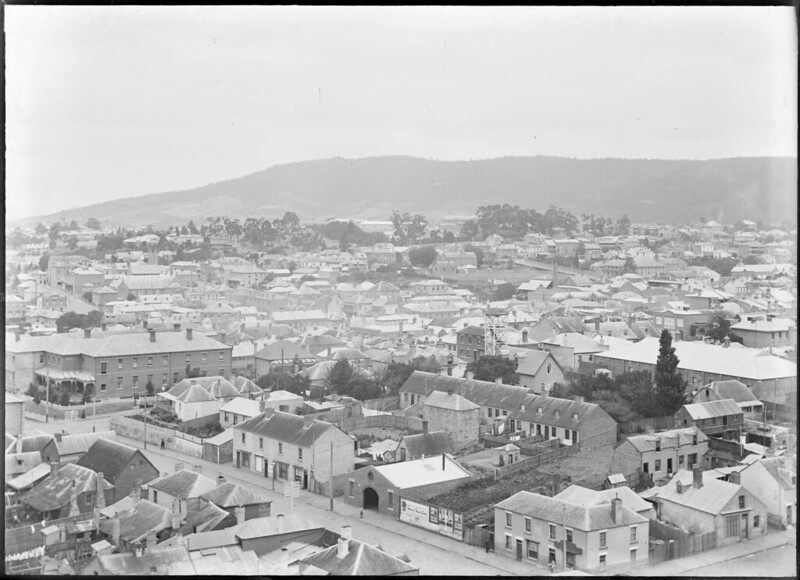
“One aspect we are excited to explore is pinpointing exactly when, why and where urban life expectancies overtook rural life expectancies in Tasmania.”
The project is expected to produce a publicly accessible resource of linked data. It will also lead to an improved understanding of the environmental effects on intergenerational disadvantage and health outcomes, which could inform policy aimed at contemporary health challenges.
“This will be the first time that census, property, and birth marriage and death records have been linked to each other, as well as the time and place in which they were generated. The innovative techniques we’re developing in data matching will be able to be used in other studies. We hope this project will form a template for future historical data reconstructions, focused on other regions of Australia.”
Professor Darryl Maybery, Director of Research at Monash Rural Health acknowledged the significance of this major project and the federal funding to support it.
“The success of this Australian Research Council application highlights the depth of Monash Rural Health’s research and the specialist skills of researchers within our School. We are proud of our strong, collaborative research partnerships - with other universities, health services and organisations - which enable us to undertake important research that ultimately improves health outcomes for regional communities.”
Putting Death In Its Place was one of just five Monash University research partnerships to be funded in the latest round of the ARC Linkage Project scheme, which promotes partnerships between researchers, business, industry and community organisations.
Photo credit: Tasmanian Archives and Heritage Office (TAHO)