
Innovative game to help medical staff respond to climate disasters
An innovative Climate Disaster Response board game, originally conceived as part of a summer research project by a Monash student, was played by medical students and health professionals at a recent Australian Medical Students' Association event.
The game was first played with the Year A graduate entry Monash medical students earlier this year, as part of an interactive workshop. The new board game is based on a serious flood event, to learn how to quickly adapt to the changing needs of patients due to climate change incidents such as bushfire, heatwaves and floods.
“Climate Disaster Response: The Game” was initiated by Mikaela Misso, while completing her Bachelor of Biomedical Science (Honours) year at Monash Rural Health in Gippsland. Working with five other Monash students, in public health and computer science, Mikaela and colleagues received Summer scholarships to develop a board game under the supervision of Associate Professor Marg Simmons and Dr David Reser from Monash Rural Health in Gippsland. The aim of the game is to teach medical students how to quickly adapt to the changing needs of patients due to climate change incidents such as bushfire, heatwaves and floods. According to Mikaela, the model consists of a series of simulated climate change disaster scenarios.
“Such disasters are expected to occur with greater frequency and severity, particularly in rural areas, as the effects of climate change become more pronounced, and we need to equip the next generation of doctors and health care workers to be able to deal with these crises.”
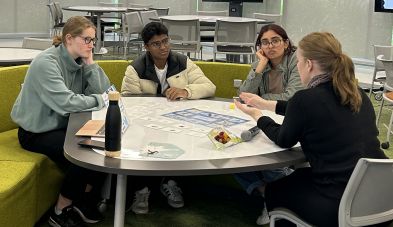
Each game based scenario challenges a group of students to imagine themselves as practitioners in a rural or remote community during a high-impact climate event. The scenarios ask students to consider how a heat wave (for example) would affect patients with existing health conditions that could be aggravated by the disaster, such as those with respiratory or heart ailments, pregnant or breastfeeding women, and elderly and very young people in the community.
The board game involves students placing themselves as junior doctors in one of seven locations including an aged care facility, a GP clinic, a farm, a hospital, at home (self-care), a pharmacy or an emergency shelter and thinking about the various implications of a serious flood event on themselves and their patients or practice with various 'chance' obstacles thrown in.
Students participating in the workshops were very engaged and were able to gain a newfound perspective of how climate change could affect their future work in ways that were not previously considered.
Dr Reser found that the gamified approach helped students understand the likely effects of climate change at a personal and professional level in an engaging and interactive way.
“Allowing students to think through the impacts of climate change and rural health in this way helps them to become better-informed and more socially aware doctors as their careers unfold in a climate-changed future.”
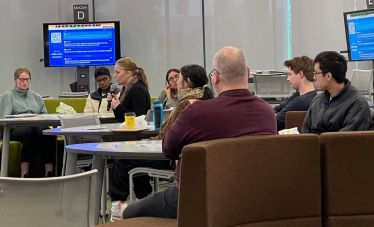
Monash University medical students as well as other medical students and health professionals took part in the interactive workshops, led by medical students as well as Monash Rural Health staff. Ms Urvi Thaneka, PhD candidate in healthcare sustainability from Deakin University also spoke about sustainable health care. Also in attendance were Professor Tony Capon of Monash Sustainability Institute, Associate Professor Zerina Tomkins of the Monash School of Nursing and Midwifery and Dr Connie Gan of Griffith University.