
World’s most comprehensive study of stone benchtop workers reveals an alarming high prevalance of silicosis
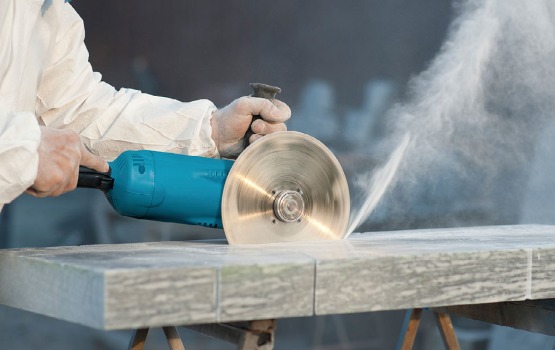
The largest and most comprehensive study to date of workers in the stone benchtop industry has found an “alarmingly high” prevalence of silicosis and that the mandated screening tests are failing to diagnose those with the disease, meaning that current estimates of the incidence of silicosis are likely wide of the mark.
The Monash University led study found that more than one quarter of people who had worked with artificial stone benchtops developed the preventable and potentially deadly disease, silicosis.
Because of the rising rates of silicosis, all state and territories are currently working with the federal government to investigate the feasibility of banning or licensing artificial stone, which can contain up to 95 per cent silica, and is widely used to make kitchen and bathroom benchtops.
This study, led by Dr Ryan Hoy and Emeritus Professor Malcolm Sim AM, from the Monash University School of Public Health and Preventive Medicine and published in the international journal, Occupational and Environmental Medicine, studied 544 stone benchtop workers to determine how many had silicosis and how accurate the current screening methods are in detecting silicosis.
Currently, employers are mandated to screen workers at risk of silica exposure, which must include respiratory function testing (RFT) and chest x- ray (CXR). In addition, for this study, stone benchtop workers who had high silica exposure also underwent secondary screening including high-resolution CT (HRCT) chest and respiratory physician assessment.
The study found that, of the 544 stone benchtop workers screened:
- 95 per cent worked with artificial stone
- 86 per cent were exposed to dry processing of stone
- 76 per cent required secondary screening
- 117 out of the 414 workers (28 per cent) that had secondary screening with CT chest were diagnosed with silicosis.
Of those diagnosed with silicosis, all were male mainly aged between 35 to 50 years. The average duration of work at the time of diagnosis of silicosis was just 12 years, and was as short as three years. Almost 60 per cent of people with silicosis were born overseas, mostly from Asian countries.
Importantly, the study raised major concerns regarding the accuracy of mandated screening tests to detect the early signs of disease. In those diagnosed with silicosis using CT imaging, 72 per cent had normal respiratory function tests.
“We also found that almost 40 per cent of people diagnosed with early stage silicosis by CT had a normal chest x-ray, meaning that the current screening approaches have limited value in this high-risk population,” Dr Hoy said.
Silicosis may not cause any symptoms until late in the disease, so early accurate detection by use of screening tests is required.
“Although early detection provides the best outlook for a worker, there should be no cases of silicosis occurring. Detection of a single worker with silicosis is completely unacceptable and is a clear indication of failings in the systems that should be protecting workers,” Dr Hoy said.
The first Australian case of silicosis associated with artificial (engineered or reconstituted) stone in the benchtop fabrication industry was reported in 2015. By last year 579 cases were identified in Australia and there have been increasingly frequent reports of silicosis in the stone benchtop industry internationally.
According to Professor Sim, in comparison to silicosis associated with natural silica sources, such as mining, artificial stone silicosis has been found to be associated with a shorter duration of exposure, more rapid disease progression, and likely higher mortality .
“Despite these health concerns, the use of artificial stone has grown at a rapid rate since its introduction to Australia in the early 2000s. Poor dust control measures have been widely reported in the industry, in particular the practice of ‘dry processing’, where water dust suppression has not been used during cutting, grinding or polishing of stone,” Professor Sim said.
“This study of a large group of workers confirms an alarmingly high prevalence of silicosis. The sensitivity and positive predictive values of respiratory function tests and chest X-ray as screening tests to detect silicosis in this high-risk occupational group are inadequate.”
The study’s authors recommended that “urgent action is required to improve occupational health and safety measures in the stone benchtop industry internationally, including the elimination of high silica content artificial stone”, and the inclusion of more sensitive chest imaging for mandated screening.
About Monash University
Monash University is Australia’s largest university with more than 80,000 students. In the 60 years since its foundation, it has developed a reputation for world-leading high-impact research, quality teaching, and inspiring innovation.
With four campuses in Australia and a presence in Malaysia, China, India, Indonesia and Italy, it is one of the most internationalised Australian universities.
As a leading international medical research university with the largest medical faculty in Australia and integration with leading Australian teaching hospitals, we consistently rank in the top 50 universities worldwide for clinical, pre-clinical and health sciences.
For more news, visit Medicine, Nursing and Health Sciences or Monash University.
MEDIA ENQUIRIES