
Landmark study of 1.3 m+ births in Sydney and Brisbane reveals flooding event – even before conception – can impact birth outcome
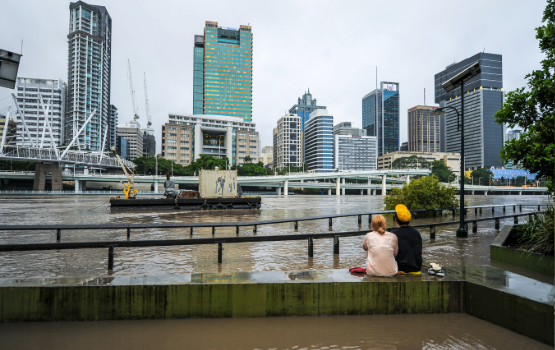
A landmark study, looking at data from more than 1.3 million births in Sydney and Brisbane over a 25-year period, has found that – even before conceiving – women who experience floods in the three months before becoming pregnant are more likely to have smaller and lower weight babies at term.
Last year in Queensland, and earlier this year in Sydney, significant flooding events followed torrential rain. These sorts of disasters have become more frequent and are expected to increase as a result of catastrophic and irreversible climate change.
More alarmingly, women who experience flood events in the first trimester, are at risk of preterm birth and stillbirth.
The study, led by Professor Shanshan Li and Professor Yuming Guo, from the Monash University School of Public Health and Preventive Medicine and published in The Lancet Planetary Health, is the first to study the impact of flooding on Australian birth outcomes, and only one of three such studies done globally.
The researchers studied data from more than 1.3 million births from all Sydney birth records from the start of 2001 to the end of 2020, from the New South Wales Midwives Data Collection, and Brisbane birth records from the start of 1995 to the end of 2014, as well as historical flood information.
They looked at five “windows” around flooding events: 13–24 weeks before the last menstrual period (LMP); 0–12 weeks before the LMP; and then the three trimesters of pregnancy.
The researchers found that flood exposure in over 13 weeks before the last menstrual period –3-6 months before becoming pregnant – was associated with increased risks of low birth weight born at full term and small for gestational age.
A mother experiencing a flood incident in the first trimester was at greater risk of preterm birth and stillbirth and also – when delivering at full term – having a baby of small gestational size.
In contrast, flood exposures during the second and third trimesters were associated with reduced risks.
As well as the direct health impact of flooding such as drowning and hypothermia, floods can indirectly impact human health through contamination of foods and drinking water, increased exposures to pathogens, impaired access to health facilities, psychological disorders, and displacements.
According to Professor Guo, the risks of adverse birth outcomes can be increased by elevated maternal exposure to non-optimal or hazardous environments, compromised maternal immune system and health status, maternal stress, and insufficient midwifery care during and after flooding events.
“It is important to understand the associations between floods and adverse birth outcomes to be able to plan for both pre-pregnancy and perinatal risk assessments and managements, if climate change is likely to increase the risk of flooding events,” he said.
Professor Li said that the findings of this study “indicate that individuals and health practitioners should pay more attention to the impacts of floods on birth outcomes, even if floods are experienced before pregnancy. At the same time, females who are pregnant or plan to conceive should be transferred from flooded areas to unflooded areas as early as possible to reduce the risks of adverse birth outcomes,” she said.
About Monash University
Monash University is Australia’s largest university with more than 80,000 students. In the 60 years since its foundation, it has developed a reputation for world-leading high-impact research, quality teaching, and inspiring innovation.
With four campuses in Australia and a presence in Malaysia, China, India, Indonesia and Italy, it is one of the most internationalised Australian universities.
As a leading international medical research university with the largest medical faculty in Australia and integration with leading Australian teaching hospitals, we consistently rank in the top 50 universities worldwide for clinical, pre-clinical and health sciences.
For more news, visit Medicine, Nursing and Health Sciences or Monash University.
MEDIA ENQUIRIES
Tania Ewing, Monash University
Media and Communications Contractor
E: taniaewing@taniaewing.com
T: +61 (0) 408 378 422
For general media enquiries please contact:
Monash Media
E: media@monash.edu
T: +61 (0) 3 9903 4840