
Reimagining - and re-imaging - the future of prostate cancer care
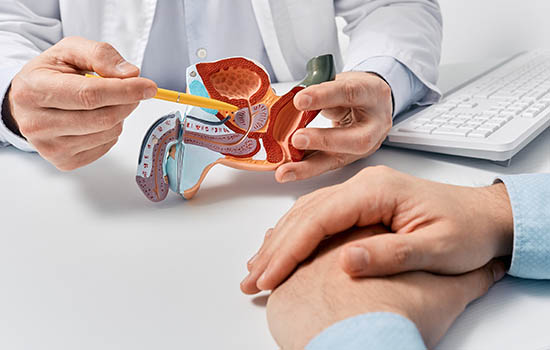
The prostate cancer patient journey can be a painful, harrowing one for many men. It starts with a PSA blood test, and can lead to a biopsy (or even multiple biopsies) and then removal of the prostate, which can result in erectile dysfunction and incontinence of urine, or hormone therapy, that is likened to chemical castration.
“Standard treatment poses an unacceptable dilemma to patients,” says Associate Professor Jeremy Grummet, from the Department of Surgery at Monash School of Translational Medicine and Director of Urology at Alfred Health. “For medium-risk prostate cancers, if they avoid treatment, they risk the cancer progressing, but if they go ahead with it, they risk losing significant quality of life.”
The challenge: stratification
In many countries, prostate cancer is the most common cancer for men, with rates set to double globally in the coming years, according to The Lancet. In Australia, more than 3000 men die each year from aggressive forms of prostate cancer, but just as importantly, more than 21,000 men will be diagnosed with cancer that has not spread beyond the prostate and may well remain harmless.
Stratifying or telling these groups apart is a significant challenge. Unlike bowel, breast and cervical cancers, there is no national screening program for prostate cancer, because PSA tests and biopsies, which have been the standard tools in the kit, are blunter than those available for other cancers.
Grummet, who is one of the team revising Australia’s clinical guidelines on early detection of prostate cancer, due out in 2025, says the system is rife with overdiagnosis and overtreatment, yet still misses too many men with advanced disease. Given the grim alternatives currently on offer, he says it’s not surprising that many GPs simply don’t initiate conversations about prostate health with their patients.
As author and prostate cancer “student” Tim Baker says, “While I’m grateful to modern medicine, I think one day we will look back and regard the current generation of cancer treatments as barbaric and primitive”.
But it turns out that new diagnostics and emerging treatments, combined with frequent checks and surveillance in men with low-grade disease, could change this.
Safer biopsies, and fewer of them
For the past decade, Grummet has been leading the charge for biopsies via the skin of the perineum to replace inserting a needle into the rectum, which adds the risk of sepsis to an already invasive procedure, and requires antibiotics.
Now, transperineal (TP) biopsies are the standard in Australia and New Zealand, with near zero sepsis rates and no need for antibiotics. Though inertia is still an issue in many countries, as Grummet noted in a 2020 Nature paper topically titled “Trexit”, urging health administrators to abandon Transrectal (TR) biopsies and invest in training and equipment to make TP biopsies the standard.
More recently, the advent of prostate MRI has boosted diagnostic accuracy and called into question the orthodoxy that a biopsy should always follow a high PSA level.
A prostate MRI will directly show any cancer, but unlike a biopsy, is not invasive or painful.
Recent research has confirmed that introducing MRIs as the next step after a PSA, instead of going straight to a biopsy, brings down over-detection rates, because clinicians can see the presence and precise location of a tumour. It allows them to divert around half of all men being tested away from unnecessary biopsies, and to target treatment to the tumour rather than involving the whole prostate.
The quality of life implications as well as increased accuracy already suggest that one day, prostate cancer is likely to join breast, cervical and bowel cancers with its own screening program for men over 50. And MRIs, although relatively costly, are likely to be an integral part of this.
Focal therapy: precision destruction
There is also innovation on the surgical front for patients who fall somewhere in the middle of “watch and wait” and needing to have their whole prostate removed. Grummet is a pioneer of focal therapy, an image-guided procedure that ablates or destroys tumours without damaging surrounding nerves and tissues. It aims to preserve bladder and bowel as well as erectile function. Although not yet standard practice, it’s being researched worldwide for its promise for men with intermediate-risk localised cancer.
Different techniques are being assessed, from brachytherapy seed implantation, irreversible electroporation (also known as the NanoKnife), high-intensity focused ultrasound (or HIFU), cryotherapy, photodynamic therapy and laser. “We don’t yet know which of these modalities is most effective, as they are all still under investigation,” Grummet told the Prostate Cancer Foundation of Australia.
Who is prostate cancer care really for?
Grummet says that active surveillance is now the standard for most men with low-grade prostate cancers.
“With our now far more accurate diagnostic tools like MRI scans and targeted transperineal biopsy, it means we can safely watch these patients with follow-up tests and only intervene if it looks like the cancer is changing into something more aggressive.”
This fast moving landscape begs the question, he says, of who current prostate cancer care is really for.
“How we diagnose and treat prostate care is a classic example of how healthcare can be skewed towards what works for doctors and hospitals, rather than being there to truly care for patients. Something is clearly amiss when we as doctors wouldn’t undergo what we are subjecting our own patients to.”
“And once a method of diagnosis or treatment has been done for long enough, it becomes dogma. Everyone does it like this, so it must be the right way, right?
“But our far more accurate diagnostic tools, and advances on the surgical front, will hopefully shake things up and lead to fewer men having to contend with life-shattering consequences.”