
Global MS diagnostic criteria update set to accelerate diagnosis and timely care
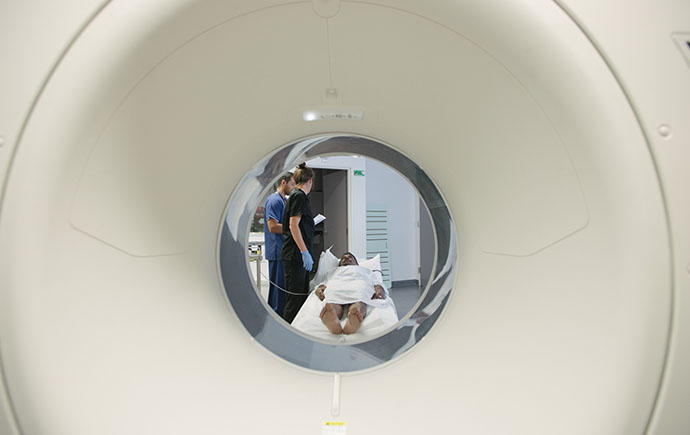
A diagnosis of multiple sclerosis is expected to take less time now thanks to updated global criteria published in The Lancet Neurology, with key leadership from Monash University researchers.
The revised McDonald Diagnostic Criteria for MS - the global benchmark used by clinicians to confirm the disease - are expected to reduce the often years-long stressful and in some cases anxious journey to diagnosis, to enable earlier treatment. The new criteria are applicable worldwide - an important advance given the challenges in low to middle-income countries of access to MRI machines and lab testing.
Clinician researchers Professor Helmut Butzkueven and Associate Professor Anneke Van der Walt, from Monash University and Alfred Health, were among 56 global experts who contributed to the revisions, working with colleagues from 16 countries under the auspices of the International Advisory Committee on Clinical Trials in Multiple Sclerosis.
“For people living with MS, time is of the essence,” Professor Butzkueven said. “Every month of delay in diagnosis and treatment can mean an irreversible loss of nerve cells impacting on people’s future life outlook. These new criteria will help clinicians act sooner and with greater confidence.”
Multiple sclerosis is a chronic condition in which the body’s immune system attacks the brain and spinal cord, disrupting nerve signals and causing symptoms from vision loss and fatigue to difficulties with balance, sensation, and movement. Around 33,000 Australians live with MS, with most diagnosed in early adulthood.
Until now, diagnosis has often been delayed for patients - taking an average of almost four years in Australia, according to MS Australia. This update - the first since 2017 - enables doctors to diagnose MS:
- after a single clinical episode, where previously multiple attacks were needed.
- through imaging and laboratory markers that reveal characteristic brain, spinal cord, or optic nerve inflammation - even before symptoms appear.
- using simpler, more accessible tests such as optical coherence tomography (OCT) eye scans and a new spinal fluid biomarker known as kappa free light chains, which can replace older, more invasive testing methods.
The Lancet Neurology paper highlights several scientific advances now incorporated into the diagnostic framework. These include:
- recognising the optic nerve as a fifth anatomical site of disease - meaning inflammation detected through eye scans or vision tests can now support an MS diagnosis.
- using new MRI features, such as the central vein sign and paramagnetic rim lesions, to help differentiate MS from other neurological disorders.
- allowing diagnosis in people with radiologically isolated syndrome — where MS-like changes appear on brain scans before symptoms develop — if supported by additional evidence.
- unifying criteria for paediatric, adult, and late-onset MS, ensuring accuracy across all ages.
- simplifying rules for progressive forms of MS, acknowledging that the disease exists on a biological continuum.
Associate Professor van der Walt said the changes will help neurologists around the world recognise MS earlier while reducing the risk of misdiagnosis, especially in older adults or those with other health conditions. ”Earlier initiation of disease-modifying therapies can slow the accumulation of nerve damage, preserve function, and improve long-term quality of life.”
The updated criteria are the result of a rigorous, multi-year international process involving neurologists, radiologists, laboratory scientists, and people with lived experience of MS. The Monash team played a key role in bringing Australian clinical perspectives and real-world data to the global table, including the MSBase registry - the world’s largest observational MS database, based at Monash University.
“Monash’s critical contribution ensured that the criteria are both scientifically robust and practically usable across different healthcare systems,” said Professor Butzkueven, Head of the Department of Neuroscience at the School of Translational Medicine. “Australia’s leadership in MS research and clinical data collection has helped shape how the world diagnoses this complex disease.”
As MS Australia CEO Rohan Greenland noted, this update represents “a major step forward in improving care and quality of life for people with MS in Australia and across the world”.
Read more: Diagnosis of multiple sclerosis: 2024 revisions of the McDonald criteria, The Lancet Neurology, Vol 24, October 2025.
About Monash University
Monash University is Australia’s largest university with more than 80,000 students. In the 60 years since its foundation, it has developed a reputation for world-leading high-impact research, quality teaching, and inspiring innovation.
With four campuses in Australia and a presence in Malaysia, China, India, Indonesia and Italy, it is one of the most internationalised Australian universities.
As a leading international medical research university with the largest medical faculty in Australia and integration with leading Australian teaching hospitals, we consistently rank in the top 50 universities worldwide for clinical, pre-clinical and health sciences.
For more news, visit Medicine, Nursing and Health Sciences or Monash University.
MEDIA ENQUIRIES